







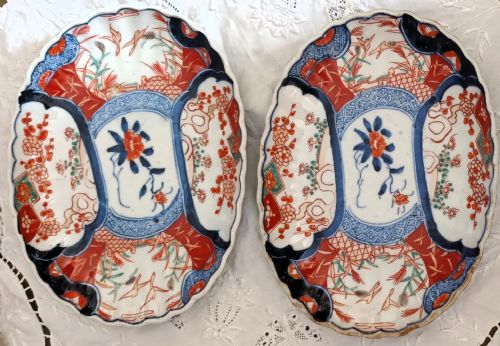
Imari Ceramic Wall Plates
Imari ceramic wall plates bring rich palettes of cobalt underglaze, enamel and gold leaf into rooms that demand bold pattern and historic character.
Imari Ceramic Wall Plates
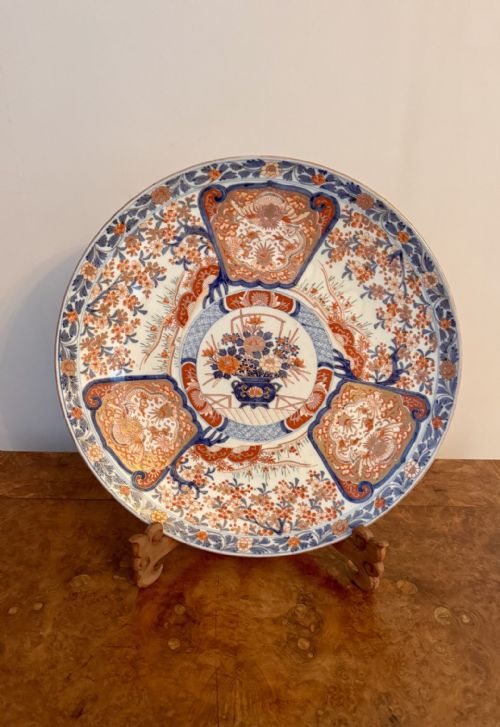
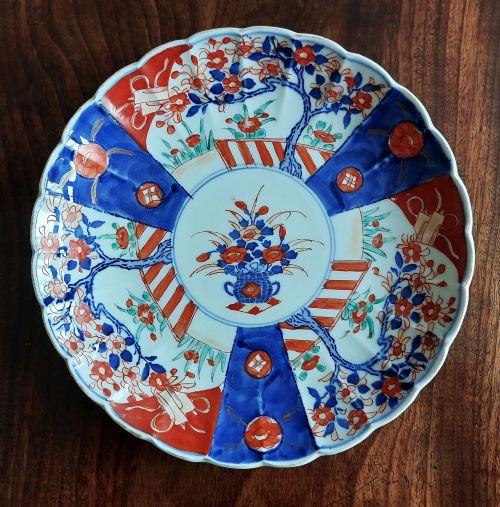
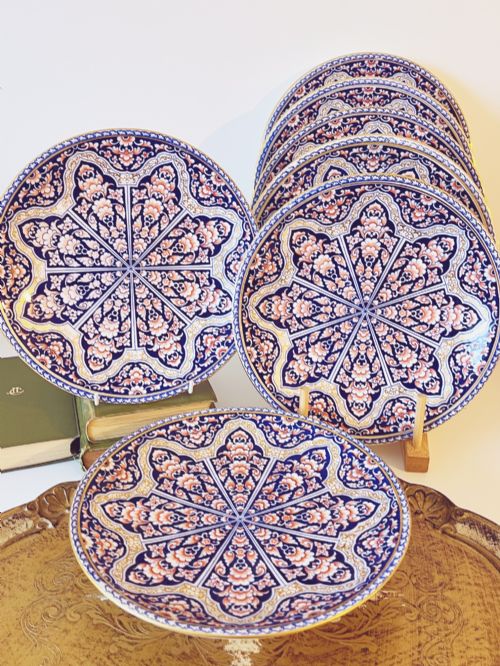
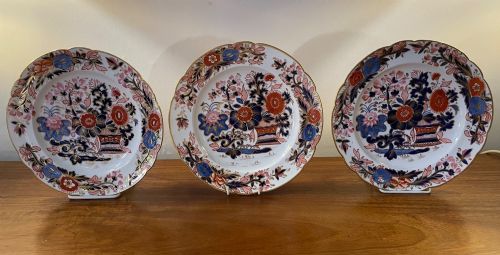
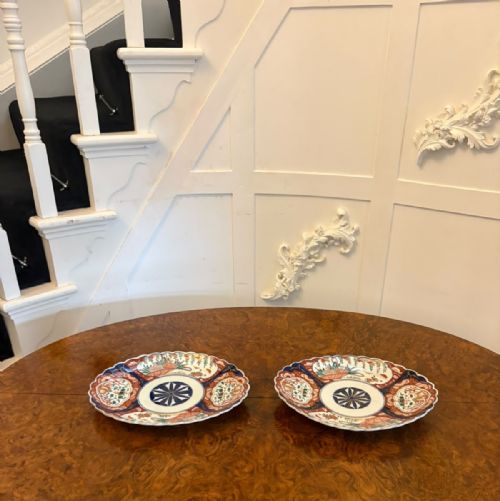
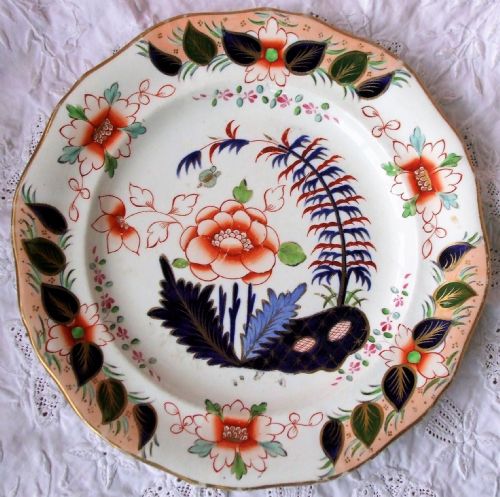
When you search for imari ceramic wall plates, you encounter striking display chargers and dishes from Japanese Meiji, Edo and Arita workshops, alongside English Georgian ironstone interpretations.
The pieces on this page span the eighteenth, nineteenth and early twentieth centuries, offering everything from small scalloped dessert dishes to large chargers made for vertical display.
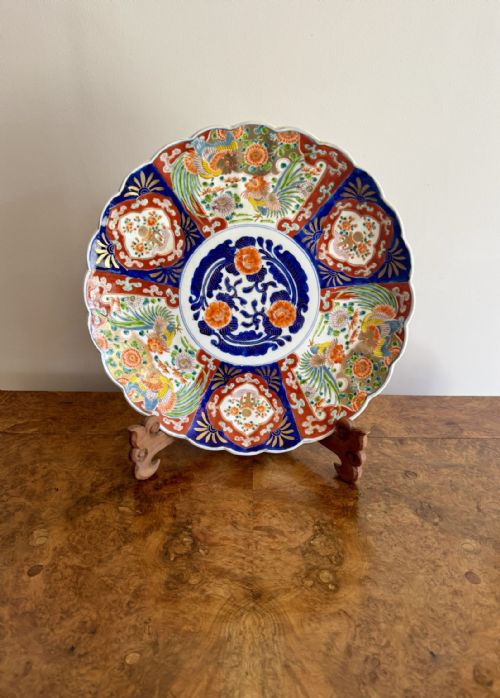
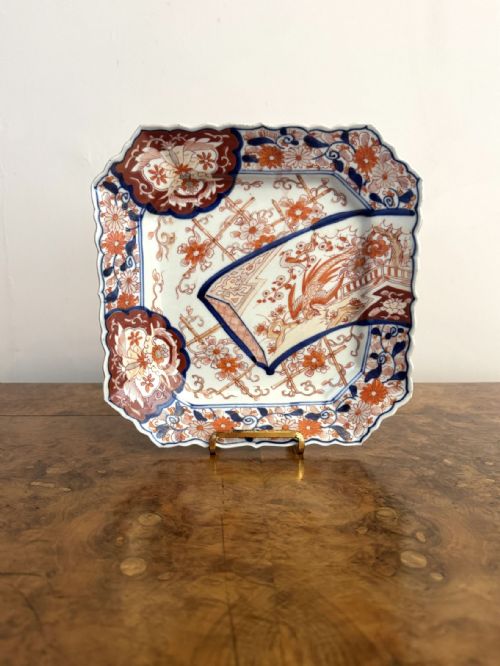
Japanese export wares dominate the selection, appearing either as traditional blue and white porcelain or rich polychrome designs with exotic birds and geometric panels.
How they were made
Potters built these plates using hard-paste porcelain, ceramic or ironstone bodies, shaped often with scalloped edges or square forms.
Decoration relied on cobalt underglaze painting combined with vibrant enamel colours and applied gold leaf or gilt details, fired repeatedly to fuse the pigments.
What varies in quality
Quality rests upon the precision of the hand-painted brushwork and the richness of the enamel and gold leaf application across the surface.
The crispness of the porcelain moulding, especially on scalloped and square shaped plates, distinguishes finer examples from standard production.
John Davenport of Longport·Royal Crown Derby
The Imari Ceramic Wall Plates Glossary
- Imari
- A style of ceramic decoration originating in Japan, characterised by a palette of cobalt blue, iron red and gold. It was later copied by English potteries.
- Charger
- A large decorative plate intended for display on a wall or sideboard rather than for dining use. These items form the centrepiece of many collections.
- Underglaze
- A method of decorating pottery in which pigments are applied to the raw ceramic body before the glaze is fired. This protects the colour beneath a glossy seal.
- Ironstone
- A type of durable heavy earthenware developed in nineteenth-century England to imitate porcelain. It provided a sturdy ground for Japan pattern transfers.
- Meiji Period
- A span of Japanese history lasting from eighteen sixty-eight to nineteen twelve, noted for the export of fine decorative arts to Western markets.
Imari Ceramic Wall Plates: Frequently Asked Questions
Can imari ceramic wall plates be hung safely?
Most large chargers and plates feature sturdy rims or shapes suitable for traditional wire display hangers.
Ensure any hanging hardware supports the full weight of the ceramic without putting pressure on historic edges.
How do I tell Japanese imari from English versions?
Japanese examples use fine porcelain bodies with hand-painted cobalt underglaze and rich enamel details from the Meiji or Edo periods.
English pieces typically utilise ironstone or earthenware bodies marked by Staffordshire potteries producing nineteenth-century Japan patterns.
Were these plates meant for daily dining?
Larger examples functioned as decorative chargers and display dishes meant for sideboards or walls.
Smaller plates occasionally formed part of nineteenth-century dessert services used alongside matching comports.
What dates are most common for these plates?
The majority of pieces date from the late nineteenth century, aligning with the Meiji period in Japan and the Victorian era in Britain.
Earlier items from the eighteenth century appear less frequently and originate from Chinese export or early Japanese workshops.