


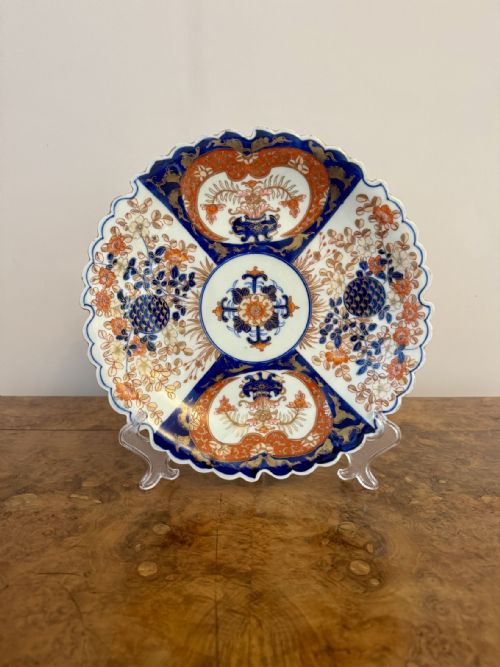
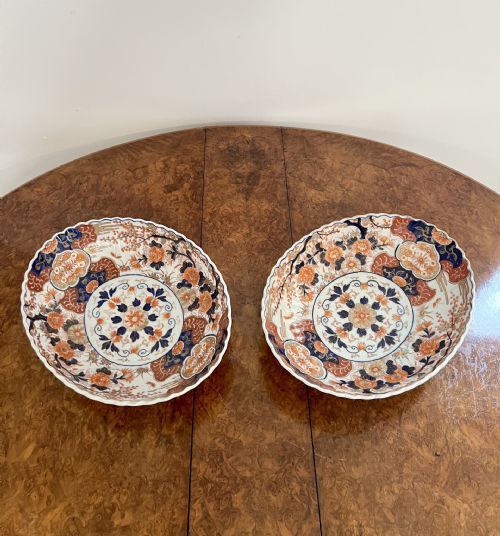


Blue Orange Ceramic Charger
A blue orange ceramic charger brings together bold hand-painted palettes on wide porcelain surfaces for display.
Blue Orange Ceramic Charger
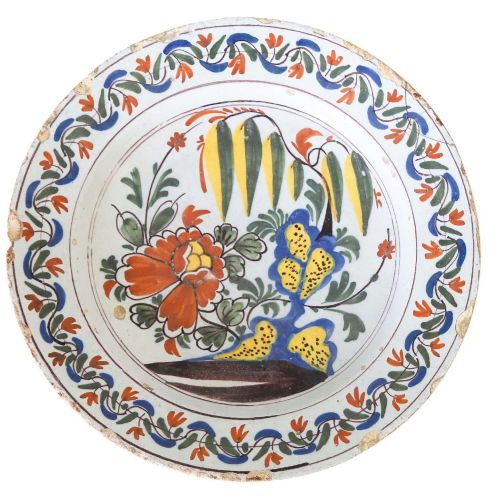
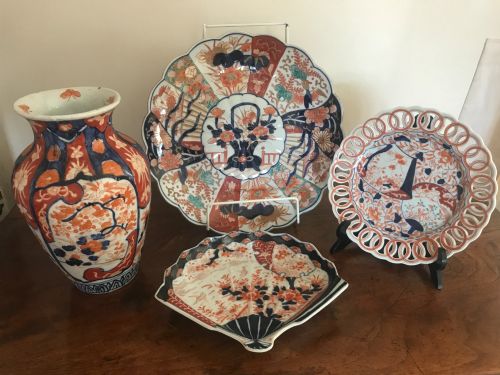
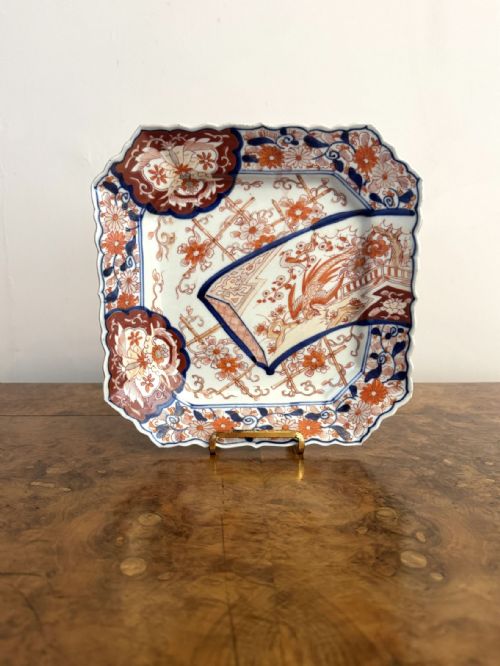
When you search for a blue orange ceramic charger, you encounter large decorative plates and chargers produced across the eighteenth, nineteenth, and early twentieth centuries. The selection on this page consists predominantly of Japanese Imari wares from the Meiji and Edo periods, alongside English Delftware and Chinese Export examples.
Forms range from standard round chargers and wall plates to square, fan-shaped, and scalloped display dishes. These pieces function primarily as decorative items, designed to be shown on walls or displayed on tabletops and bowls.
Materials and techniques
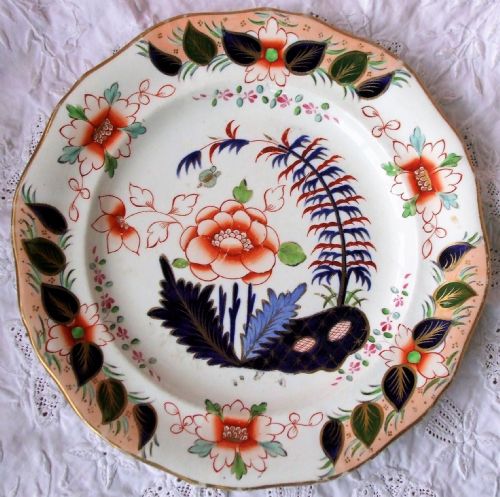
Pieces combine ceramic, porcelain, and ironstone bodies finished with tin-glaze or standard glaze layers. Artisans applied hand-painted decoration directly onto the surface utilising distinctive polychrome pigment schemes.
Certain examples incorporate gold leaf, gilt, or gilding to accent patterns, while enamel applications add raised textural detail to the painted motifs.
Several plates depict the Seven Lucky Gods, ensuring your wall display comes fully equipped with divine Japanese endorsement.
Distinctions in quality
Superior items separate themselves through the crispness of the hand-painted decoration and the complexity of the underlying ceramic form. Square, fan-shaped, and heavily scalloped plates demonstrate higher technical skill in shaping than standard round vessels.
The density and precision of the pigment application define the upper tier of the range. Depth of colour and the skilful integration of gilding distinguish exceptional examples from simpler production pieces.
John Davenport of Longport
The Blue Orange Ceramic Charger Glossary
- Charger
- A large decorative plate or platter traditionally used for display rather than dining. These wide surfaces provide ample space for elaborate hand-painted patterns.
- Imari
- A style of Japanese porcelain featuring a characteristic palette of cobalt blue and iron red, frequently augmented with gilt and other colours. This decorative approach became widely exported to Europe during the Edo and Meiji periods.
- Delftware
- English tin-glazed earthenware produced with a white opaque background and painted polychrome or blue decoration. Eighteenth-century examples often emulate imported Asian ceramics.
- Meiji Period
- A Japanese historical era spanning from 1868 to 1912, associated with increased production of decorative porcelain for international markets. Pieces from this time demonstrate refined hand-painting techniques.
- Edo Period
- The period in Japanese history running from 1603 to 1867, preceding the Meiji era. Early examples from this timeframe display distinct dished ceramic profiles.
Blue Orange Ceramic Charger: Frequently Asked Questions
What is a blue orange ceramic charger?
A blue orange ceramic charger is a large decorative plate or bowl decorated in traditional polychrome palettes, most notably the Imari style.
These items span several centuries of production from Japanese, Chinese, and English kilns.
How were these chargers displayed?
Historically, large chargers served as ornamental centerpieces on sideboards or were hung directly on walls for visual impact.
Their wide diameters and colourful motifs made them prominent decorative elements in domestic interiors.
How do I identify Japanese Imari?
Japanese Imari pieces display a distinct combination of underglaze cobalt blue and iron red enamel, often highlighted with gold leaf.
They appear in various forms, including scalloped plates, bowls, and square display dishes.
What is English Delftware?
English Delftware is a tin-glazed earthenware produced in England during the eighteenth century.
These pieces frequently feature polychrome floral decoration inspired by imported Asian ceramic designs.
How do I care for antique ceramic chargers?
Display chargers require stable environments away from direct sunlight to preserve hand-painted enamels and gilding.
Cleaning should be limited to gentle dusting with a dry cloth rather than washing with water.