



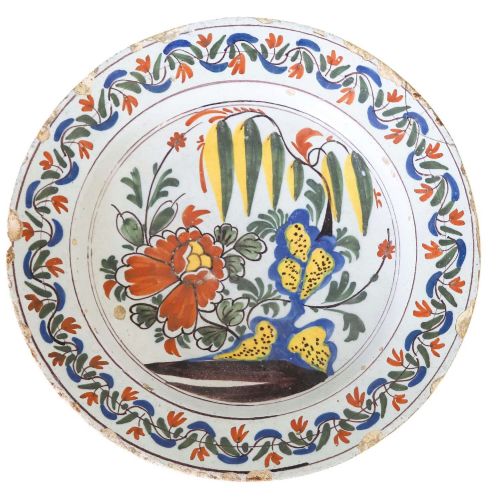


English Delftware Display Dish
An English delftware display dish is a tin-glazed earthenware plate or charger carrying hand-painted decoration that brings rich historic colour and pattern to a wall or dresser.
English Delftware Display Dish
An English delftware display dish is typically found as a large charger or plate originating in the eighteenth century. These pieces were made for visual impact, often displayed on dressers or walls rather than used at the dining table.
The selection here encompasses eighteenth-century chargers and plates featuring both blue and white and polychrome palettes. Styles range from simple floral motifs to elaborate Chinoiserie and Dutch-influenced designs.
Forms include large decorative chargers, smaller plates, and matching pairs or sets. Each piece demonstrates the distinct hand-painted artistry characteristic of this historic earthenware production.
How they were made
Makers shaped clay into plates and chargers, which were then coated in a tin glaze to create an opaque white surface. Cobalt pigment and other colours were applied directly onto this absorbent unfired glaze before firing.
The hand-painted decoration relies on the quick absorption of pigments into the tin glaze, leaving no room for correction. This technique produces the characteristic soft edges and expressive brushwork seen on eighteenth-century examples.
English Delftware Display Dish Retail Price Guide 2026
Typical asking prices for english delftware display dish among the pieces listed under this phrase on Sellingantiques today, from the lower quarter to the upper quarter. They describe what is for sale here now, not the wider market.
Listings feature eighteenth-century earthenware forms decorated with cobalt pigment and tin glaze, spanning Georgian and Chinoiserie styles.
What varies in quality
The distinction in quality rests upon the confidence and fluidity of the hand-painted brushwork. Superior pieces display lively, assured floral or Chinoiserie motifs executed with a free hand.
Surface preservation and the stability of the tin glaze also determine distinction. Plates and chargers that retain their glossy glaze and clear pigment definition stand apart from those with heavy surface wear.
The English Delftware Display Dish Glossary
- Charger
- A large decorative plate intended for display rather than everyday dining. These substantial dishes form the centrepiece of many historical ceramic collections.
- Tin Glaze
- An opaque white glaze made by adding tin oxide to a lead glaze. This surface provided an ideal canvas for painting in cobalt pigment and colours.
- Polychrome
- Decoration employing multiple colours rather than a single hue. On these pieces, it typically involves a palette of several pigments applied over the white tin glaze.
- Chinoiserie
- European interpretations of Chinese artistic motifs and styles. This aesthetic appears frequently in the hand-painted decoration of eighteenth-century earthenware.
- Cobalt Pigment
- A blue mineral colour used under the glaze to paint designs. It turns deep blue during the high-temperature firing process.
English Delftware Display Dish: Frequently Asked Questions
How were these dishes used originally?
These tin-glazed earthenware dishes were primarily intended for visual display rather than daily dining. Owners placed them on sideboards, dressers, or hung them on walls to showcase their decorative qualities.
Because the tin glaze is susceptible to scratching and chipping from metal cutlery, their primary role was ornamental. Their large size and striking hand-painted patterns made them ideal focal points in period interiors.
Are blue and white or polychrome pieces older?
Both blue and white and polychrome decoration were produced concurrently throughout the eighteenth century. Dating relies on stylistic shifts in the painting rather than the choice of palette alone.
Early pieces often feature simpler motifs or specific Dutch influences, while mid-century examples incorporate vibrant multi-coloured palettes and Chinoiserie scenes. Examining the brushwork and glaze characteristics helps pinpoint the era.
How do I hang a heavy charger safely?
Displaying a large earthenware charger requires a specialised wall hanger with coated springs that grip the rim securely without applying undue pressure. Ensure the fixing goes directly into a wall stud or uses appropriate masonry anchors.
Avoid wire-only solutions that rely on friction alone against the footring. Regular checks ensure the plate remains secure against the wall.
What defines English delftware compared to Dutch delft?
English production often utilised local clays and developed distinct potting characteristics and palette variations tailored to domestic tastes. Workshops in centres like London produced wares with slightly different body densities and glaze tones.
While influences flowed freely between England and the Netherlands, English pieces frequently exhibit looser, more expressive brushwork in their floral and landscape motifs.