
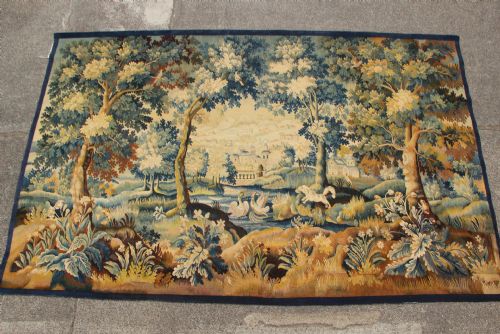
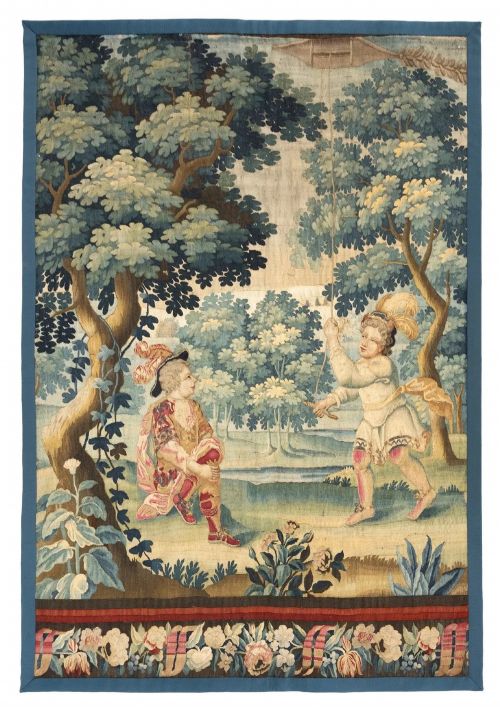

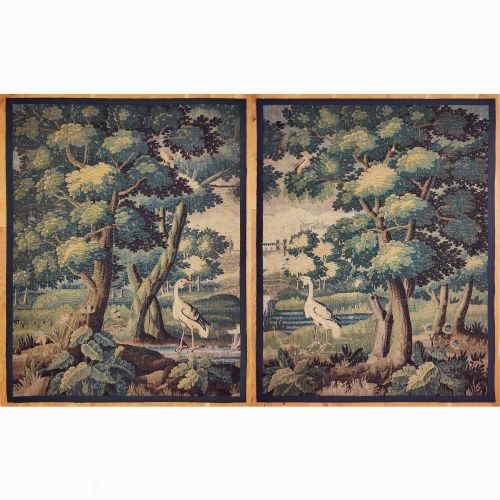
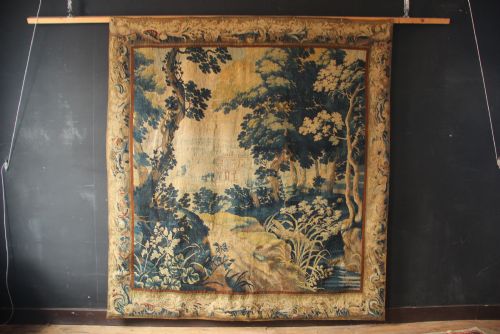




Blue Green Woven Tapestry
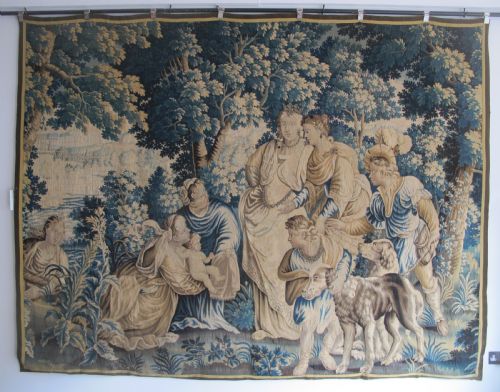
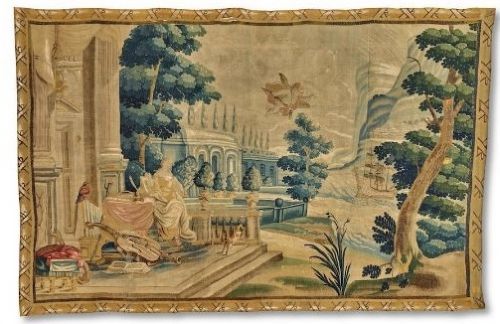
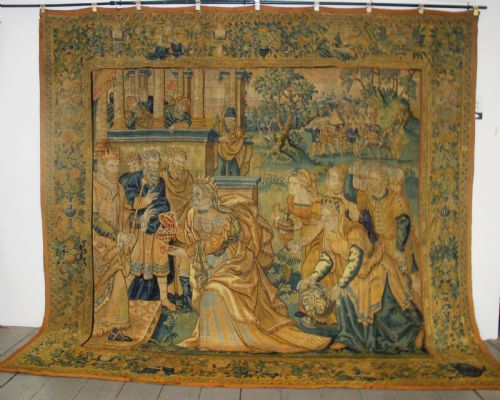
These blue green woven tapestry pieces are historic textile works of art that bring rich colour and texture to large interior walls.
Blue Green Woven Tapestry
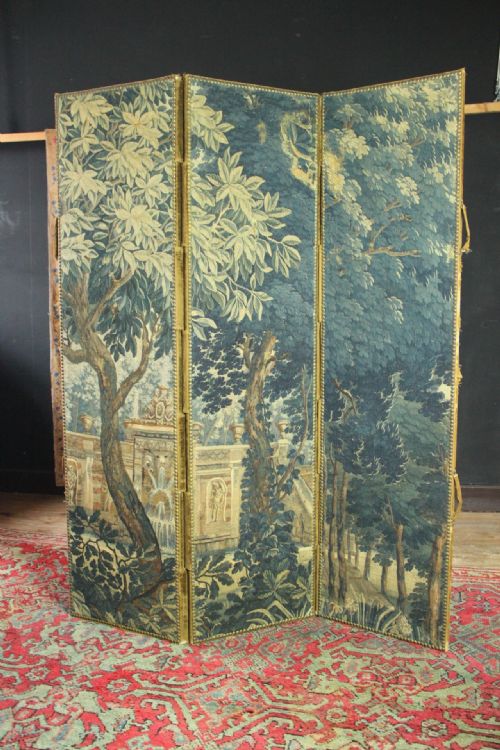
When you search for a blue green woven tapestry, you encounter heavy wall hangings and screens originating from European workshops. The pieces appearing here span from the late sixteenth century through to the end of the nineteenth century.
The most common forms are verdure landscapes dominated by foliage, alongside mythological and biblical scenes. These textiles often survive as large panels or folding screens mounted on wood frames with brass detailing.
Originating predominantly from Flemish and French centres such as Aubusson and Audenarde, these works served to insulate stone walls and display status. Their palettes lean heavily into deep blues, greens, and earthy tones that have shifted over centuries.
Materials and construction
These textiles were produced using wool, silk, and linen yarns woven on high-warp or low-warp looms by skilled artisans. Wool provided the durable structural weight and earthy green foliage, while silk introduced finer detail and luminous blue highlights.
Linen often served as the warp foundation or backing support to sustain the heavy tension of the woven design. Supporting framework components include wood and brass hardware, particularly on folding screen adaptations.
Early weavers often hid tiny domestic dogs and secretive blue birds deep within the tangled green foliage of verdure panels.
Judging quality in historic weaving
Quality rests in the density of the weave, the complexity of the narrative or foliage, and the survival of the original dyestuffs. Finer pieces incorporate generous amounts of silk alongside wool to achieve tonal depth and shading.
Proportion, perspective, and the artistic execution of borders distinguish grand scale works from simpler panels. The integrity of the textile structure and the preservation of the distinct blue and green pigments determine the standing of each piece.
The Blue Green Woven Tapestry Glossary
- Verdure tapestry
- A wall hanging depicting a stylised landscape of plants, trees, and foliage, often featuring birds or animals hidden among the leaves. These form the majority of surviving domestic textiles from the period.
- Warp
- The vertical or longitudinal threads held under tension on a loom through which the coloured weft threads are passed. Linen is frequently utilised for this structural foundation.
- Weft
- The horizontal threads passed back and forth through the warp to create the visible pattern and colour of the textile. Master weavers blended dyed wool and silk here.
- Aubusson
- A town in central France famous for its production of woven tapestries and carpets from the seventeenth century onwards. Pieces from this region often display refined floral and pastoral designs.
- Flemish
- Pertaining to Flanders, a historical region renowned for its master weavers during the Renaissance and Baroque periods. Flemish workshops produced many of the grand mythological and verdure panels surviving today.
Blue Green Woven Tapestry: Frequently Asked Questions
How were tapestries used originally?
Historic households hung these heavy textiles on cold stone walls to provide insulation and block draughts in large chambers. They also served as movable partitions and decorative displays of wealth during feasts and ceremonies.
Over time, grand scale panels became permanent fixtures in state rooms, while smaller fragments and screens were adapted for more intimate domestic spaces.
How do I care for a textile hanging?
Protect the wool and silk fibres from direct sunlight to prevent further fading of the blue and green dyes. Keep the textiles away from damp environments and avoid hanging them directly against uninsulated exterior walls.
Gentle surface dust removal with a soft brush or low-suction vacuum through a protective mesh screen maintains the weave without stressing the historic fibres.
What is a game park tapestry?
A game park tapestry is a specific type of verdure scene depicting a fenced woodland enclosure populated by hunting animals, deer, and exotic birds. These compositions celebrate aristocratic pastimes and rural estates.
The inclusion of architectural elements like gates or distant châteaux helps define this particular subcategory of landscape weaving.