



Antique Chateau Wall Tapestry
These antique chateau wall tapestry pieces bring centuries of woven textile art and French interior grandeur straight into a room.
Antique Chateau Wall Tapestry
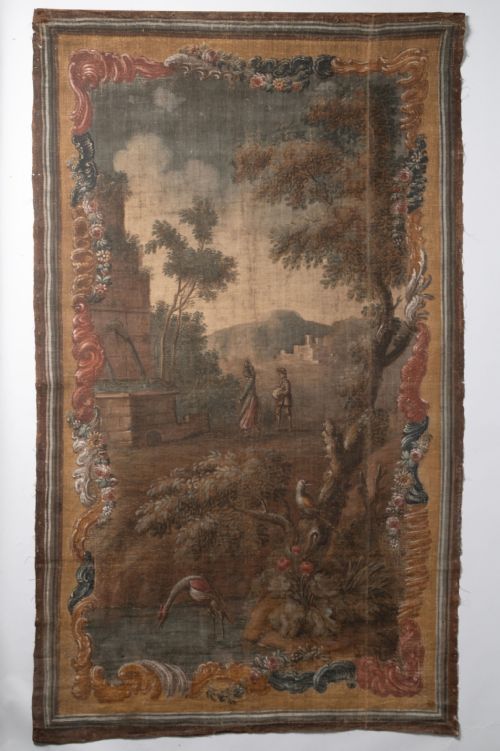
Buyers searching for an antique chateau wall tapestry encounter large woven panels and framed textile art originating primarily from French and Flemish traditions. The examples found here span from the seventeenth century through to the early twentieth century, showcasing enduring decorative ambition.
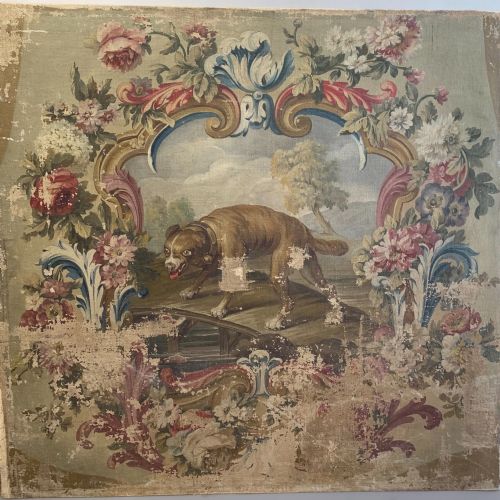
The most frequent items on this page are French wall tapestries, woven panels, and related textile works carrying distinct Rococo, Baroque, and Verdure styles. Alongside woven textiles, the selection occasionally includes related items such as needlework panels, cushion covers, and oil painted canvases used as cartoons for weaving.
Origins cluster around seventeenth-century Flemish production and eighteenth to nineteenth-century French chateau pieces. Buyers meet both grand expansive wall hangings and smaller framed textile panels that capture historic domestic decoration.
How they were made
These textiles rely principally on natural fibres including wool, silk, cotton, and linen, hand-woven to produce dense and intricate pictorial surfaces. Artisans constructed each wall hanging through traditional loom techniques that required months or years of careful colour blending.
Some works incorporate supplementary media, pairing woven textile art with wooden frames, gilt highlights, or oil paint on canvas when painters drafted preparatory cartoons for weavers. Verdure designs required nuanced shifts in green and earthy tones to depict lush woodland foliage.
Antique Chateau Wall Tapestry Retail Price Guide 2026
Typical asking prices for chateau wall tapestry among the pieces listed under this phrase on Sellingantiques today, from the lower quarter to the upper quarter. They describe what is for sale here now, not the wider market.
Styles recorded across the inventory include French Chateau, French Rococo, French Baroque, Flemish Baroque, and Rococo Revival.
What varies in quality
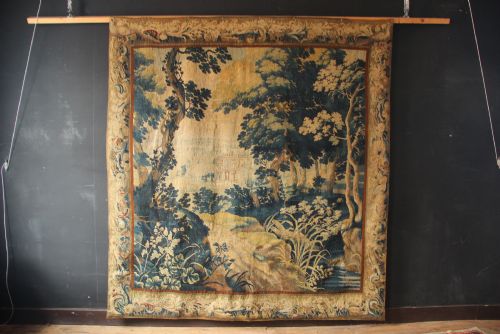
Quality rests upon the fineness of the weave and the complexity of the narrative or botanical design, distinguishing simple decorative panels from masterworks. Verdure tapestries show distinction in the depth of their foliage and the preservation of their original colour palette.
The integrity of the material fibres and the survival of early framing or mounting elements determine the standing of each piece. Finer works maintain crisp pictorial detail across large expanses of wool and silk.
The Antique Chateau Wall Tapestry Glossary
- Verdure tapestry
- A type of woven wall hanging depicting landscape, trees, foliage, and often birds or animals. These pieces rely heavily on green and earthy tones.
- Aubusson style
- A design tradition originating from the French town of Aubusson, known for pastoral scenes and floral motifs within classical borders.
- Cartoon
- A full-scale preparatory drawing or painting executed on canvas or paper, used by weavers as a precise guide for a tapestry.
- Needlework panel
- A piece created by stitching yarn or thread onto a canvas or linen ground by hand, producing a flat decorative textile surface.
- Flemish Baroque
- A seventeenth-century artistic style from Flanders characterised by dramatic movement, rich ornamentation, and grand narrative scale.
Antique Chateau Wall Tapestry: Frequently Asked Questions
How do I hang a heavy antique tapestry?
Large textile panels require even distribution of weight across the upper edge to prevent distortion of the weave. Dealers often recommend attaching a sturdy cotton sleeve to the reverse and sliding a flat wooden batten through it for wall mounting.
Direct contact with nails or pins damages the historical fibres over time. Proper support ensures the textile hangs flat without putting strain on the wool and silk yarns.
What is a verdure tapestry?
A verdure tapestry focuses on natural landscapes, typically featuring dense forests, trees, plants, and sometimes hidden animals. These pieces were extremely popular in French and Flemish chateaux for bringing the outdoors inside.
The colour palette is dominated by greens, browns, and ochres, creating a moody and atmospheric woodland scene across the wall.
How can I tell a seventeenth-century piece from a nineteenth-century one?
Dating relies on stylistic clues, dye analysis, and the specific weave structure used by the workshop. Seventeenth-century Flemish works often display heavier Baroque architectural borders and deeper, oxidised tones.
Nineteenth-century revivals frequently employ brighter synthetic-influenced dyes or cleaner cotton warps. Examining the reverse side reveals the hand-tied knots and yarn types characteristic of each era.