


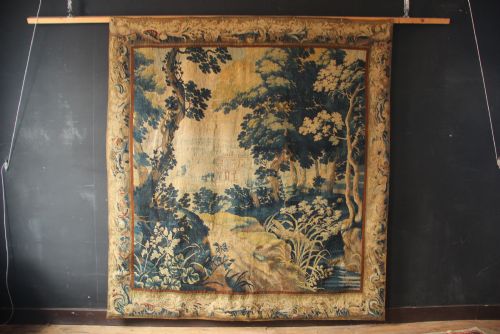


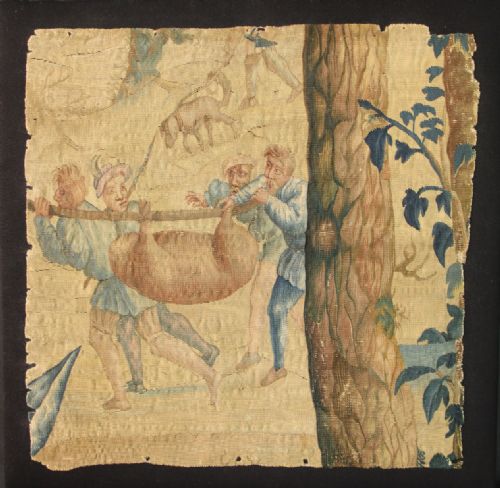


Verdure Tapestry Hanging
A verdure tapestry hanging brings deep woodland foliage and distant chateaux straight into a room, offering rich historical texture for large wall spaces.
Verdure Tapestry Hanging
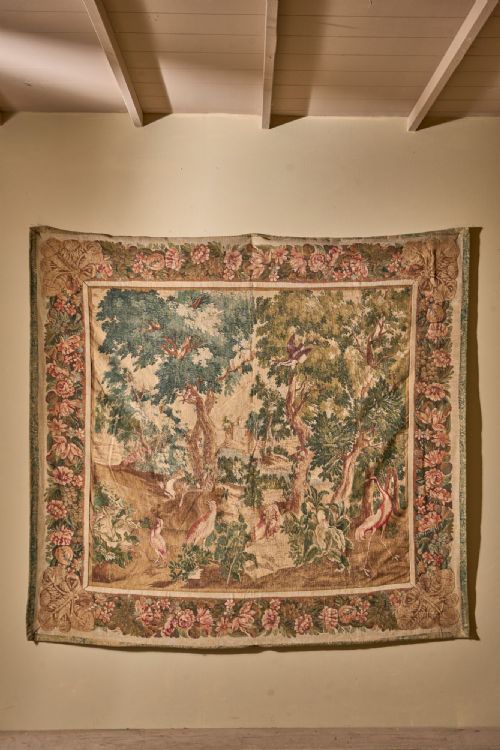
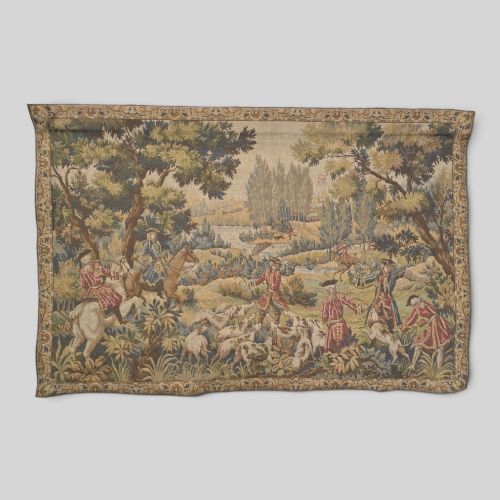
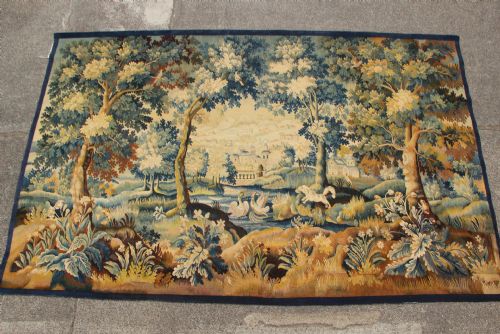
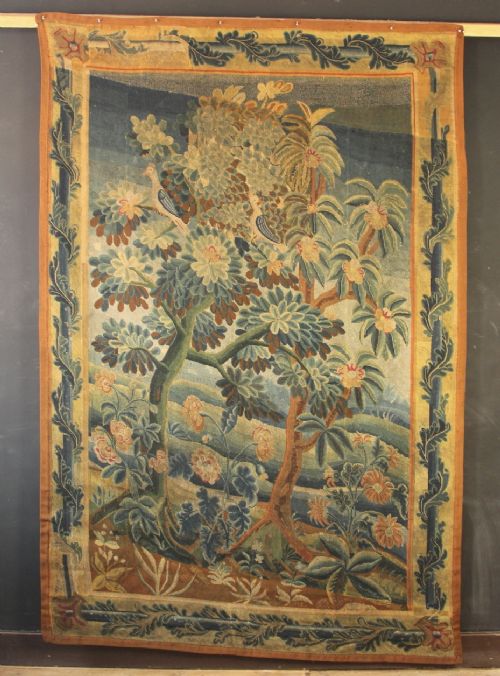
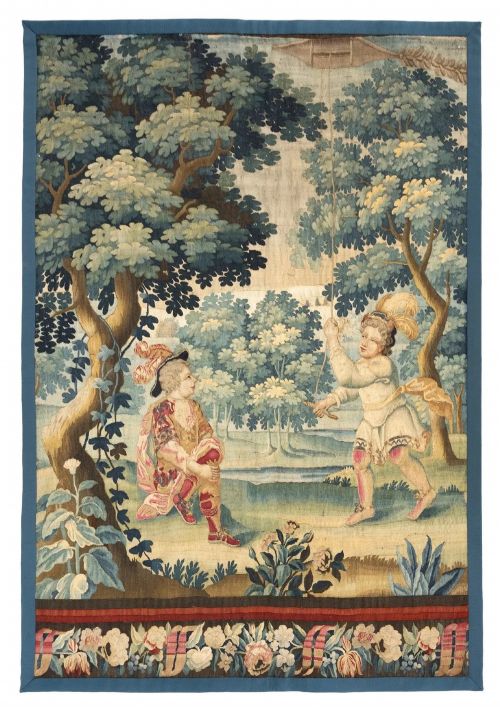
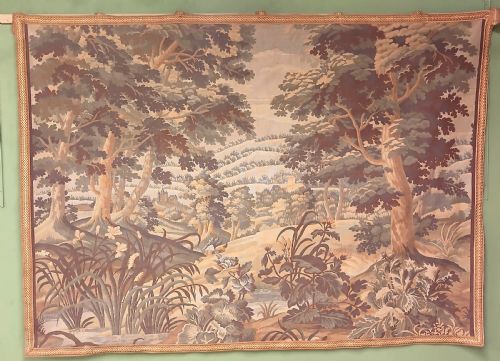
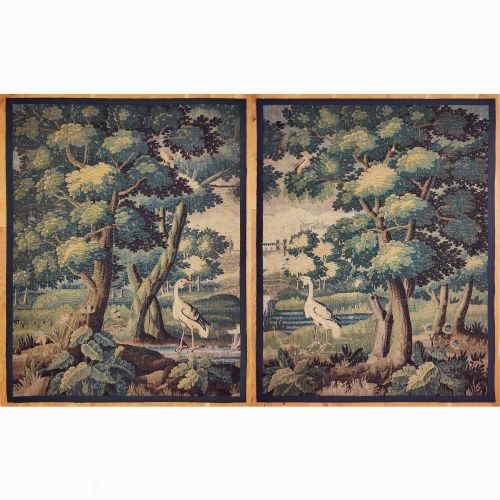
A verdure tapestry hanging displays dense botanical scenes, foliage, trees, and often distant architecture or wildlife, designed to cover large interior walls. When exploring verdure tapestry hanging options, pieces range from substantial 17th century Flemish and Aubusson works to later 19th century French panels.
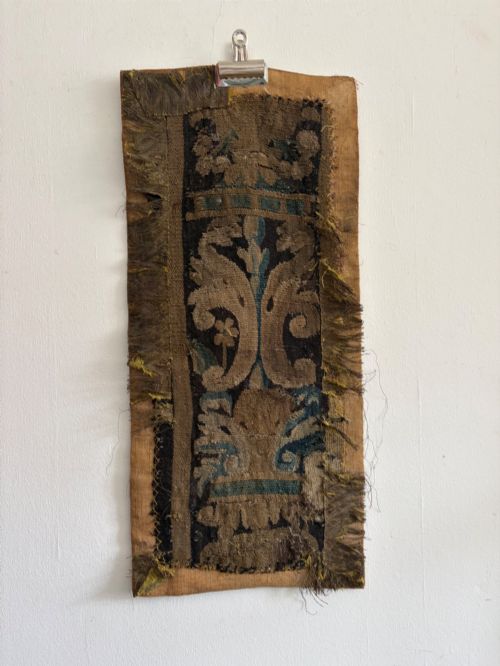
The selections span distinct historical periods, including the 17th century, 18th century, and 19th century. Forms vary from full wall tapestries and long panels to smaller border fragments mounted on linen or framed for display.
Origin points cluster around historical weaving centres in France and Flanders, with specific works attributed to Aubusson, Audenaarde, and wider European workshops. Buyers encounter everything from expansive pastoral scenes down to narrow vertical panels.
Materials and Techniques
These textiles rely on natural fibres, primarily wool combined with silk, cotton, and linen yarns to build depth and varied texture across the foliage. Weavers constructed these large panels on looms, interlacing warp and weft threads to form complex pictorial designs.
Certain pieces incorporate wooden elements for framing or support, while others utilise linen backings to mount smaller fragments or protect fragile borders. The interplay of wool and silk threads allowed makers to create subtle tonal shifts in the green and earth-toned verdure landscapes.
Several centuries ago, weavers hid tiny dogs and birds deep within the endless green foliage just to amuse observant castle guests.
Assessing Quality
Quality rests in the intricacy of the botanical detail and the fidelity of the perspective within the woodland landscape. Finer examples display subtle colour gradations in the foliage and well-defined architectural or animal elements in the background.
The condition of the textile fibres and the integrity of the weave separate standard room panels from exceptional historic survivals. Larger, cohesive compositions from established weaving regions demonstrate superior design ambition compared to isolated fragments.
The Verdure Tapestry Hanging Glossary
- Verdure tapestry
- A wall hanging dominated by landscape, foliage, trees, and plants, often featuring small animals or distant buildings. These scenes formed a major output for European weaving centres.
- Aubusson
- A town in France famous for its carpet and tapestry production from the 17th century onward. Workshops there produced notable pastoral and verdure wall hangings.
- Flemish Baroque
- An artistic style prevalent in Flanders during the 17th century, characterised by drama and rich detail. Tapestries from this tradition display exuberant, dense botanical compositions.
- Warp
- The vertical threads held in tension on a loom before the coloured weft threads are passed through. These foundational threads support the entire textile structure.
- Fragment
- A surviving portion of a larger historical textile, often mounted on linen or framed for preservation. Fragments allow collectors to own historic weaving work on a smaller scale.
Verdure Tapestry Hanging: Frequently Asked Questions
How were verdure tapestries originally used?
Historic households hung these large textiles on stone walls to insulate rooms against cold draughts and to display wealth and sophistication.
They served as portable decoration for great halls and chambers, often moving with noble families between different residences.
Where were these tapestries made?
The primary production centres were located in France, particularly Aubusson, and in Flemish towns such as Audenaarde.
Master weavers in these regions produced distinct regional styles influenced by Baroque and Rococo aesthetics.
How do I hang a heavy tapestry?
Large textiles require even weight distribution, often achieved by sewing a Velcro or sleeve heading along the top edge to attach to a concealed wooden batten.
Smaller panels and framed fragments can be mounted directly onto walls using standard picture-hanging hardware suited to their weight.
How should I care for an antique tapestry?
Protect the textile from direct sunlight to prevent the fading of wool and silk yarns over time.
Keep the hanging away from high-moisture areas and gently vacuum with a low suction setting through a protective mesh screen to remove dust.