

Blue Gilt Porcelain Urns
Blue gilt porcelain urns bring together deep cobalt bodies and shimmering gold leaf or ormolu mounts, bridging Regency elegance and Victorian display.
Blue Gilt Porcelain Urns
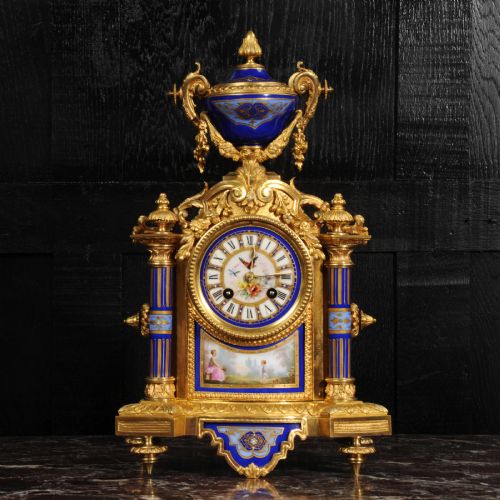
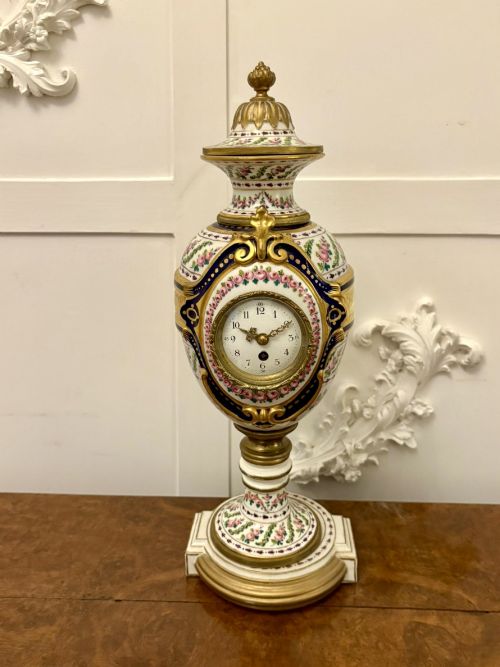
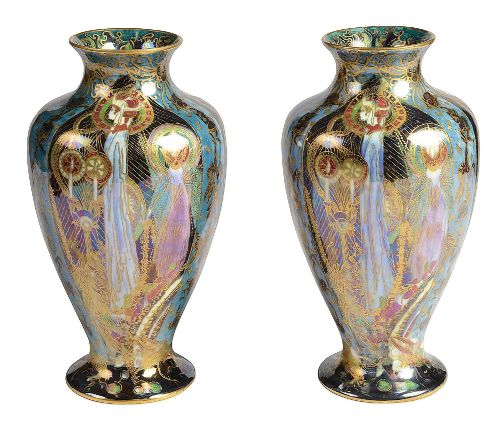
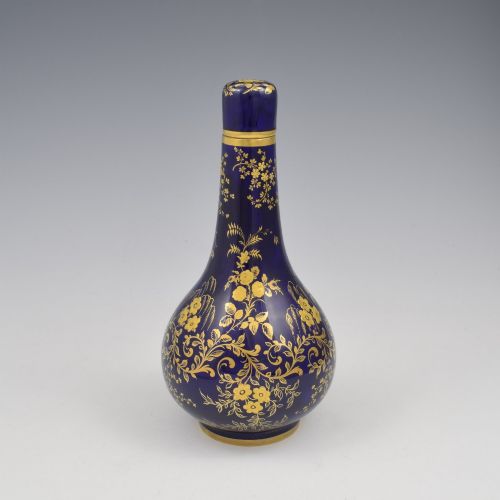
Blue gilt porcelain urns encompass decorative vases, lidded jars, mantel clocks, and table lamps originating from nineteenth-century European and Japanese kilns. The phrase draws together cobalt ceramic bodies enriched with gold leaf, enamel, and gilt bronze mounts.
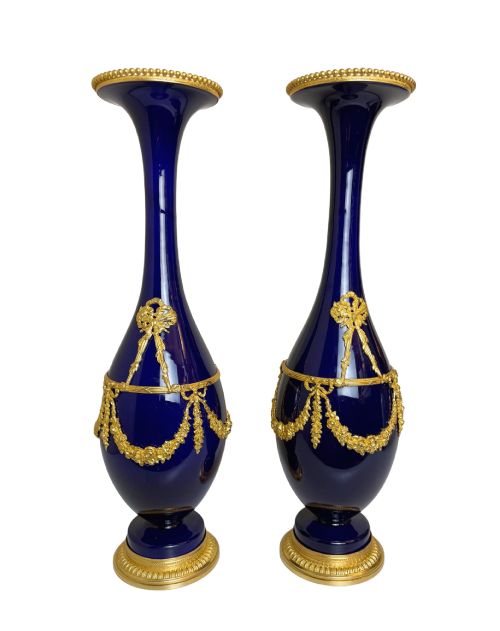
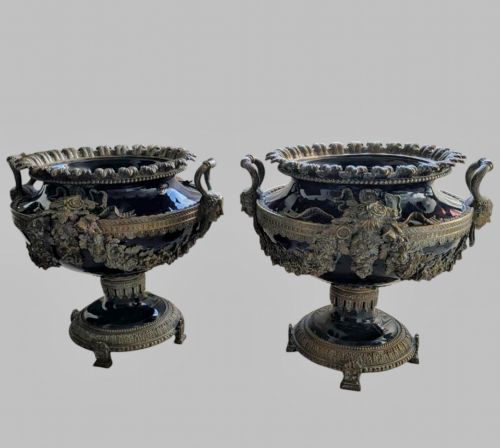
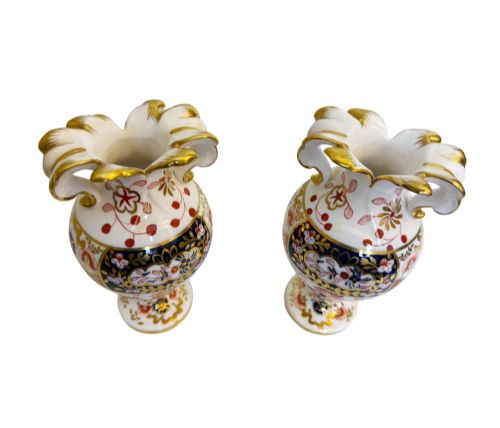
Makers across France, England, and Japan produced these pieces in styles spanning Regency classicism, French Rococo Revival, and Meiji period aesthetics. Many survive as matched pairs intended for mantelpieces and console tables.
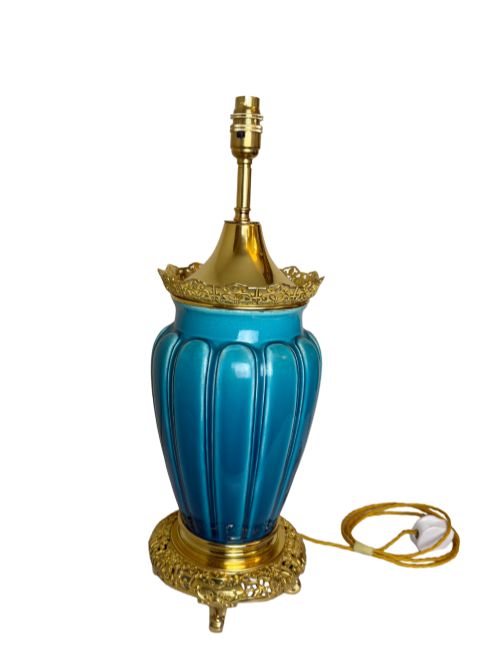
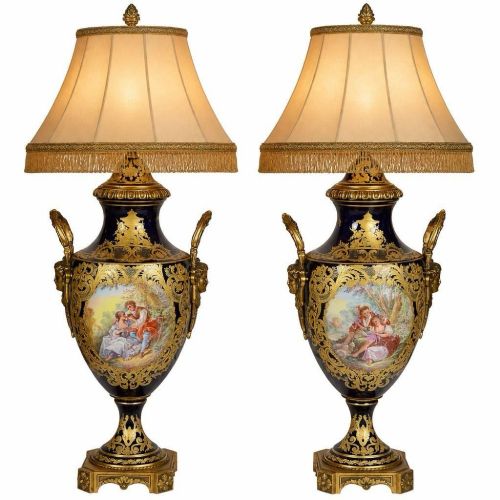
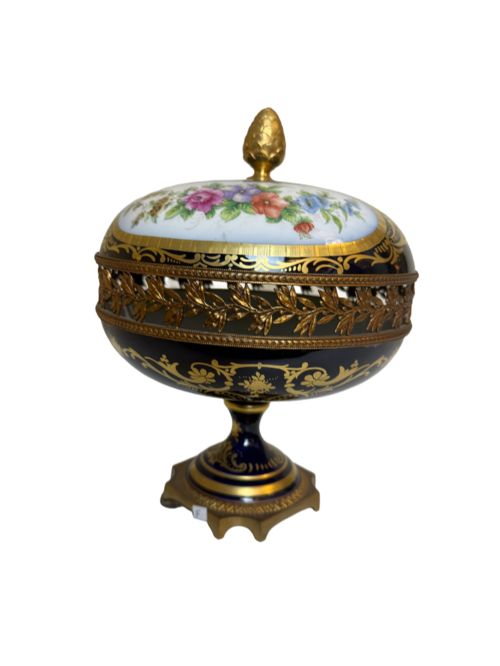
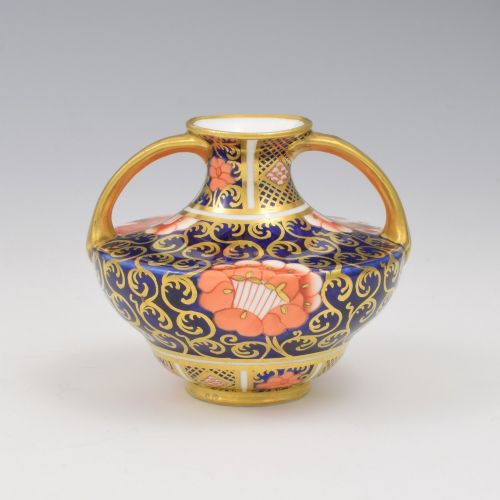
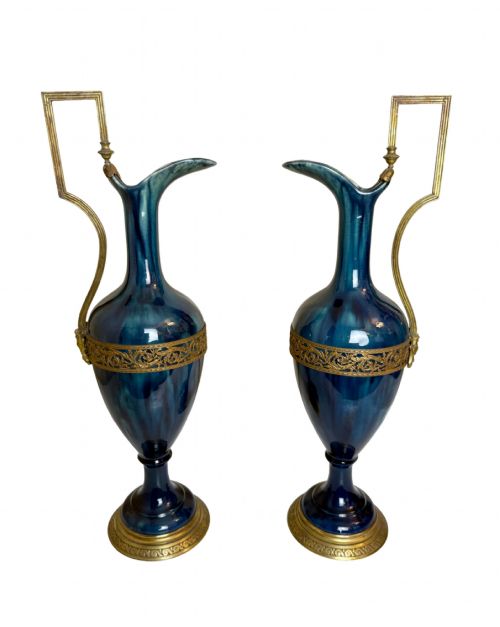
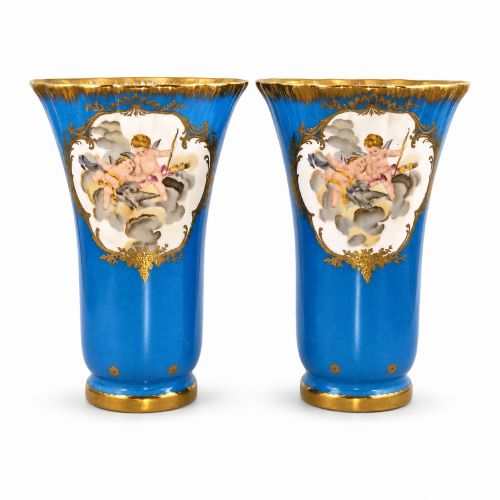
The selection ranges from Sevres-style French vessels with ormolu trim to English ironstone and Japanese Satsuma ware with cobalt grounds. Buyers encounter both utilitarian urns and objects later converted into lamps or clock housings.
How they were made
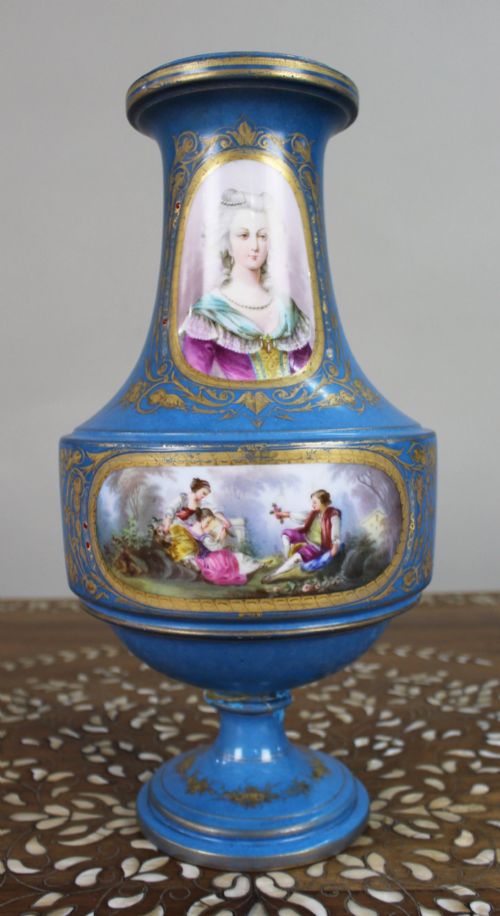
Potters shaped ceramic clay, porcelain, or ironstone bodies before applying rich blue glazes such as bleu celeste or mazarine blue. Artisans then hand-painted panels or applied raised moriage details prior to firing.
Metalworkers cast ormolu and gilt bronze mounts to encase the ceramic rims, handles, and bases. Gilders applied gold leaf or liquid gold highlights that required subsequent kiln firing to bond with the glaze.
Listings feature porcelain, earthenware, ceramic, and ironstone bodies paired with ormolu, gilt bronze, and enamel across the nineteenth and early twentieth centuries.
What varies in quality
The precision of the hand-painted reserves and the crispness of the gilt tooling dictate the grade of each piece. Superior examples display finely rendered figures or floral scenes framed by clean, hand-applied gilding rather than mass-produced transfer prints.
The weight and chasing of the ormolu or gilt bronze mounts distinguish workshop standards. Heavier, deeply chiselled metalwork securely fitted to the porcelain indicates a higher tier of production than thin, plain brass trims.
Japy Freres·Royal Crown Derby·Chamberlain Worcester·Samson Paris·Royal Doulton·Coalport
The Blue Gilt Porcelain Urns Glossary
- Ormolu
- Gilded bronze mounts cast and chased to ornament furniture, clocks, and porcelain bases. This technique was widely utilised by nineteenth-century French makers.
- Bleu Celeste
- A bright turquoise or sky-blue porcelain ground colour popular in French workshops. It frequently provides a contrasting backdrop for gilded scrollwork.
- Moriage
- A Japanese ceramic decoration technique using piped clay slips to create raised patterns. Artisans often gilt these textured surfaces with gold leaf.
- Cassolette
- A decorative vessel shaped as an urn, designed with a reversible lid that functions as a burner or a solid cover. They appear in pairs on gilt bronze bases.
- Ironstone
- A heavy, durable ceramic paste developed in England as a robust alternative to porcelain. It takes blue glazes and gold transfer designs effectively.
Blue Gilt Porcelain Urns: Frequently Asked Questions
Were these urns originally made as lamps?
Most nineteenth-century pieces began as decorative mantel vases, lidded jars, or clock housings rather than lighting fixtures. Wiring and lamp fittings were frequently added later in their history to suit changing domestic interiors.
Converters often preserved the original ceramic body by running cords through existing apertures or mounting the base without drilling the porcelain.
How can I tell French pieces from English ones?
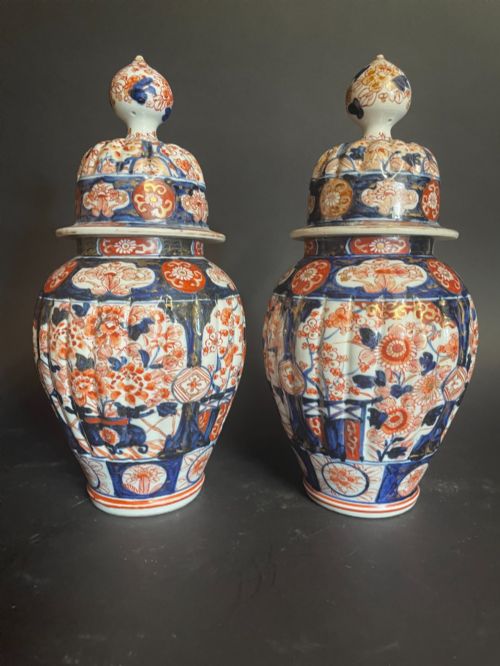
French pieces often lean towards rococo revival styles with extensive ormolu mounts and bleu celeste grounds reminiscent of Sevres workshops. English examples commonly utilise ironstone or bone china bodies featuring Imari palettes or transfer-printed patterns.
Examining the underside for factory marks, pattern numbers, or characteristic paste colours helps confirm the specific origin.
What is the difference between an urn and a vase?
Urns typically feature a covered body set upon a pedestal foot, often flanked by handles, reflecting classical funerary or architectural vessel forms. Vases encompass a broader category of open-topped display vessels designed primarily for holding flowers or standing alone.
In marketplace terminology, the two terms often overlap when describing decorative nineteenth-century mantel ornaments.