


Blue Ceramic Floor Vase
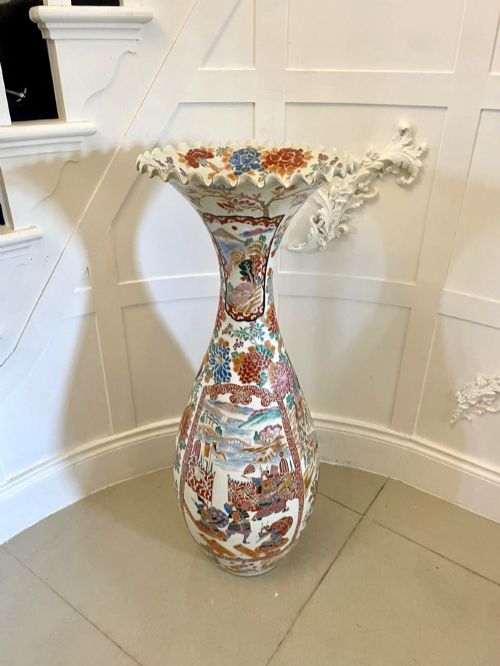
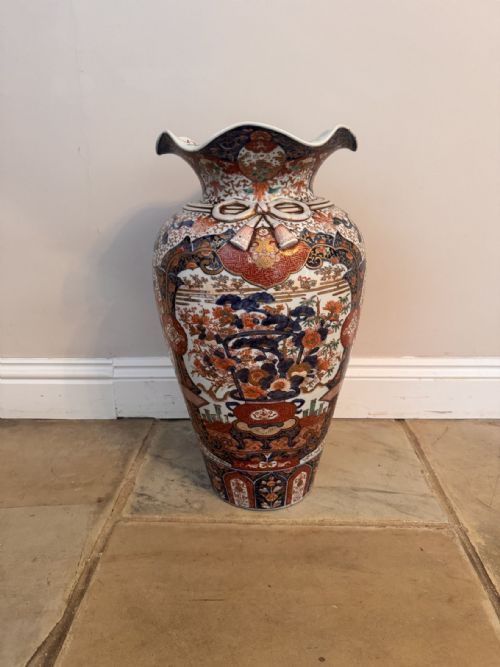
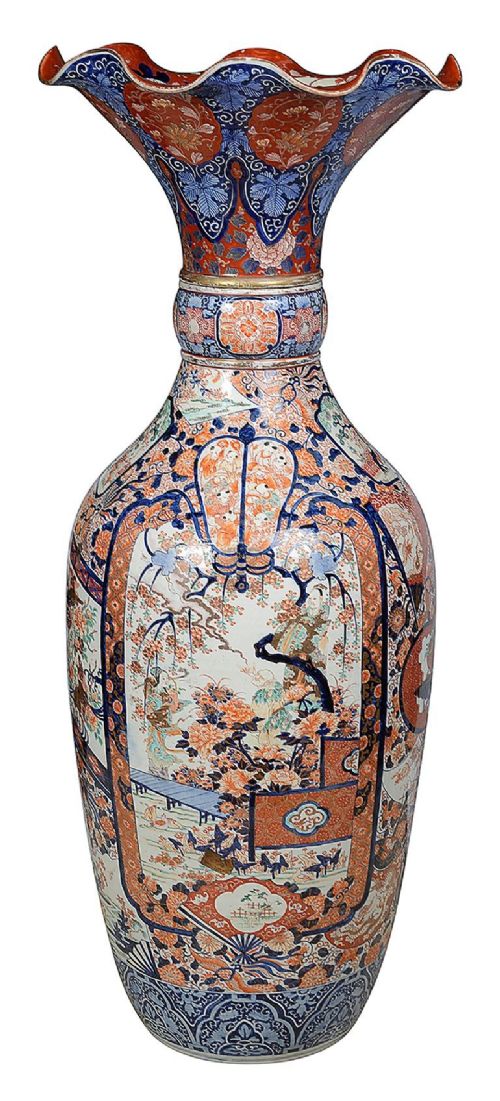
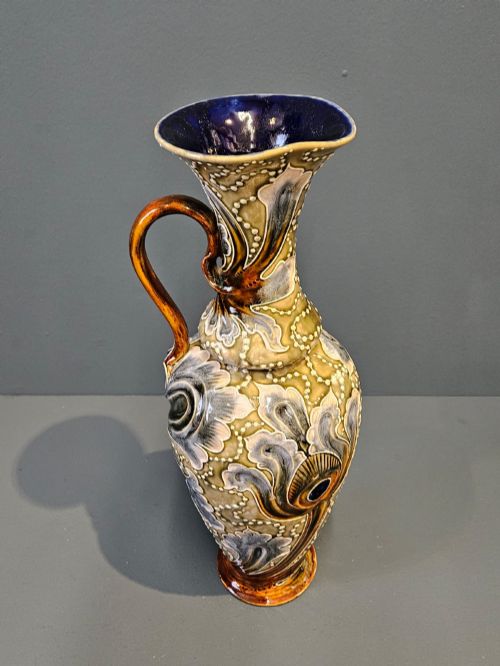
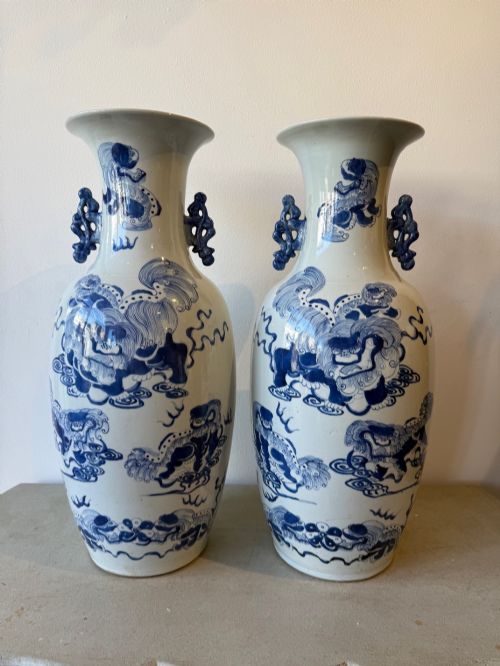
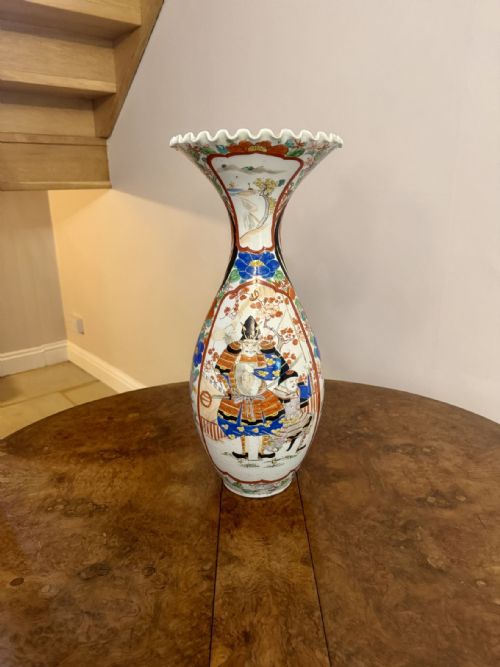
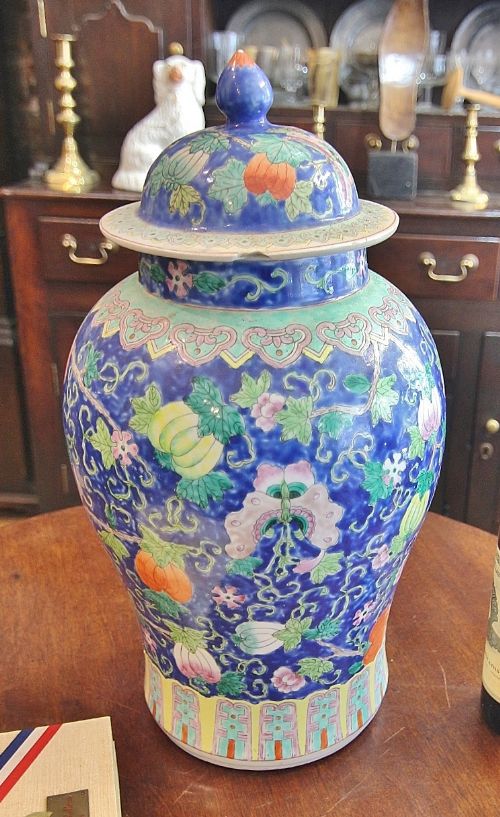
A blue ceramic floor vase commands space with substantial scale, and the pieces found here span 19th Century Japanese Imari to Chinese blue and white and Victorian earthenware.
Blue Ceramic Floor Vase
When you search for a blue ceramic floor vase, you encounter large vessels designed to stand directly on the ground rather than upon furniture. The selection here leans heavily towards grand 19th Century Japanese Imari examples, alongside Chinese blue and white pieces and Victorian earthenware forms.
These substantial objects range from tall cylindrical shapes to lidded vessels and monumental pairs standing well over a metre high. Alongside traditional vases, the listings include decorative ewers, floor lamps converted from torchere standards, and majolica pieces on pedestals.
How they were made
Potters shaped these large forms in porcelain, earthenware, and heavy ceramic bodies, often applying intricate glazes and the distinctive blue and white or Imari palette. Certain pieces incorporate applied details such as gold leaf, enamel, and lacquer panels set into the ceramic body.
The physical construction required considerable skill to prevent distortion during high-temperature firing, particularly given the monumental height achieved by makers working in the 19th Century.
Several towering Imari vases stand taller than the average person, demanding rooms with proper headroom and an absence of clumsy pets.
What varies in quality
Quality reveals itself in the crispness of the hand-painted cobalt and iron-red decoration, the depth of the glaze, and the ambition of the scale. Pieces featuring additional enrichment like gold leaf or detailed lacquer panels demonstrate greater workshop investment.
Structural stability in such tall vessels distinguishes superior pieces, as does the balance of the form and the preservation of the original surface over decades of standing upon floors.
Doulton Lambeth Ware·Kinkozan·Masons Ironstone·Brannam
The Blue Ceramic Floor Vase Glossary
- Imari
- A traditional Japanese style of porcelain decorated in underglaze blue, iron red, and gilt. This palette dominates the larger floor-standing pieces from the nineteenth century.
- Earthenware
- A porous ceramic body fired at lower temperatures than porcelain. It forms the foundation for heavy Victorian wares and art pottery.
- Majolica
- A type of tin-glazed earthenware known for brightly coloured lead glazes. Italian examples often incorporate substantial pedestals.
- Porcelain
- A fine, dense ceramic material fired at high temperatures. It provides the smooth white ground characteristic of many large Chinese and Japanese vases.
- Ewer
- A large jug with a wide spout and handle, used historically for pouring water. Several decorative examples appear among these floor vessels.
Blue Ceramic Floor Vase: Frequently Asked Questions
Where should a floor vase go?
These large vessels suit grand hallways, empty corners, or wide landings where their height and decorative palette can be appreciated without obstruction.
Because they stand independently on the ground, they work best away from heavy foot traffic while remaining a focal point in a large room.
How do I date a Japanese Imari vase?
Nineteenth-century pieces often exhibit deep underglaze cobalt combined with iron red and gilt, reflecting the output of the Meiji period and earlier decades.
Examining the weight of the ceramic body and the style of the hand-painted motifs helps distinguish Victorian-era imports from later twentieth-century production.
Can these vases hold water?
Many historic ceramic floor vessels function primarily as decorative architectural elements rather than functional planters or umbrella stands.
Using them for dried stems or leaving them empty preserves the interior glaze and protects the historic fabric of the piece.
What is the difference between Imari and blue and white?
While blue and white porcelain relies exclusively on cobalt oxide under a clear glaze, Imari incorporates contrasting iron red and gold leaf.
Both styles appear frequently across the large nineteenth-century pieces gathered in this selection.