


Blue White Temple Jar
A blue white temple jar brings symmetry and deep cobalt pigment to a room, whether in the form of a lidded ginger jar or a converted lamp.
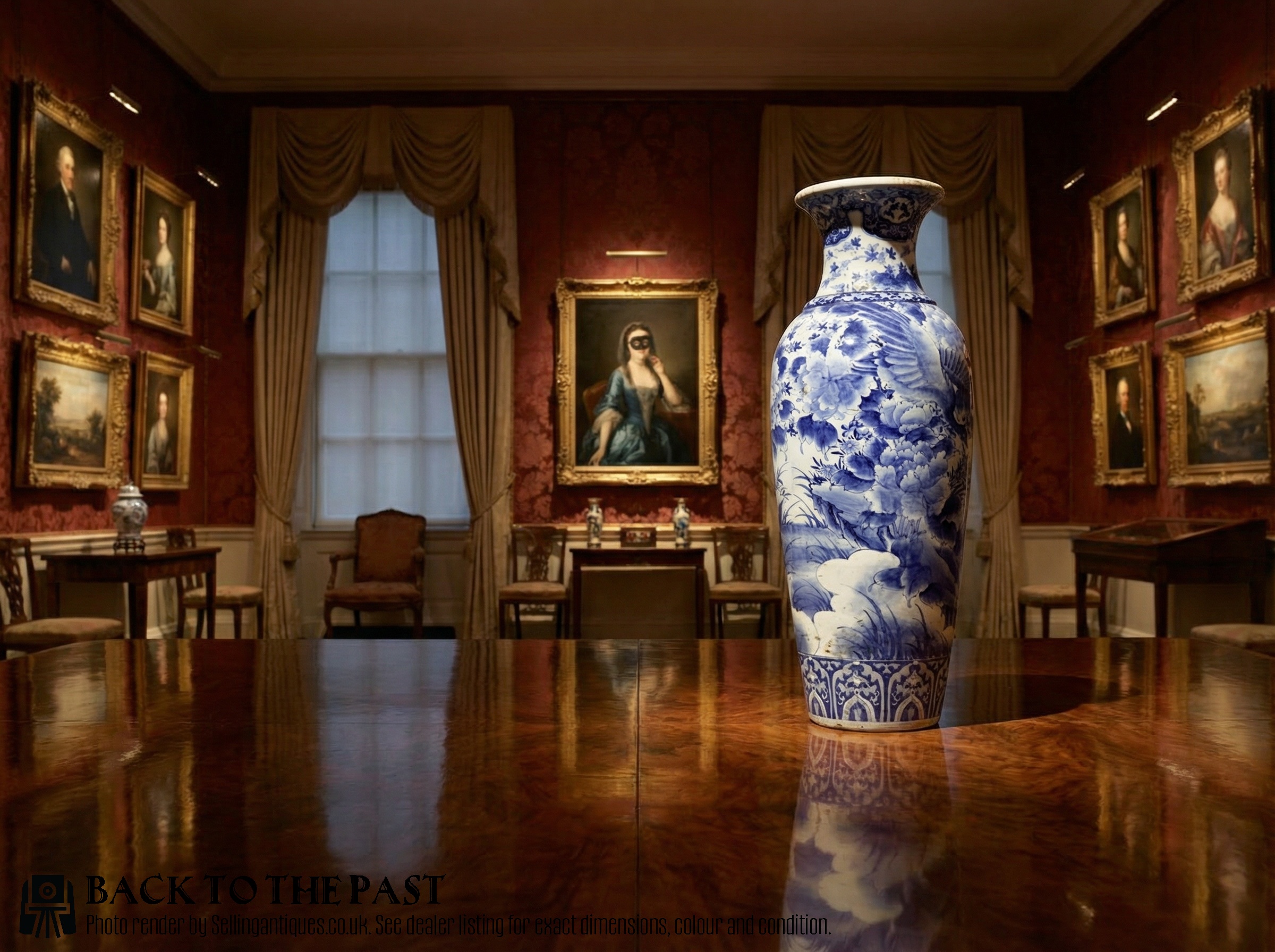
Blue White Temple Jar
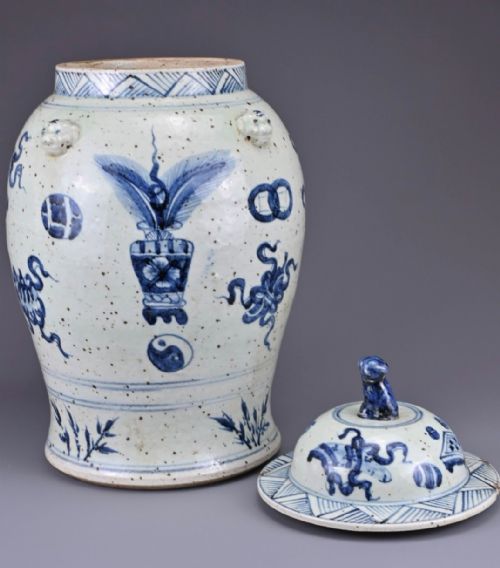
A blue white temple jar is primarily represented by large porcelain vessels and lidded ginger jars originating from Chinese and Japanese traditions. Buyers encounter pieces spanning several centuries, including seventeenth-century Arita wares, eighteenth-century designs, and nineteenth-century Qing Dynasty productions.
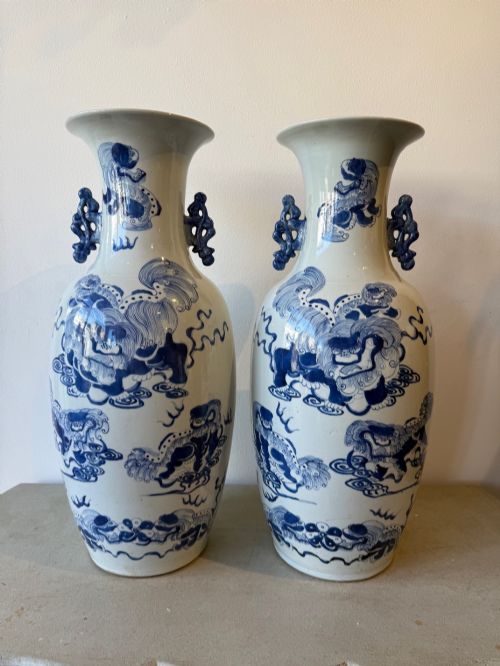
The inventory includes matched pairs, single lidded urns, and vases adapted as table lamps. These objects serve as prominent decorative focal points, often retaining their original covers or displaying classic baluster proportions.

Materials and construction
The foundation of every piece is hard-fired ceramic or porcelain, painted with cobalt pigment beneath a clear glaze to achieve the characteristic blue and white palette. Certain decorative variations incorporate additional enamel colours, gold leaf accents, or mounted hardwood elements.
Vessels are shaped on the potter's wheel or formed in sections, then hand-painted before undergoing high-temperature kiln firing. Lidded jars require precise shrinkage control during firing so that the cover fits the shoulder of the vessel correctly.
Several jars have spent time moonlighting as table lamps before returning to their original lidded state.
Assessing the execution
Quality rests upon the depth and clarity of the cobalt glaze painting, where fluid brushwork distinguishes superior examples from repetitive workshop output. The crispness of the porcelain body and the successful control of kiln temperature during firing also dictate the fineness of the surface.
The survival of an original matching cover significantly elevates a piece, as does the crisp preservation of underglaze decoration without heavy rubbing. Edo and Meiji period Japanese examples show distinct regional painting styles that influence desirability among collectors.
Fukagawa
The Blue White Temple Jar Glossary
- Cobalt glaze
- A metallic oxide pigment applied beneath the transparent glaze to produce deep blue tones upon firing. This mineral withstands high kiln temperatures without losing definition.
- Imari
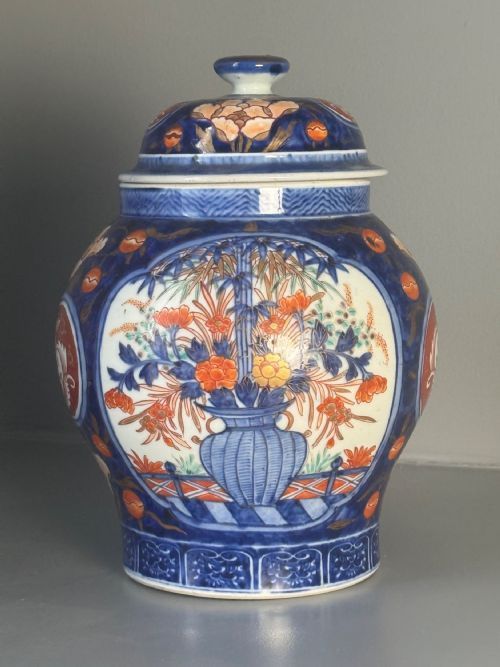
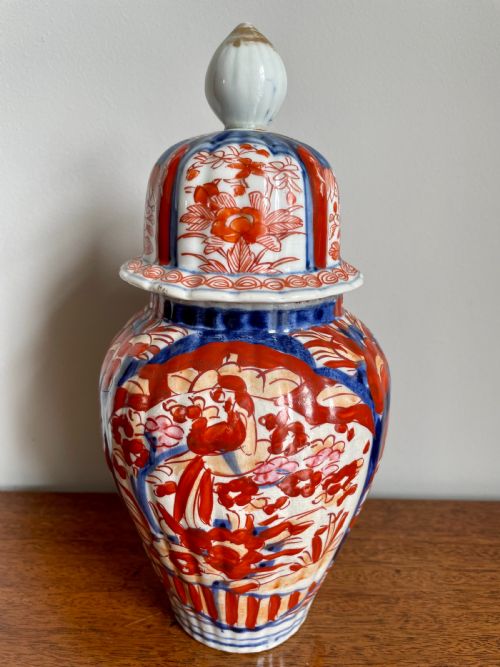
- A style of Japanese porcelain featuring underglaze blue combined with iron red and gold enamel overglaze. The technique originated in Arita and was widely exported.
- Kangxi
- A period of the Qing Dynasty spanning the seventeenth and eighteenth centuries, known for exceptional porcelain production. Later makers frequently referenced this era in their designs and marks.
- Meiji period
- An era of Japanese history marked by significant artistic output and international trade in decorative arts. Porcelain from this time often displays meticulous detail and refined potting.
- Ovid jar
- A vessel shape characterised by an egg-like, rounded body tapering towards the base and neck. This form is common among traditional lidded ginger jars.
Blue White Temple Jar: Frequently Asked Questions
How do I date a blue white temple jar?
Dating relies on stylistic clues, potting characteristics, and any cyclical marks found on the base of the porcelain. Comparison with documented pieces from periods such as the Qing Dynasty or the Meiji era helps establish an approximate decade of origin.
Changes in the shade of the cobalt blue and the composition of the clay body also provide reliable indicators of age for experienced handlers.
Were these jars used to store ginger?
Many jars of this general shape were originally produced to hold commodities such as spices, tea, or ginger for transport and storage. Over time, their decorative qualities led to them being displayed purely as ornamental items in European and Asian interiors.
Larger lidded vessels were often displayed in pairs on mantelpieces or architectural ledges, functioning as decorative centerpieces rather than utilitarian containers.
How should I display a lidded jar at home?
These jars command attention when placed on heavy wooden furniture, sideboards, or dedicated display pedestals where their painted motifs are clearly visible. Their strong vertical presence makes them effective for balancing symmetrical arrangements in traditional and eclectic rooms.
Care should be taken to place them on stable surfaces away from high-traffic zones, particularly when the vessel retains its original separate lid.
What is the difference between Chinese and Japanese pieces?
Chinese pieces often emphasise flowing floral scrolls and symbolic landscapes executed in deep cobalt tones under the glaze. Japanese counterparts, such as those from Arita or the Meiji period, frequently introduce contrasting enamel colours and gilding alongside the blue pigment.
Forms and potting techniques also vary between the regions, reflecting distinct regional aesthetics and domestic kiln traditions.