


Black Wooden Mantel Clock
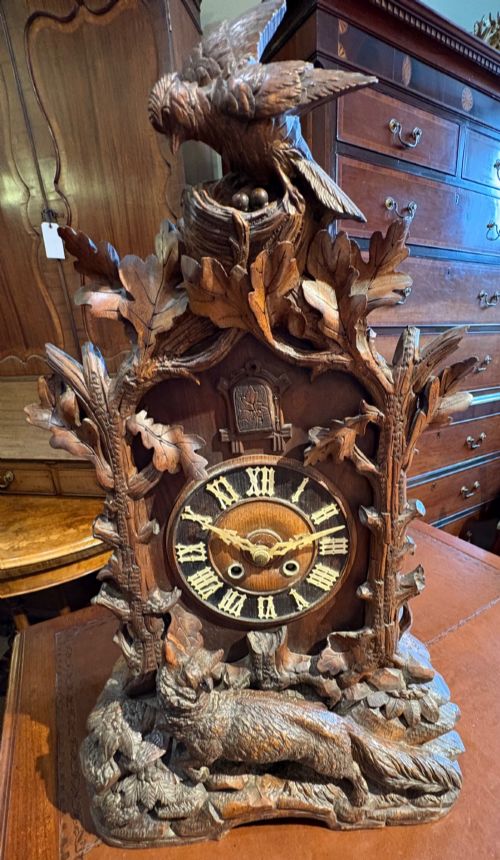
A black wooden mantel clock brings deep tones and mechanical precision to a room, ranging from simple ebonised timber cases to elaborate carved forest designs.
Black Wooden Mantel Clock
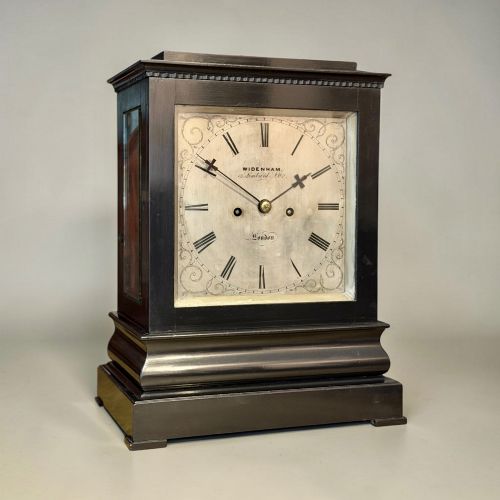
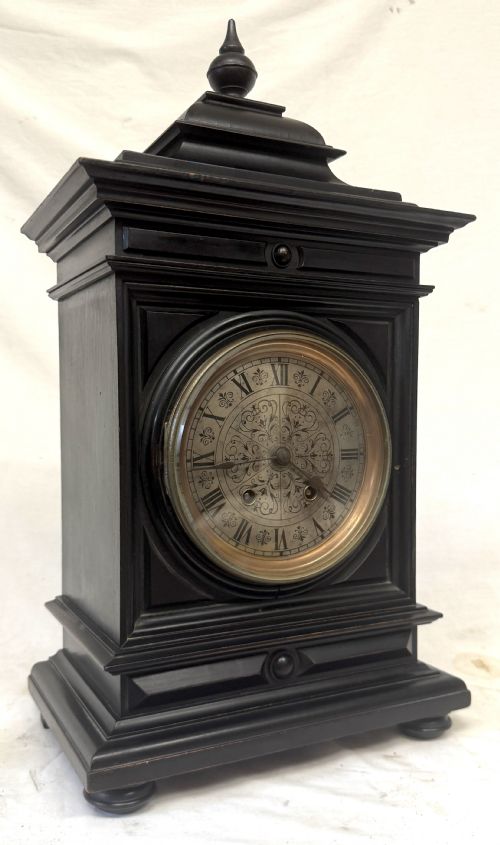
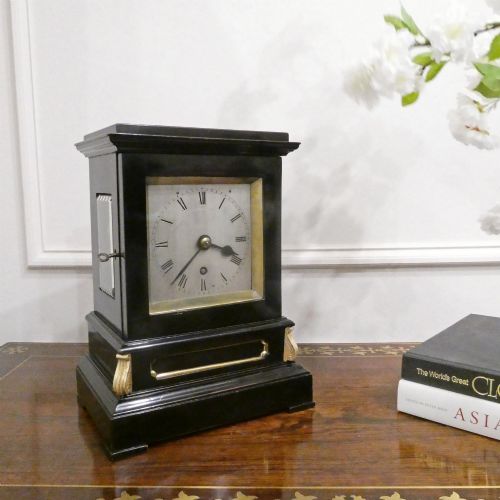
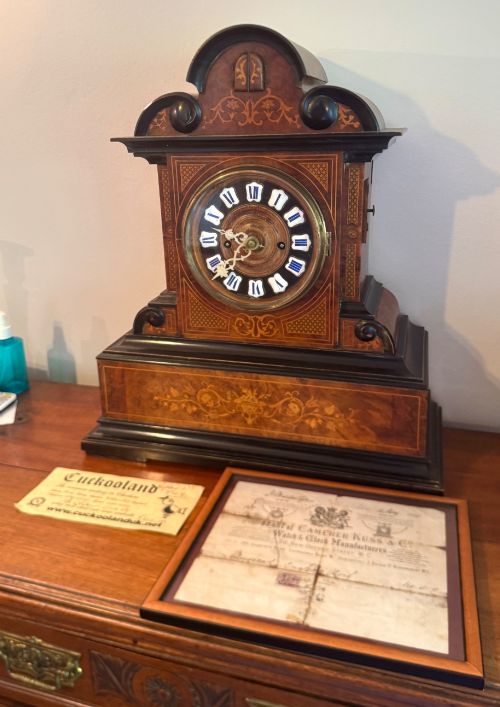
When you search for a black wooden mantel clock, you encounter a variety of forms spanning several centuries, from English bracket clocks to Swiss chalet carvings. Ebonised wood and dark walnut dominate the selection, offering a formal presence that contrasts sharply with lighter interior palettes.
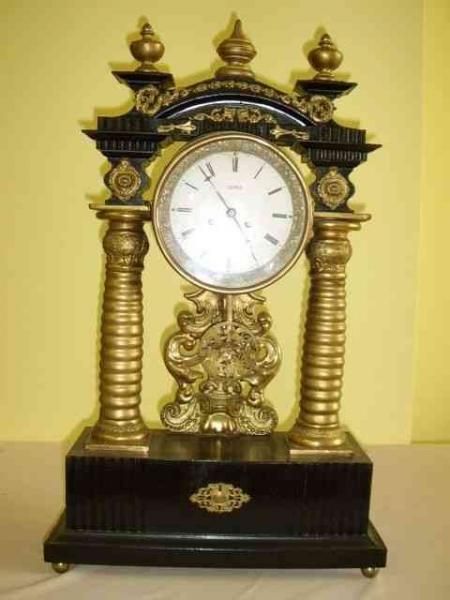
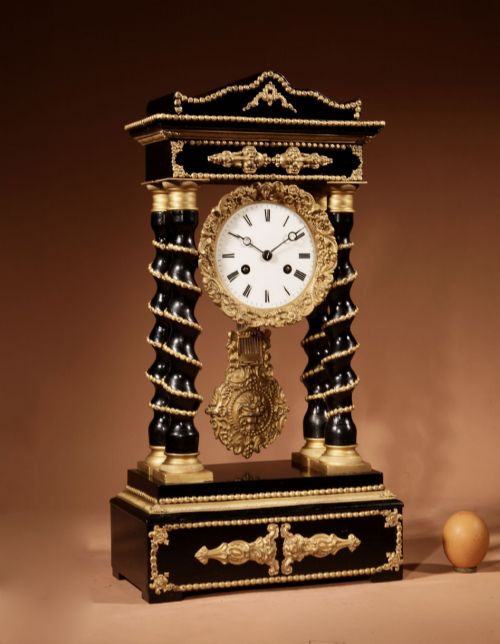
The most common examples you meet on this page date from the nineteenth century, including Victorian ebonised designs and Black Forest carved wooden cases. These range from architectural portico clocks to diminutive library pieces and musical bracket clocks.
Earlier pieces from the eighteenth century appear alongside later nineteenth-century examples, showing shifts from Georgian restraint to ornate Victorian and French Rococo styling. Each era brings distinct dial treatments, ranging from silvered brass to painted enamel.
Materials and construction
Cases combine structural timbers such as walnut or linden wood with ebonised finishes that imitate expensive ebony. Carved details in Black Forest pieces display intricate hand-chiselling of natural motifs directly into the timber.
Movements rely on brass components, fusee mechanisms, and striking trains often paired with silvered or enamel dials. Ormolu mounts, gilded accents, and glass display domes frequently complete the presentation of these timepieces.
Black Wooden Mantel Clock Retail Price Guide 2026
Typical asking prices for black wooden mantel clock among the pieces listed under this phrase on Sellingantiques today, from the lower quarter to the upper quarter. They describe what is for sale here now, not the wider market.
Listings feature ebonised wood, walnut, linden wood, and brass across Victorian, Regency, and Georgian periods.
Assessing quality
Quality rests in the crispness of the timber carving and the depth of the ebonised finish. Finer examples display meticulous hand-carving on linden wood and sharp architectural mouldings rather than cast resin or soft ornamentation.
Mechanical complexity separates standard timepieces from high-end bracket and portico clocks. The presence of triple fusee movements, musical chimes, and signed maker dials elevates a piece significantly.
Widenham of London·Lenzkirch·Bergen & Co·Des Granges of London·Andrew Marchant of London·John Leroux·Barraud & Lunds·Joseph Lum·Wm. Gilbert·Junghans
The Black Wooden Mantel Clock Glossary
- Ebonised
- Wood stained or painted to resemble ebony. This dark, polished finish was widely used on Victorian and Georgian clock cases to create a formal appearance.
- Fusee
- A conical pulley used in mechanical clocks to maintain even drive force as the mainspring unwinds. It ensures more accurate timekeeping throughout the running cycle.
- Bracket clock
- A portable spring-driven clock originally designed to sit on a wall bracket. Later versions stood directly on mantelpieces and desks.
- Portico clock
- A clock housed within a architectural frame supported by columns. These neoclassical designs often feature prominent pendulums swinging between the pillars.
- Verge escapement
- An early timing mechanism regulating the release of gear trains. It requires careful setup and appears in eighteenth-century bracket clocks.
Black Wooden Mantel Clock: Frequently Asked Questions
What is a fusee movement?
A fusee is a conical drum inside mechanical clocks that equalises the declining power of the mainspring as it unwinds. This clever gearing helps the clock maintain steady accuracy.
You find fusee movements in better quality English bracket and table clocks from the eighteenth and nineteenth centuries.
How do I wind my mantel clock?
Wind the clock using the correct key on the designated arbours located on the dial face. Turn gently until you feel resistance, avoiding overwinding.
Most eight-day movements require a weekly turn, while single fusee or daily variations need more frequent attention to keep running.
Are Black Forest clocks German or Swiss?
Black Forest clocks originate from a mountainous region spanning parts of Germany and Switzerland. Both areas produced exceptional wood-carved clocks during the nineteenth century.
Attribution often depends on specific maker labels or regional carving styles, as artisans from both sides of the border worked in similar traditions.
What is an ebonised case?
An ebonised case is ordinary timber, such as beech or fruitwood, treated with stain and polish to imitate solid ebony. This technique was popular in Victorian and earlier periods for a sleek look.
Inspect the edges and corners to see the underlying grain where the dark surface has softened through age and handling.