
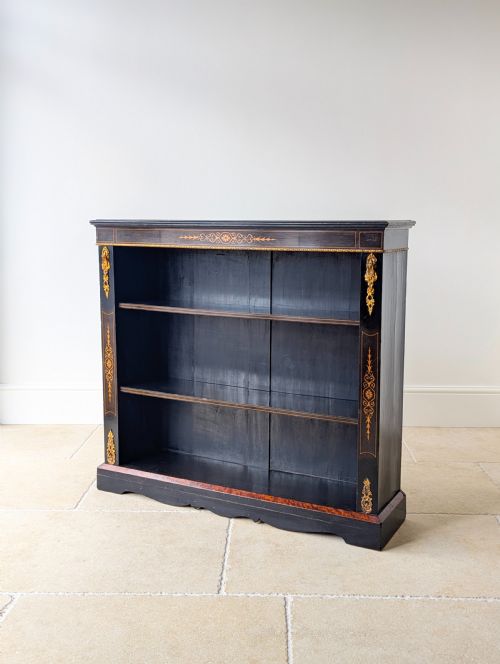


Black Ebonised Display Cabinet
A black ebonised display cabinet brings dark timber and polished glass together to hold porcelain and metalwork with quiet authority.
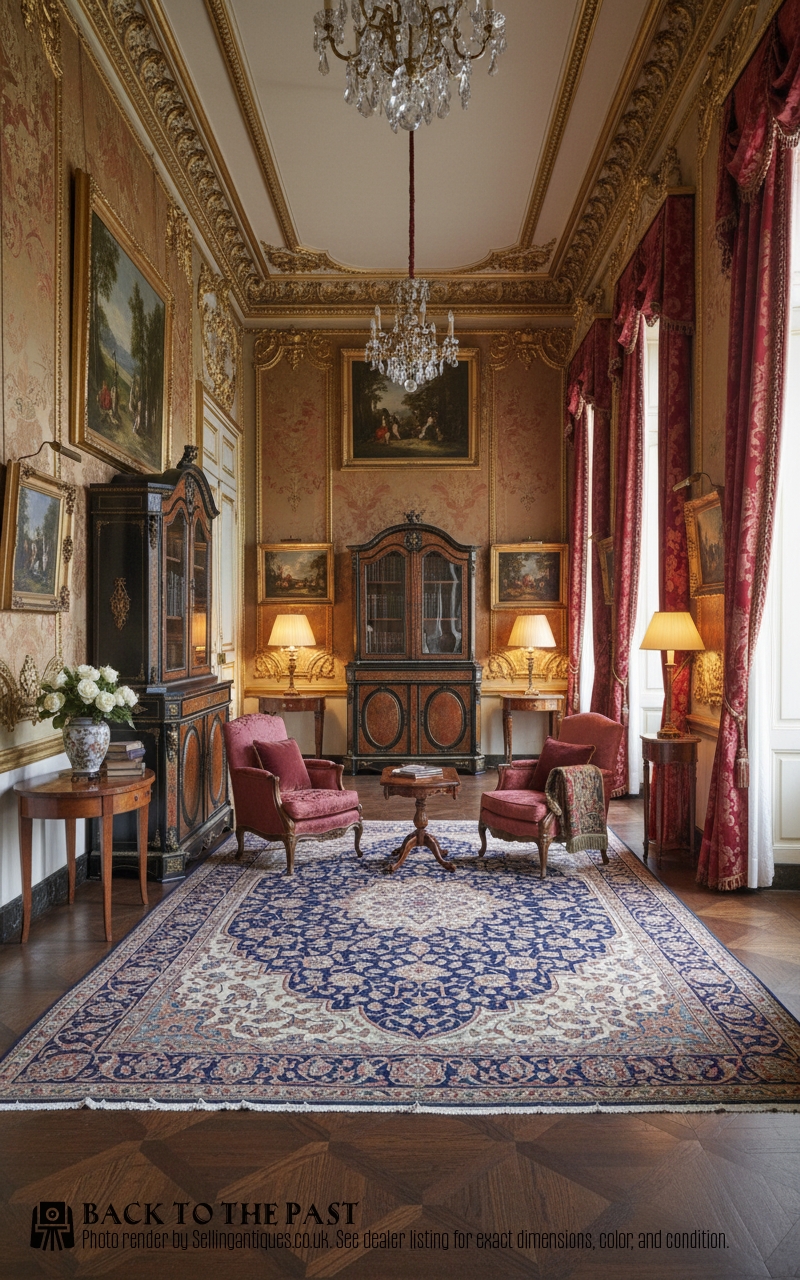
Black Ebonised Display Cabinet
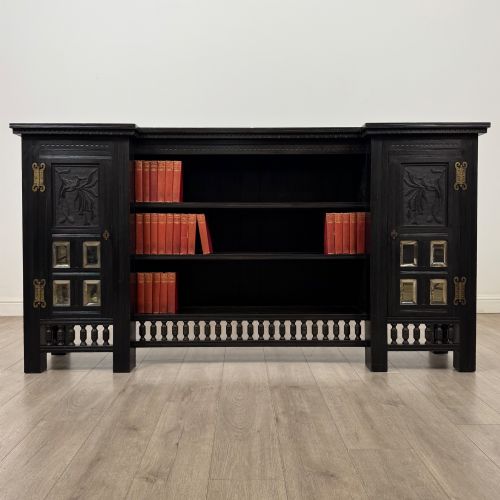
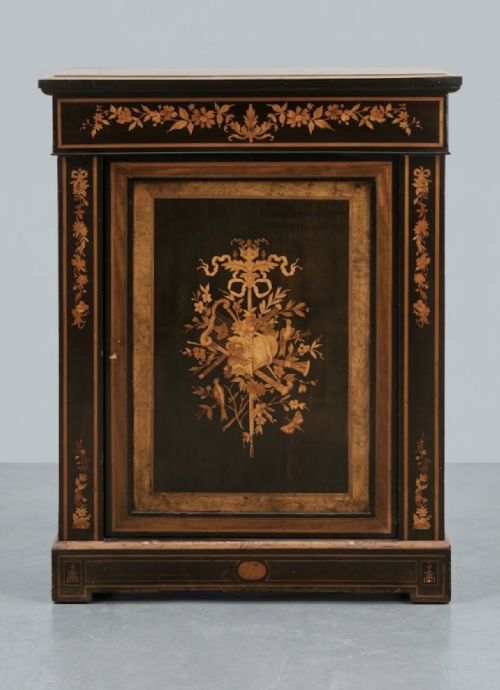
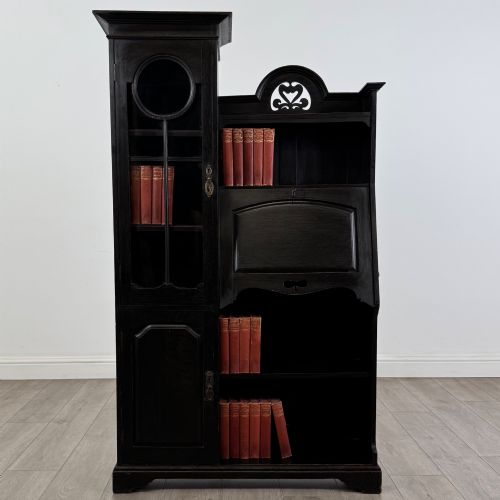
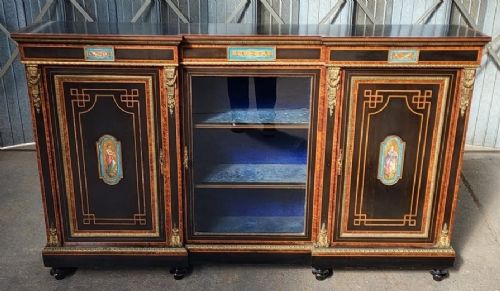
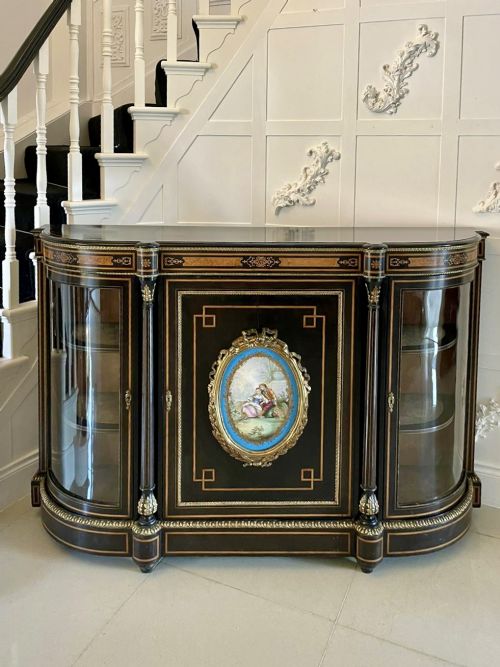
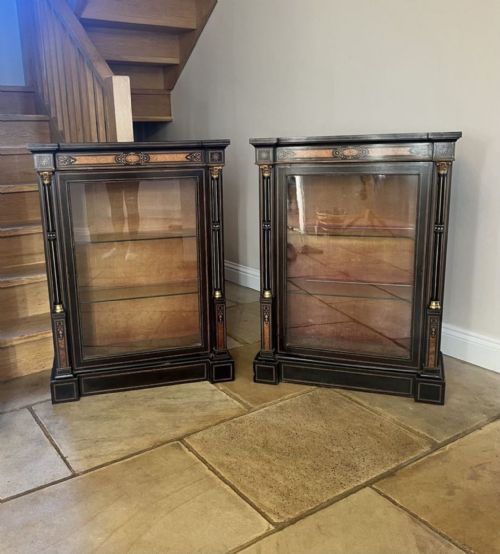
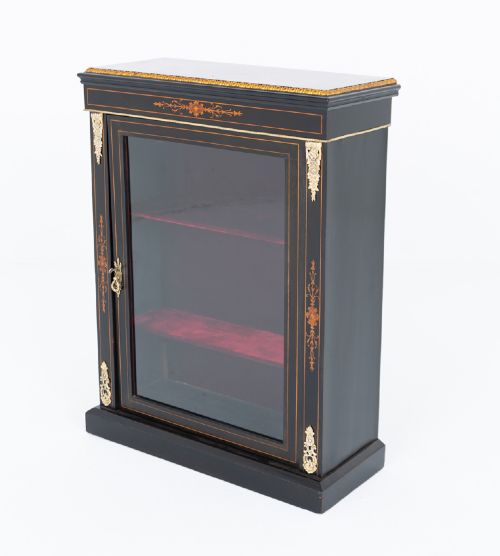
A black ebonised display cabinet appears in forms ranging from compact pier cabinets to broad credenzas and glazed bookcases. Victorian and Napoleon III examples dominate the selection, often taking the shape of low credenzas or tall cabinets designed to showcase collections behind glass.
Makers of the nineteenth century utilised dark finishes to mimic solid ebony, applying them across side cabinets, breakfront bookcases, and corner units. These pieces serve primarily to protect and exhibit objects while adding deep tone to a room.
French influence runs strong through the listings, alongside English Gothic Revival and Aesthetic Movement interpretations. Cabinets frequently incorporate glazed doors or open shelves, balancing utility with decorative presence.
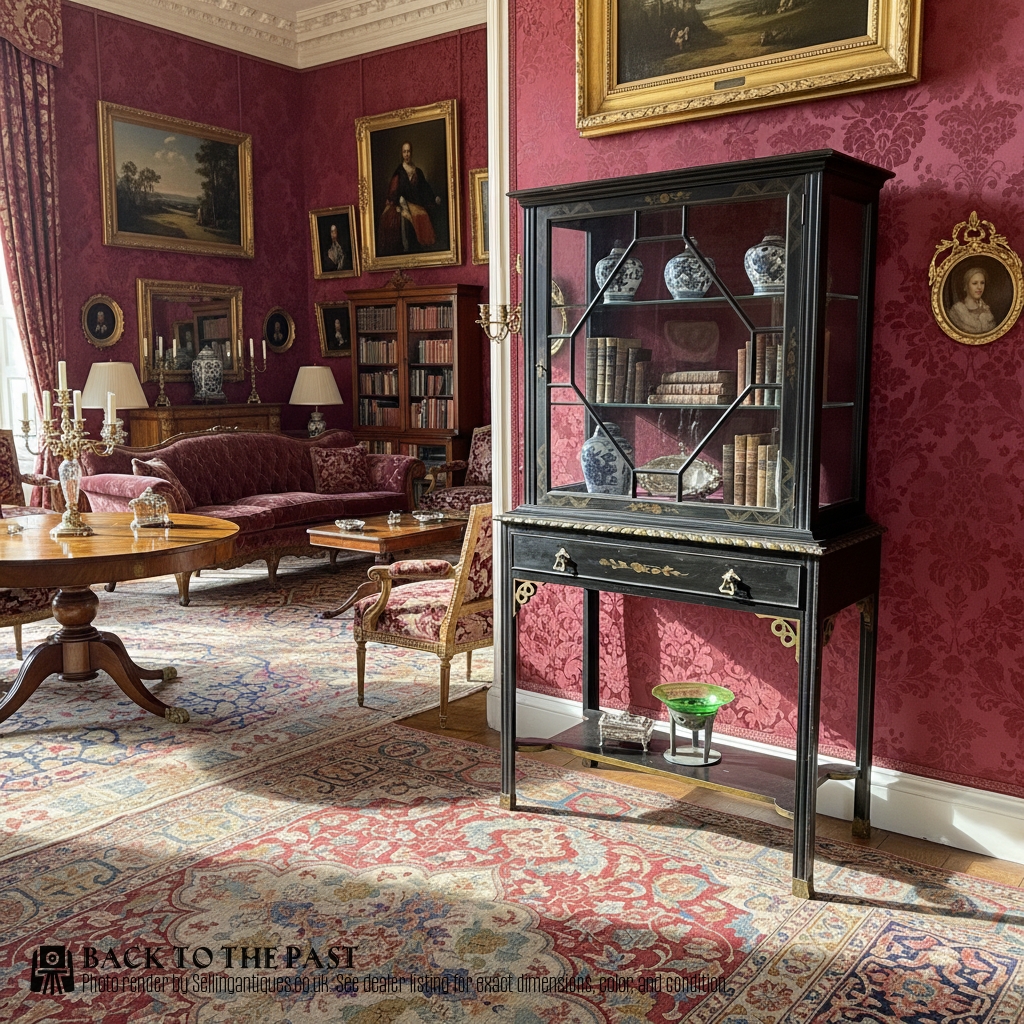
Materials and construction
Timber receives an ebonised finish to achieve a dense black surface, frequently paired with contrasting amboyna, mahogany, or walnut veneers. Artisans applied polish to build a deep sheen that absorbs and reflects light.
Ormolu mounts, brass stringing, and gilt highlights provide structural and decorative accents around glass panels and doors. Porcelain plaques, including Sevres style insets, appear flush within the wooden framework.
Marquetry and inlay work introduce floral or geometric patterns in lighter woods against the dark background. Boulle technique brass and tortoiseshell work also occurs on French pieces.
Samuel Pepys makes an unexpected appearance in a mid nineteenth century cabinet title, bringing a touch of naval diarist history to the dark timber.
Distinctions in standard
The precision of the inlay and the crispness of the cast ormolu mounts dictate the tier of craftsmanship. Finer pieces demonstrate meticulous alignment where brass stringing meets timber and porcelain plaques sit evenly within their brass bezels.
The depth and durability of the ebonised finish distinguish workshop standards, alongside the quality of the underlying secondary timbers. Superior examples retain original glass panels with subtle distortions rather than modern replacements.
George Edmund Street·Garnett & Sons
The Black Ebonised Display Cabinet Glossary
- Ebonised
- Wood treated with stain, dye, or paint to imitate solid ebony. This process became widespread during the nineteenth century to achieve a formal dark surface.
- Ormolu
- Gilded bronze mounts applied to furniture for decoration. The technique creates a metallic gold contrast against dark timber.
- Credenza
- A low cabinet enclosed by doors, often featuring glazed central sections and curved side compartments. It functions as both a sideboard and a display piece.
- Pier Cabinet
- A narrow upright cabinet built to stand against the wall space between windows. These pieces typically feature a single glazed door enclosing tiered shelving.
- Marquetry
- Patterns formed by inserting veneers of different woods, metals, or shells into a solid wood ground. The technique requires exact cutting and fitting by hand.
Black Ebonised Display Cabinet: Frequently Asked Questions
What periods do these cabinets represent?
The pieces span the nineteenth and early twentieth centuries, with significant representation from the Victorian and Napoleon III eras. Aesthetic Movement and Gothic Revival examples also feature alongside later twentieth century items.
Dates cluster around the decades of the late 1800s, reflecting periods of historic revival and sophisticated cabinet making across England and France.
How do pier cabinets differ from credenzas?
Pier cabinets stand tall and narrow, built specifically for placement in wall spaces between windows or architectural openings. They generally rely on a single glazed door to protect the interior shelves.
Credenzas provide a lower, broader silhouette with multiple doors and often incorporate side cabinets flanking a central display section.
Where were these cabinets placed in historic homes?
Cabinets with glass fronts served in drawing rooms and parlours to display ceramics, glassware, and small ornaments. Their reflective surfaces and gilt mounts caught the flicker of gaslight and oil lamps.
Larger bookcases and credenzas occupied principal reception rooms, providing both storage for volumes and a surface for decorative objects.
What materials accompany the ebonised wood?
Makers combined the dark timber with brass stringing, ormolu mounts, and porcelain plaques. Contrasting veneers such as amboyna and mahogany appear frequently within inlaid panels.
Glass panels dominate the front elevations, while velvet or fabric linings sometimes back the interior shelving to highlight displayed items.