


Japanned Display Cabinet
A japanned display cabinet brings dark lacquer and gilt figures into a room, offering height and glass fronts for precious things.
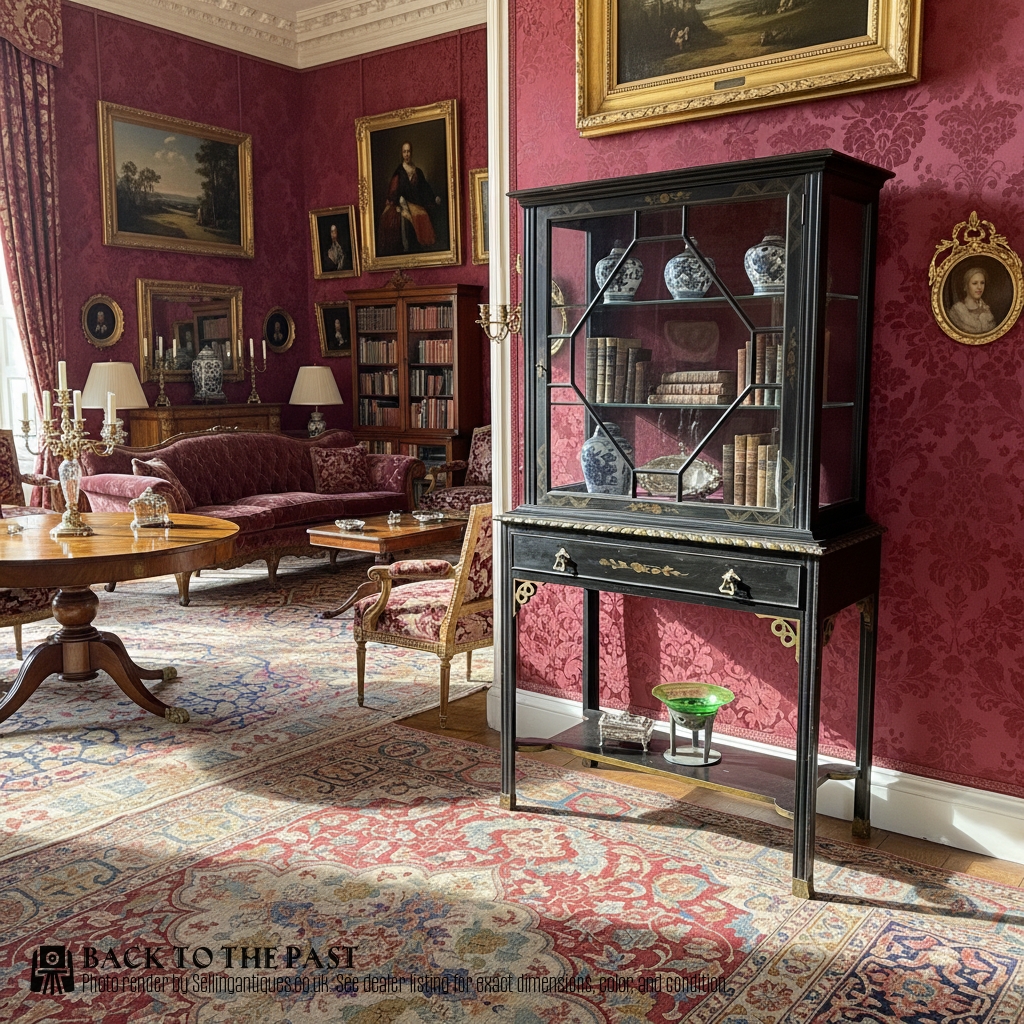
Japanned Display Cabinet
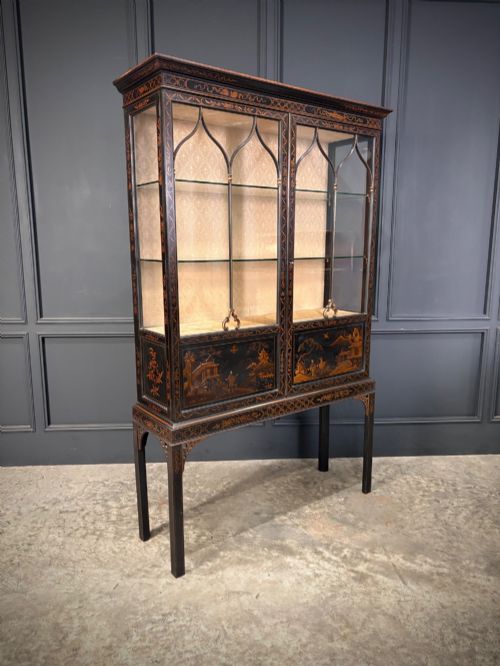
A japanned display cabinet combines lacquer work with enclosed shelving to show off porcelain or curiosities. The examples here span from the eighteenth century through the Victorian and Edwardian eras to the early twentieth century, showing lasting favour for Chinoiserie ornament.
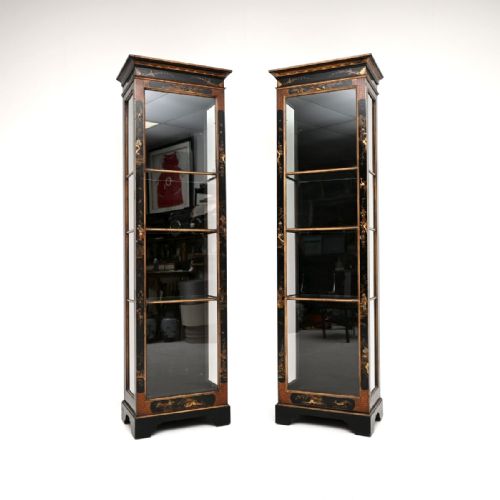
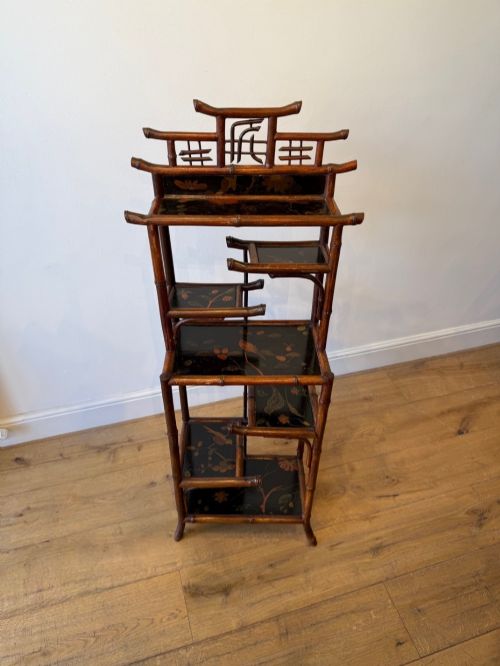
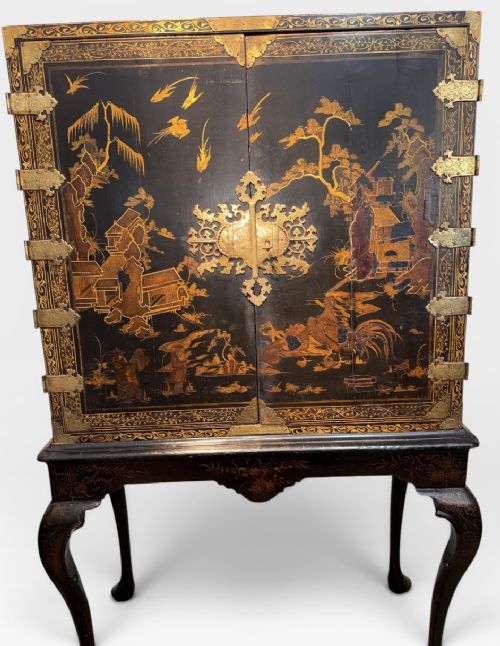
The form shifts from tall corner cupboards and bureau bookcases down to low bamboo shelves and cabinets on stands. Black lacquer grounds dominate the selection, often finished with birds and flowers in gold leaf.
Makers drew on Georgian, Regency, and Aesthetic Movement traditions to shape these pieces. Buyers meet both grand corner cabinets built to fill a room and lighter bamboo versions made for smaller spaces.
How they were made
Wood carcasses of pine or other timbers received layers of dark lacquer to build a hard, glossy surface. Artisans then applied gold leaf and painted details by hand, depicting traditional scenes with birds, flowers, and figures.
Brass fittings such as hinges, escutcheons, and handles added functional contrast to the dark painted panels. Glass doors protected the interior shelves while allowing light to reach the displayed items.
Many of these cabinets hide small painted birds amongst their gold leaf foliage, rewarding close inspection with unexpected pops of colour.
What varies in quality
The depth and execution of the painted lacquer work set the standard across these pieces. Finer cabinets display intricate gold leaf detailing and layered brushwork that give figures and foliage a sense of relief.
Construction materials also divide the range, from simple bamboo frameworks to solid timber carcasses built with traditional joinery. The crispness of the brass hardware and the clarity of the glass panes further mark the distinction between everyday items and finer workshop production.
The Japanned Display Cabinet Glossary
- Japanning
- European imitation of East Asian lacquer work developed in the seventeenth and eighteenth centuries. It involves building up layers of varnish and resin, often finished with gold decoration.
- Chinoiserie
- European artistic style reflecting Chinese motifs and decorative techniques. It appears frequently on furniture and ceramics through painted landscapes, figures, and pagodas.
- Lacquer
- Protective and decorative coating derived from tree sap or synthetic resins. It dries to a hard, smooth finish that takes polish and paint well.
- Aesthetic Movement
- Nineteenth-century design style emphasising visual beauty over narrative content. Pieces from this period often incorporate bamboo and simple structural forms with oriental decoration.
- Bijouterie table
- Glass-topped display table designed for small valuables and trinkets. These pieces raise delicate items to eye level for close inspection.
Japanned Display Cabinet: Frequently Asked Questions
What is a japanned display cabinet?
A japanned display cabinet is a piece of furniture finished in dark European lacquer with gold painted decoration, featuring glass panels or open shelves to showcase objects.
These pieces draw on Chinoiserie styles across different periods, offering both large floor-standing cupboards and smaller corner units.
How do I date a japanned cabinet?
Dating relies on the structural form, timber types, and the style of the painted decoration. Eighteenth-century pieces often use heavy stands and distinct corner cabinetry, while Edwardian and later examples show lighter framing.
Materials like bamboo point towards specific late nineteenth-century aesthetic tastes, whereas mahogany or pine carcasses suggest Georgian or Victorian origins.
Where should I place one?
These cabinets suit drawing rooms, dining spaces, or hallways where their dark lacquer surfaces and gold details provide a strong visual anchor. Corner cupboards make efficient use of difficult angles while adding vertical interest to a room.
Keep them away from direct sunlight to protect the lacquer finish and painted details from fading over time.
How do I care for lacquer?
Dust the surfaces gently with a soft, dry cloth and avoid harsh chemical cleaners or polishes that can damage the delicate finish. Maintaining a stable indoor temperature prevents the wood underneath from expanding and cracking the lacquer.
Glass panels can be cleaned with standard glass cleaner applied to a cloth rather than sprayed directly onto the cabinet.