
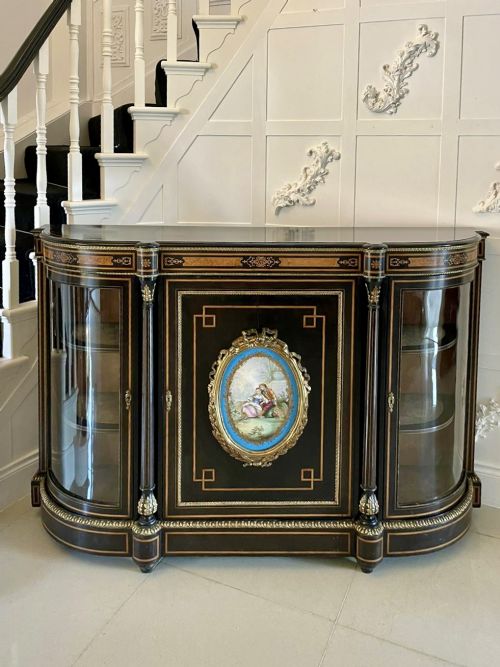
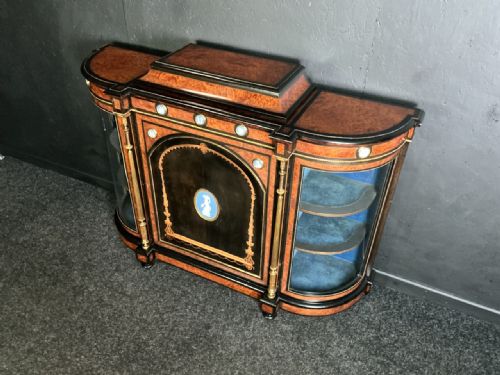
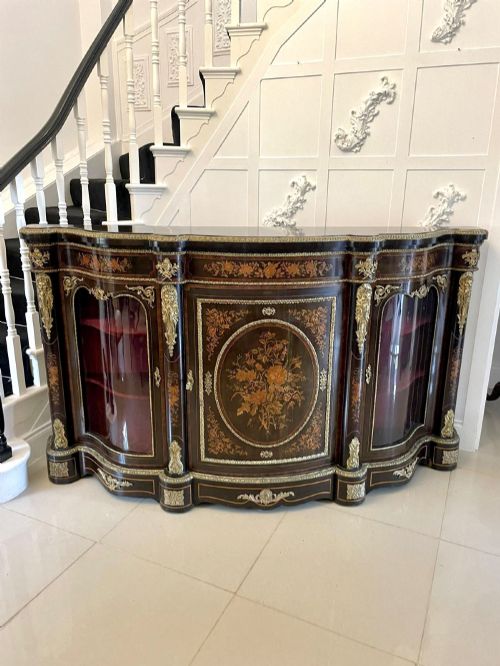


Gilt Ebonised Display Cabinet
A gilt ebonised display cabinet brings dark timber and bright metalwork together to showcase porcelain, glass and small treasures.
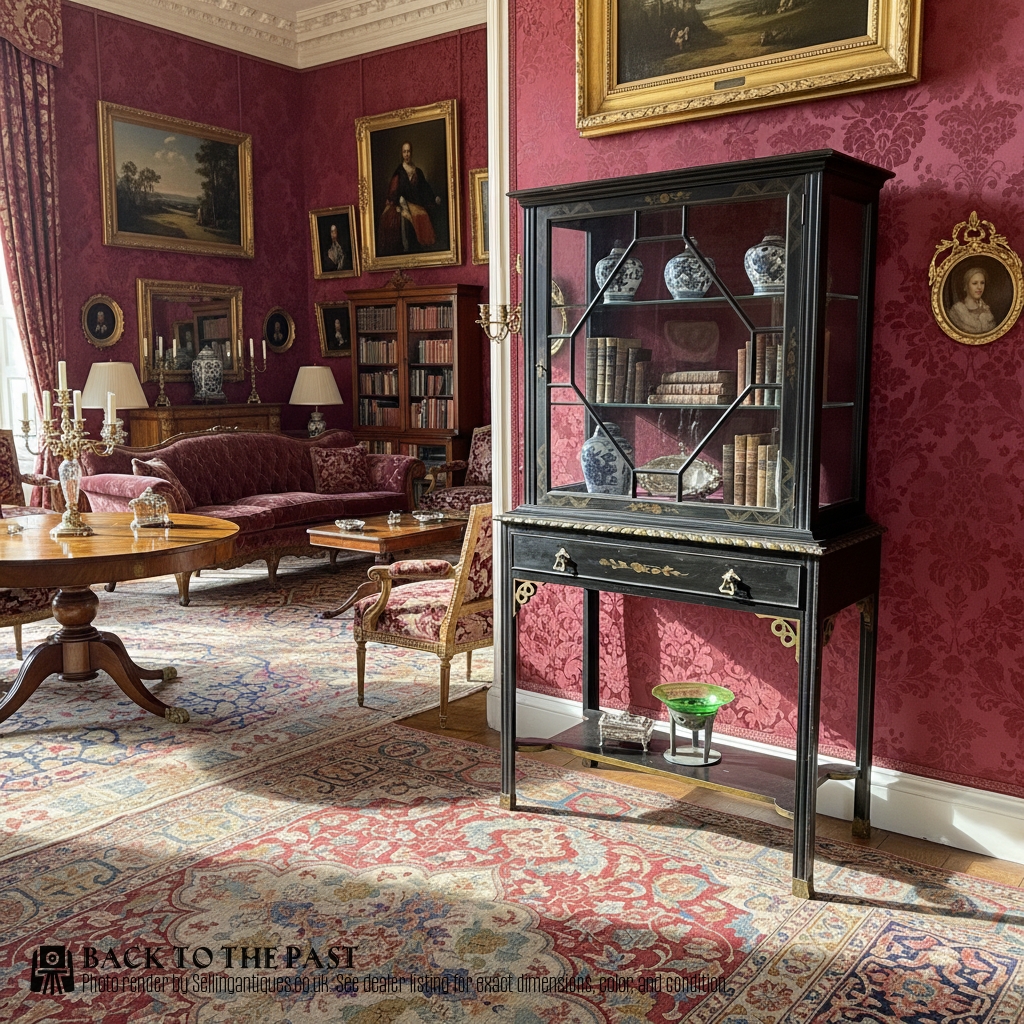
Gilt Ebonised Display Cabinet
A gilt ebonised display cabinet is a piece of furniture designed to exhibit objects behind glass while projecting a dark, polished silhouette enlivened by metallic highlights. Buyers searching this phrase will find a variety of forms ranging from compact pier cabinets and side cabinets to grand breakfront credenzas and vitrines.
The pieces on this page stem predominantly from the nineteenth century, including specific dates across the eighteen-fifties, sixties, seventies and eighties, alongside general Victorian and Aesthetic Movement examples. French Napoleon III designs and English craftsmanship appear frequently among the selection.
Credenzas with glazed doors and central cupboards are the most common large format, while single-door pier cabinets represent the smaller scale. Many incorporate mirrored backs or marble tops alongside their timber framework.
Materials and construction
Cabinetmakers built these pieces using primary timbers such as mahogany, walnut and coromandel, which were then ebonised to achieve a dense, black finish mimicking expensive ebony. Secondary woods and framing elements support glazed doors and shelved interiors designed to hold collections.
Decoration relied heavily on applied ormolu, gilt bronze and gilt metal mounts, often combined with inlaid brass, gold, marquetry, and occasionally porcelain plaques or pietra dura panels. Gilt highlights accentuate carved mouldings and turned details.
Listings feature nineteenth-century examples spanning the Aesthetic Movement and Victorian eras, utilising ebonised wood, ormolu, and amboyna.
Craftsmanship and distinction
Quality in a gilt ebonised display cabinet rests upon the depth of the ebonisation, the crispness of the gilt mounts, and the integration of decorative panels such as marquetry or pietra dura. Superior examples exhibit finely cast ormolu and precise inlay rather than simple painted lines.
The handling of secondary timbers like amboyna, burr walnut, and coromandel also distinguishes finer pieces, as does the structural complexity of serpentine fronts and breakfront configurations.
Lamb of Manchester
The Gilt Ebonised Display Cabinet Glossary
- Ebonised
- Wood treated with stain or polish to resemble solid ebony. This dark finish provides a stark background for gilt mounts.
- Ormolu
- Gilt bronze applied as decorative mounts and feet. It adds reflective warmth to the dark ebonised surface.
- Credenza
- A sideboard or cabinet featuring glazed central and side doors. These large pieces often anchor a formal reception room.
- Pier cabinet
- A narrow cabinet designed to stand against the wall space between windows. They frequently feature a single glazed door and porcelain plaques.
- Marquetry
- Decorative veneer patterns arranged in floral or geometric designs. It adds colourful contrast to the black timber framework.
Gilt Ebonised Display Cabinet: Frequently Asked Questions
How do I clean an ebonised surface?
Dust gently with a dry, soft cloth to prevent scratching the polished black finish. Avoid harsh modern chemical cleaners that can strip the historic polish.
Wax can be applied sparingly if the timber appears dry, provided it is suitable for dark antique wood surfaces.
Where were these cabinets placed originally?
Pier cabinets were made specifically for the narrow wall spaces between tall nineteenth-century windows. Larger credenzas stood against principal dining or drawing room walls.
They served both as decorative focal points and secure display spaces for valuable ceramics and glassware.
Can the internal shelves be moved?
Most nineteenth-century cabinets feature fixed wooden supports or traditional adjustable wooden brackets for the interior shelves. Altering shelf heights is rarely straightforward without modifying the historic interior.
Consider the height of your intended collection items before placing them inside the glazed compartments.
Are porcelain plaques original?
Cabinets featuring Sevres or painted porcelain plaques usually integrate them as intentional decorative centrepieces of the design. These inserts were manufactured specifically to complement the gilt mounts and ebonised woodwork.
Inspect the mounting bezels to ensure the ceramic elements sit flush within the timber frame.