
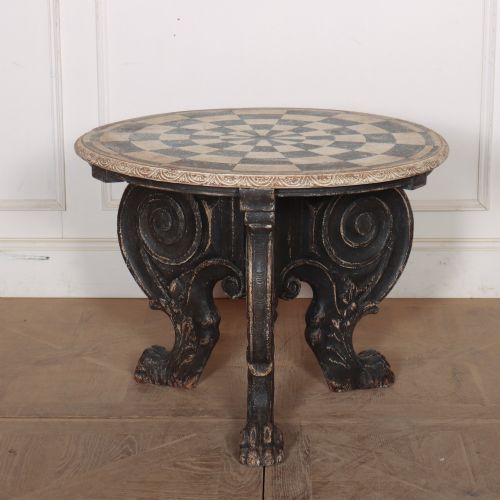

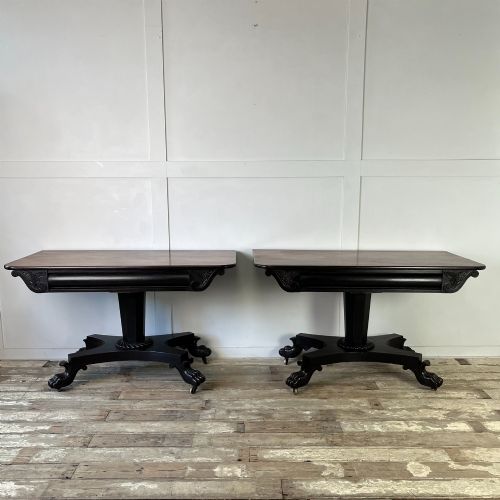

Black Carved Pedestal
A black carved pedestal brings sombre strength to a room, supporting lamps, planters and sculptures across various Victorian and later styles.
Black Carved Pedestal
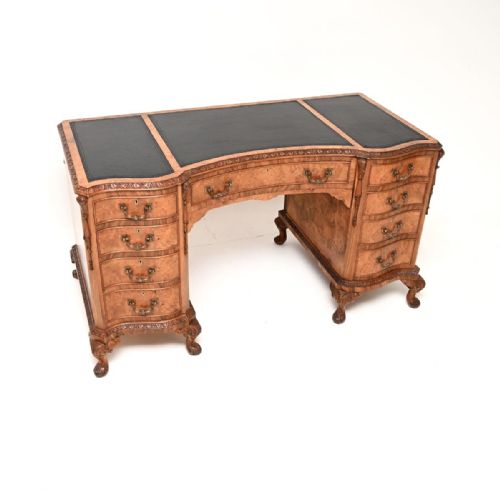
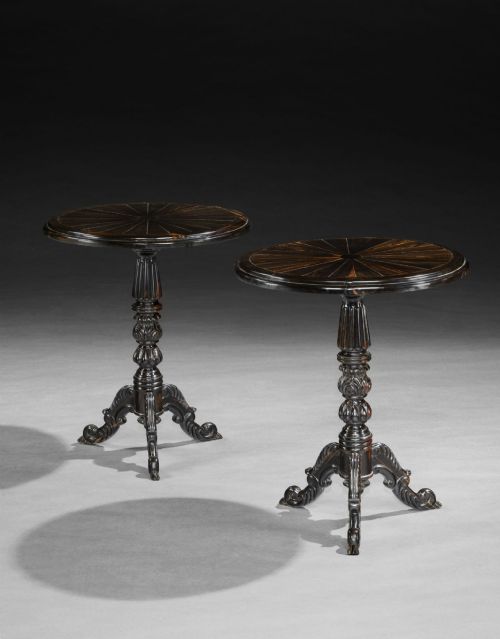
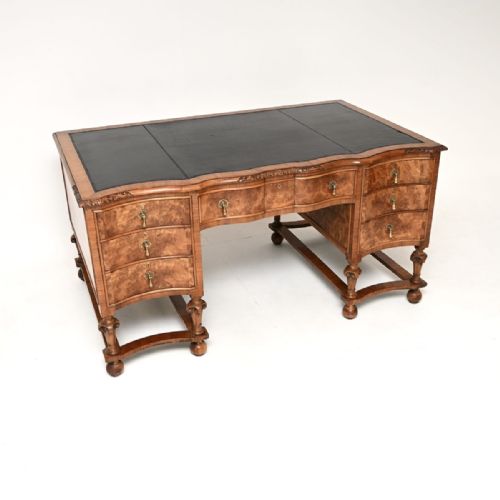
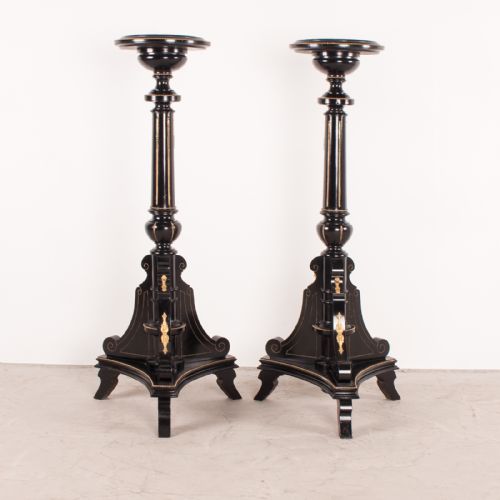
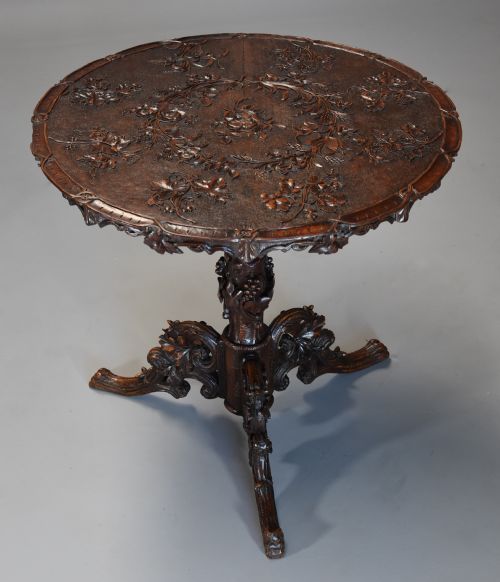
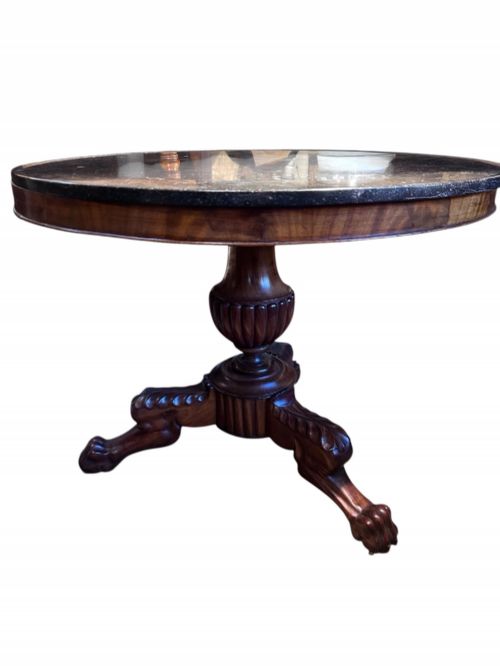
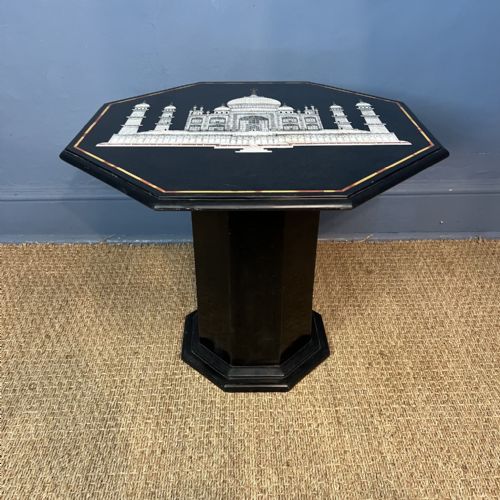
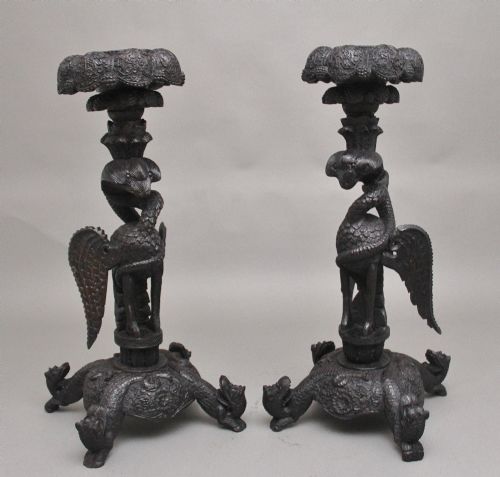
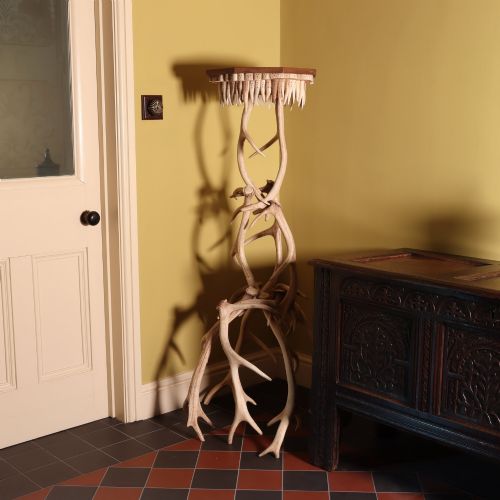
A black carved pedestal encompasses diverse supports such as plant stands, torcheres, centre tables and side tables spanning the nineteenth and early twentieth centuries. These pieces emerge from distinct traditions including Anglo-Indian, Black Forest, Aesthetic Movement and Chinese Export workshops.
Buyers encounter forms ranging from heavy ebonised wood columns and tripod bases to intricate linden wood carvings and marble-topped tables. The selection draws together pieces created for display, holding everything from decorative bowls to heavy bronze sculptures.
Evaluating craftsmanship
The distinction between ordinary and exceptional pieces rests upon the depth and precision of the carving. Profuse hand-carving executed with crisp detail elevates a Black Forest or Anglo-Indian stand far above simpler factory-turned columns.
Material selection dictates durability and presence, with solid ebony, heavy marble tops and figured walnut commanding greater visual weight. Integrated marquetry, detailed Pietra Dura inlay and stable joinery distinguish finer furniture from utilitarian stands.
Maple and Co·Liberty of London
The Black Carved Pedestal Glossary
- Ebonised
- Wood treated with a dark stain or finish to imitate ebony. This process became widely used during the Victorian era on occasional tables and display stands.
- Torchere
- A tall ornamental stand designed to support a lamp or candle. These pieces often feature slender carved wooden shafts and tripod bases.
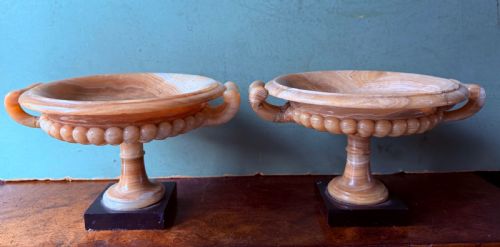
- Tazza
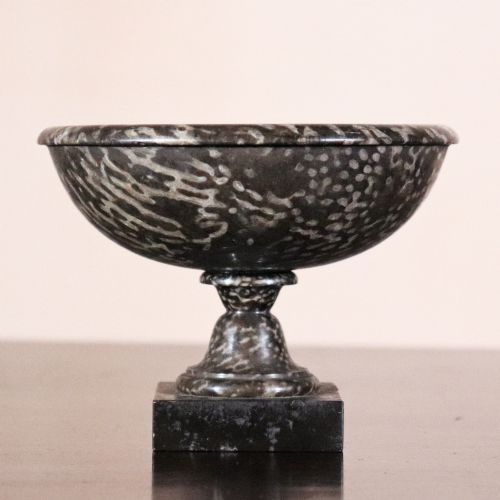
- A small shallow cup or bowl set on a pedestal foot. Examples in marble or stone frequently sit upon black bases for display.
- Gueridon
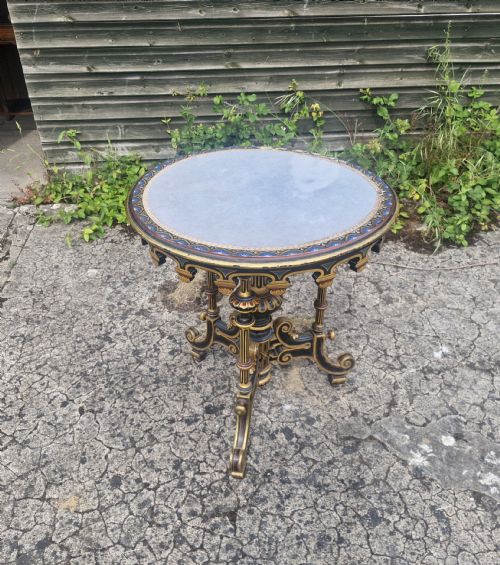
- A small French table supported by a central pillar or column. Nineteenth-century versions often incorporate marble tops and ebonised frames.
Black Carved Pedestal: Frequently Asked Questions
What were these pedestals used for originally?
These pieces served practical roles in nineteenth-century interiors as surfaces for heavy table lamps, decorative vases and potted plants.
Taller torcheres and plant stands elevated decorative objects to eye level, while smaller centre tables held books and ornaments in formal reception rooms.
How do I identify a Black Forest carved piece?
Black Forest pieces typically feature deep, naturalistic carvings of animals, foliage or figures executed in linden wood or walnut. The dark finishes accentuate the texture of carved fur, leaves and rustic wooden supports.
Many examples incorporate sculptural elements like seated hounds or figures directly into the structural design of the table or stand.
Where should I place a heavy marble-topped stand?
Marble-topped tables and tazza stands require sturdy, level flooring due to the substantial weight of the stone inserts. They function effectively in hallways, alcoves or living spaces as permanent display surfaces.
Pairing them with appropriate lighting allows the reflective qualities of the black marble and ebonised wood to stand out.
Are ebonised woods difficult to maintain?
Ebonised surfaces require regular dusting with a soft, dry cloth to prevent the accumulation of particles in carved recesses. Avoiding direct sunlight and excessive moisture protects the dark stain and underlying timber.
Occasional application of appropriate furniture wax helps preserve the sheen on antique polished woods without building up heavy residues.