




Bird Motif Ceramic Vase
Bird motif ceramic vases bring feathered subjects into decorative display through painted, glazed and enamelled surfaces.
Bird Motif Ceramic Vase
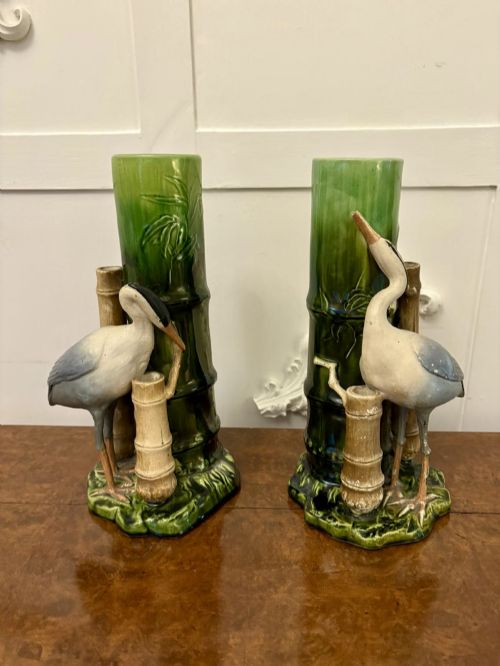
A bird motif ceramic vase combines pottery or porcelain bodies with avian imagery executed across various historical periods and stylistic traditions. When searching for a bird motif ceramic vase, buyers encounter forms ranging from ginger jars and umbrella stands to garniture sets and table lamps. The selection spans late nineteenth century Victorian works alongside Japanese Meiji period porcelains, stonewares and earthenware creations.
The objects frequently originate from European potteries and Japanese workshops, reflecting cross-cultural aesthetic exchanges during the Victorian and Art Nouveau eras. Standard shapes include bulbous ginger jars, slender porcelain vessels and heavy earthenware stick stands designed for domestic display. Each piece integrates naturalistic bird depictions into surface decoration using techniques specific to its origin and date.
Materials and construction methods
Makers utilised ceramic, earthenware, stoneware and porcelain as the foundational bodies for these vessels, shaping them on the potter's wheel or casting them in moulds. Surface decoration relied on hand-painted glazes, enamels and lacquer over-paint applied directly to the fired clay or porcelain. Certain pieces incorporated metallic elements such as brass mounts or gold leaf detailing alongside cloisonné wirework.
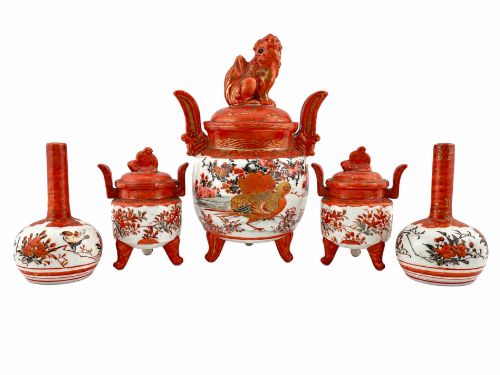
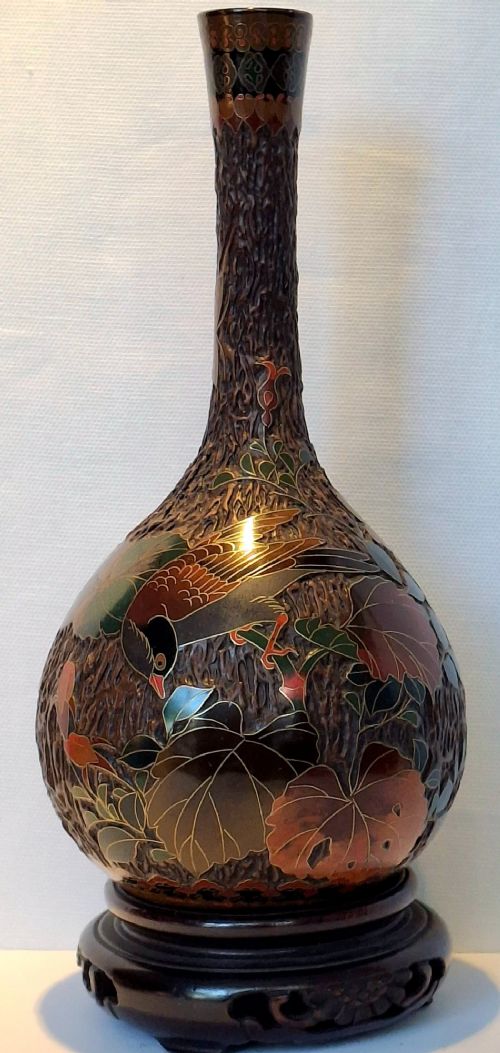
Japanese workshops employed specialised techniques including Kutani and Satsuma painting styles, alongside cloisonne enamel on ceramic bases known as Totai Shippo. European makers utilised similar dexterity, combining polychrome hand-painting with intricate glaze formulations characteristic of Art Nouveau and Victorian production.
Bird Motif Ceramic Vase Retail Price Guide 2026
Typical asking prices for bird motif ceramic vase among the pieces listed under this phrase on Sellingantiques today, from the lower quarter to the upper quarter. They describe what is for sale here now, not the wider market.
Listings feature items from the Victorian, Art Nouveau, and Meiji periods, utilising porcelain, earthenware, stoneware, and enamel.
Evaluating craftsmanship and detail
Quality rests in the precision of the hand-painted brushwork or the exactness of the enamel work defining the avian subjects and surrounding foliage. Superior examples display subtle tonal gradations in the plumage and careful integration of the motif with the underlying ceramic form. Lesser pieces rely on stencilled transfers or hasty application that lacks depth and definition.
The reputation of the workshop or maker significantly influences the standing of a piece, with documented works by notable ceramicists commanding greater attention. The condition of the glaze, the integrity of any enamel or lacquer work, and the structural stability of the ceramic body complete the assessment of overall merit.
Makuzu Kozan II·Kinrin Workshop·Doulton Lambeth·Falcon Ware·Rozenburg·Bretby·Fukagawa
The Bird Motif Ceramic Vase Glossary
- Garniture
- A set of three or more matching vases or decorative jars traditionally displayed together on a mantelpiece or cabinet. These sets often feature coordinated bird and floral imagery across each component.
- Cloisonne
- A decorative technique where metal wires are soldered to a base to form compartments, which are then filled with enamel paste and fired. In ceramic applications, this method is known as Totai Shippo.
- Kutani
- A style of Japanese porcelain characterised by strong pictorial designs and rich colour palettes, frequently incorporating birds, flowers and figures. It originated in Kaga province during the seventeenth century and continued through the Meiji period.
- Stoneware
- A heavy, durable ceramic fired at high temperatures until vitrified and rendered impermeable to liquids. Doulton Lambeth pieces represent prominent examples of this medium.
- Satsuma
- A type of Japanese earthenware featuring a pale, ivory-crackled glaze decorated with finely detailed polychrome enamels and gilding. Bird and landscape motifs frequently adorn these surfaces.
Bird Motif Ceramic Vase: Frequently Asked Questions
What periods do these vases come from?
The pieces span the late nineteenth and early twentieth centuries, encompassing Victorian, Art Nouveau and Meiji period productions. Dates range from the 1880s through to the 1930s.
European and Japanese makers from these decades dominated the creation of ceramic vessels featuring avian decoration.
How were these vases used originally?
Many served as purely decorative garnitures, mantelpiece ornaments or centrepieces in affluent Victorian and Edwardian drawing rooms. Larger examples functioned as umbrella and stick stands in hallways.
Some porcelain and ceramic pieces were also later adapted into lamp bases for domestic lighting.
How do I distinguish Japanese from European pieces?
Japanese examples from the Meiji period often employ Kutani, Satsuma or cloisonne techniques with distinct cultural motifs and signature panels. European pieces typically reflect Victorian, Arts and Crafts or Art Nouveau stylistic conventions.
Examine the base markings, clay composition and application style for clues to the geographical origin.
How should I care for an antique ceramic vase?
Keep ceramic and porcelain vessels out of direct sunlight to prevent fading on hand-painted enamels and gold leaf details. Dust them gently with a dry, soft cloth rather than using liquid cleaning products.
Avoid placing them in areas subject to rapid temperature fluctuations or high humidity.