

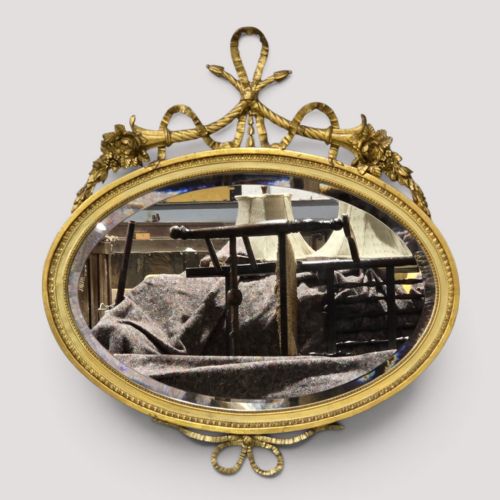
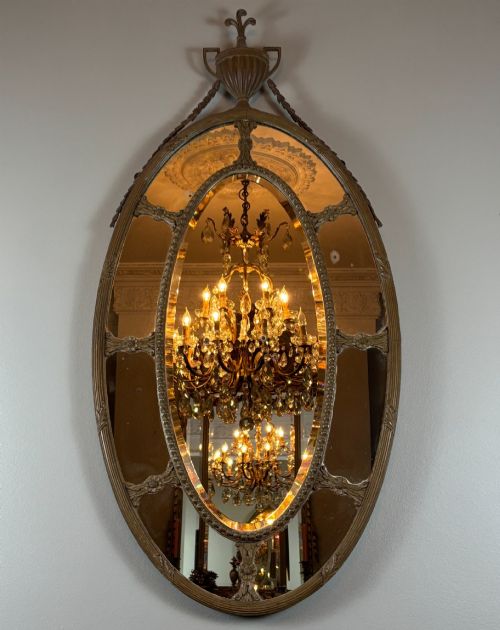
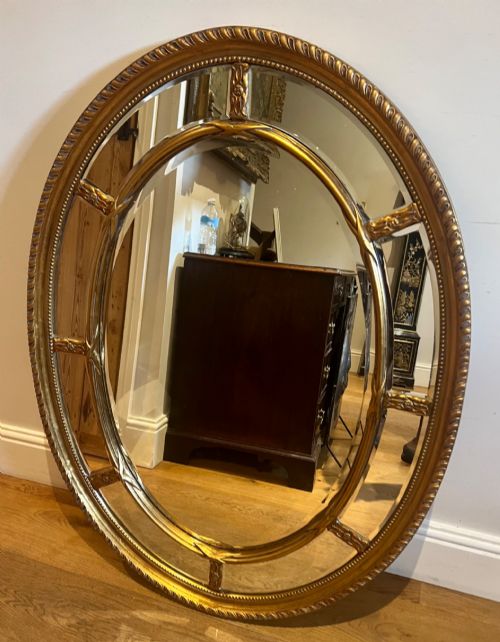
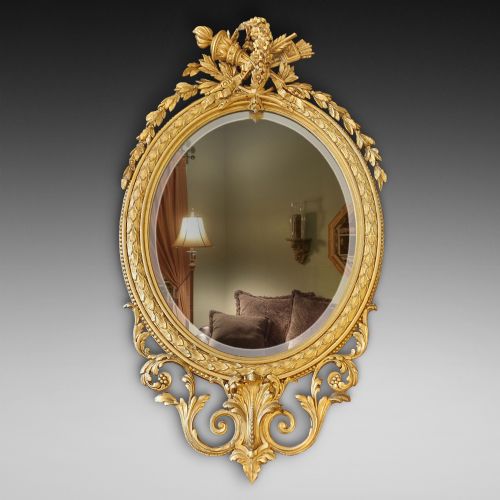
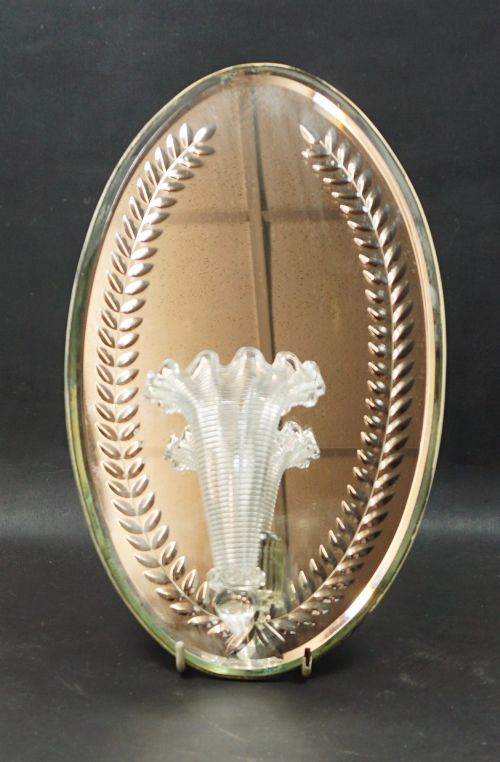
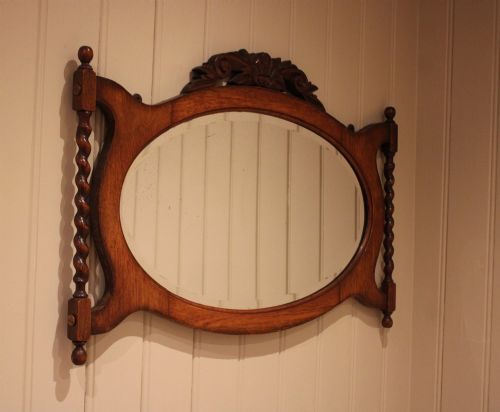
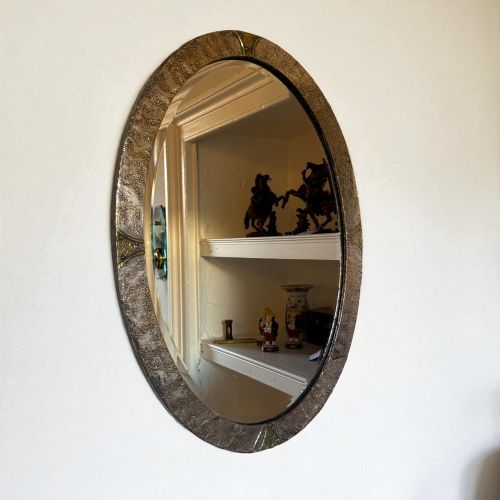
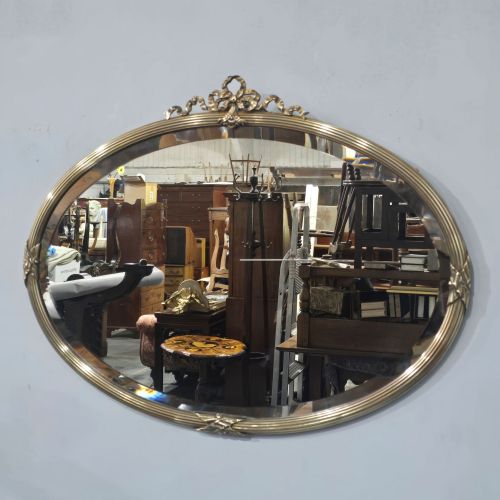
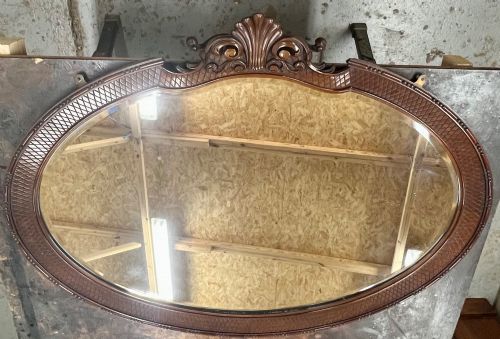


Bevelled Oval Wall Mirror
A bevelled oval wall mirror brings depth to a room through curved glass and shaped timber or gilt frames.
Bevelled Oval Wall Mirror
A bevelled oval wall mirror serves as a functional looking glass and a decorative wall hanging, shaped with a curved perimeter rather than sharp corners. These pieces frequently appear from the nineteenth and early twentieth centuries, spanning Victorian, Edwardian, and later revival periods.
The selection ranges from carved oak and mahogany frames to ornate gilt gesso pieces adorned with floral or classical detailing. Buyers often encounter simpler timber mouldings alongside elaborate French and Italianate designs meant for principal rooms and hallways.
Assessing quality and craftsmanship
Quality rests in the crispness of the frame carving and the depth of the gilt gesso relief work. Finer examples display clean timber joins, substantial weight, and original glass retaining natural foxing and clear bevels.
Simpler production frames show straightforward moulded timber construction, whilst superior specimens incorporate detailed ornamentation, such as painted silk inserts or intricate brass framing.
Bevelled Oval Wall Mirror Retail Price Guide 2026
Typical asking prices for bevelled oval wall mirror among the pieces listed under this phrase on Sellingantiques today, from the lower quarter to the upper quarter. They describe what is for sale here now, not the wider market.
Listings feature oak, mahogany, and giltwood frames spanning the Victorian and Edwardian eras.
The Bevelled Oval Wall Mirror Glossary
- Bevel
- An angled edge ground along the perimeter of the glass plate. This technique catches the light and adds visual depth to the looking glass.
- Gesso
- A plaster-based mixture applied to wood frames and carved or moulded into decorative reliefs before gilding. It provides a smooth surface for gold leaf.
- Giltwood
- Timber coated with gold leaf or metallic powder. It creates a bright reflective surface popular in formal nineteenth-century interiors.
- Overmantel mirror
- A large wall mirror designed specifically to hang above a fireplace mantelpiece. These pieces often feature broader proportions.
- Barbola
- A decorative technique using coloured gesso to create raised floral motifs applied directly to the frame. This style appears frequently on pieces from the early twentieth century.
Bevelled Oval Wall Mirror: Frequently Asked Questions
Where should I hang an oval mirror?
These mirrors suit narrow spaces like hallways, entryways, and above mantlepieces where the curved frame softens straight architectural lines.
Position the glass at eye level to maximise light reflection and create a sense of space in smaller rooms.
How do I date a antique mirror?
Examine the timber species, framing style, and the construction of the backboards and fixings. Victorian and Edwardian pieces often display distinct revival motifs and hand-cut screws.
The presence of original mercury or silver backing with natural foxing points towards older nineteenth-century production.
Are original mirror plates common?
Many surviving pieces retain their original glass plates, which often display subtle imperfections, waves, and age spots known as foxing. These natural signs of ageing confirm the piece retains its historic fabric.
Replacement glass usually appears too uniform and lacks the characteristic bevel depth found on period examples.