
Bedroom Table with Mirror
A bedroom table with mirror brings purposeful elegance to a room, offering a dedicated surface for grooming framed by glass.
Bedroom Table with Mirror
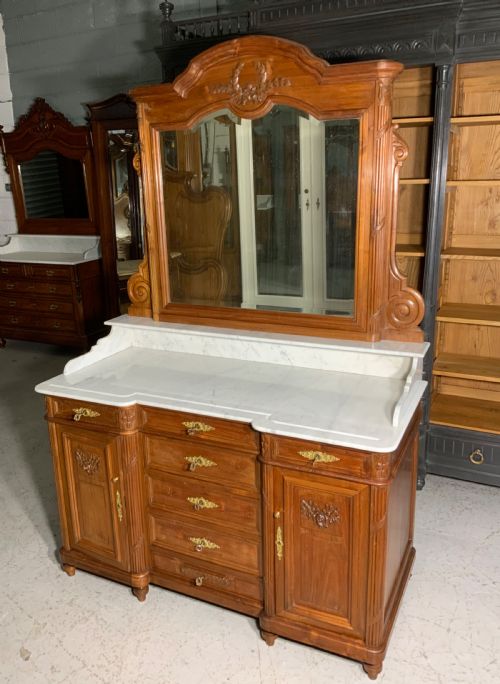
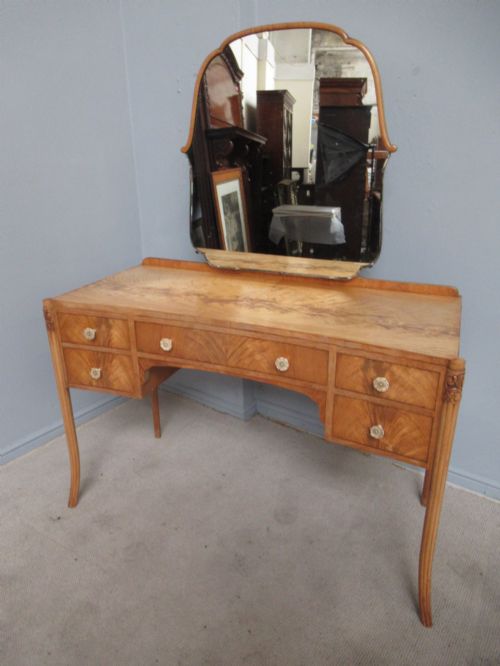
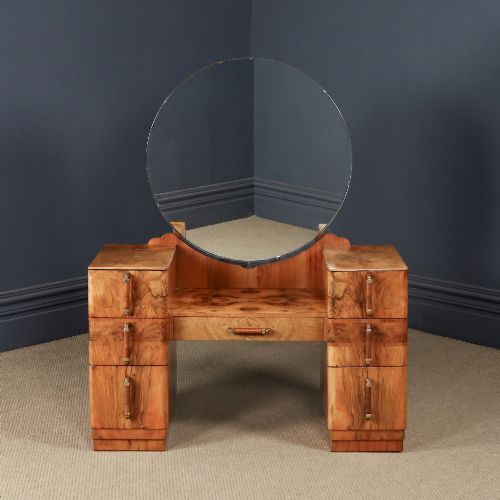
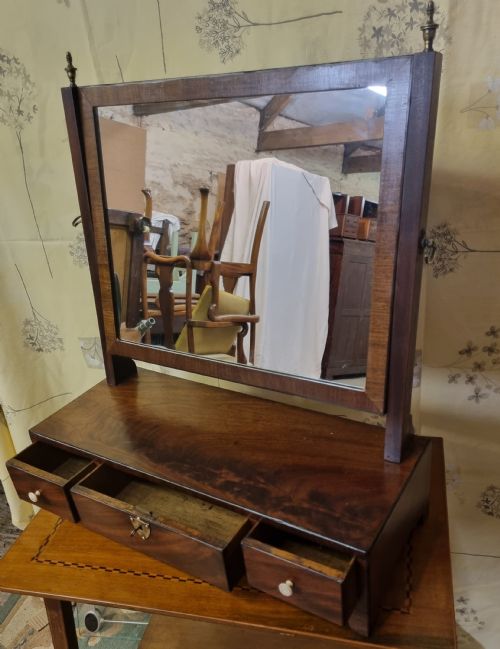
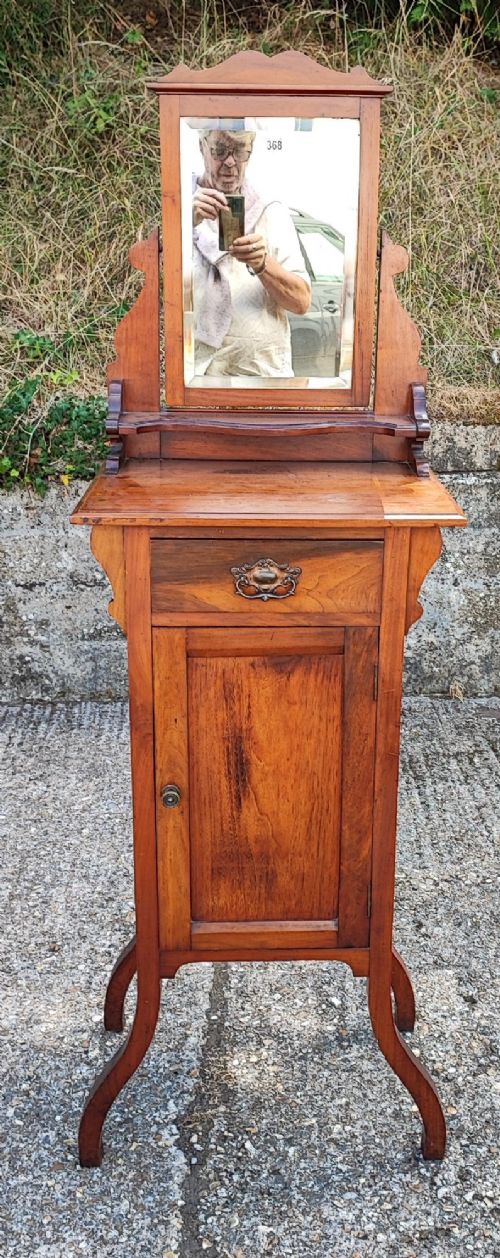
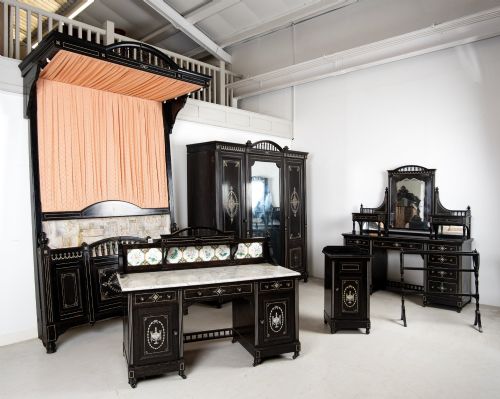
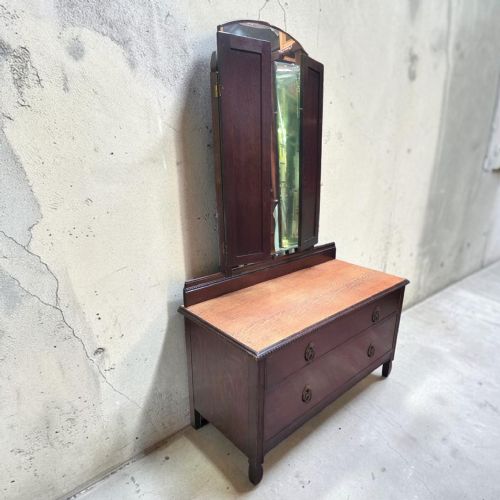
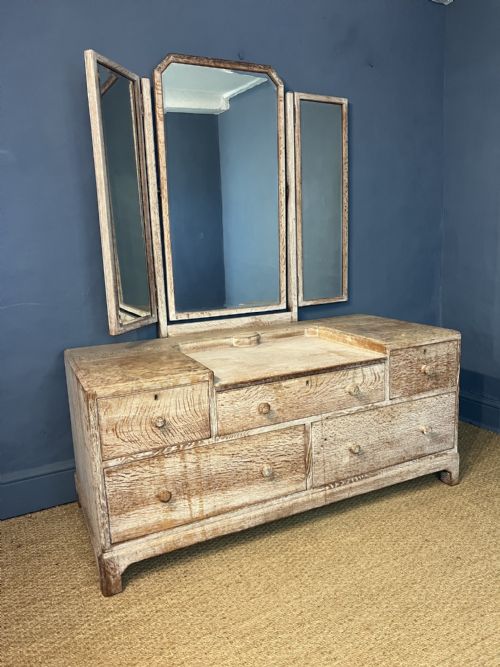
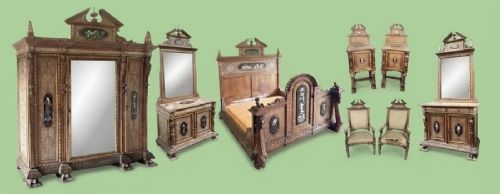
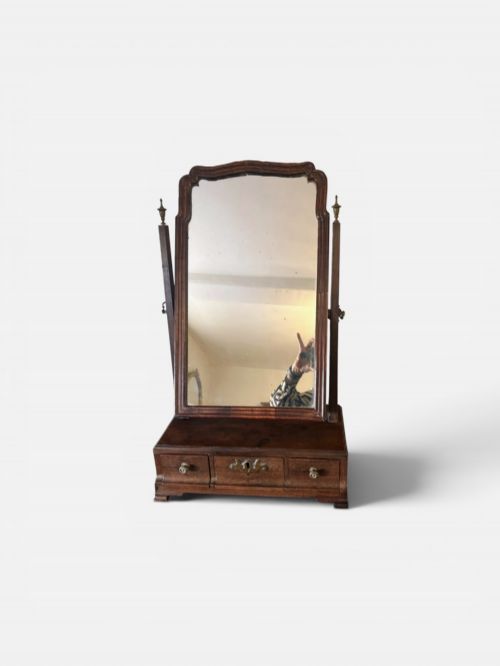
A bedroom table with mirror encompasses a variety of forms designed for personal grooming and daily preparation, ranging from compact toilet mirrors to expansive dressing chests and full dressing tables. The most common examples you will encounter span the Victorian and Edwardian eras, alongside pieces executed in the Art Deco style.
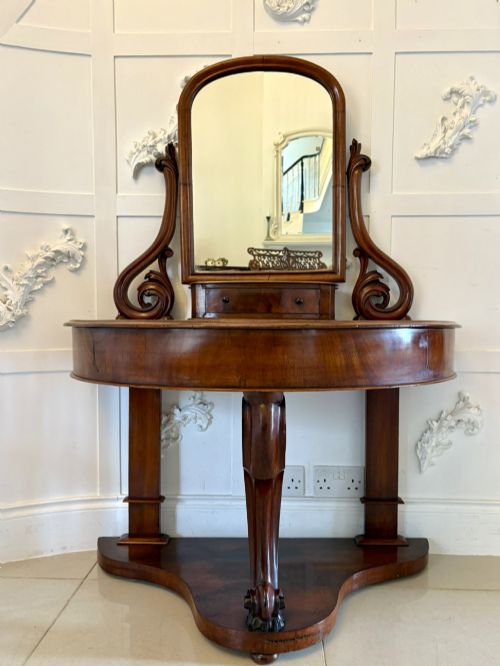
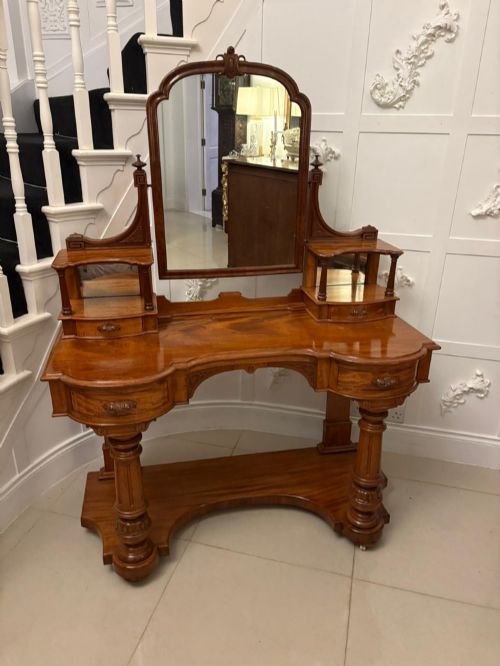
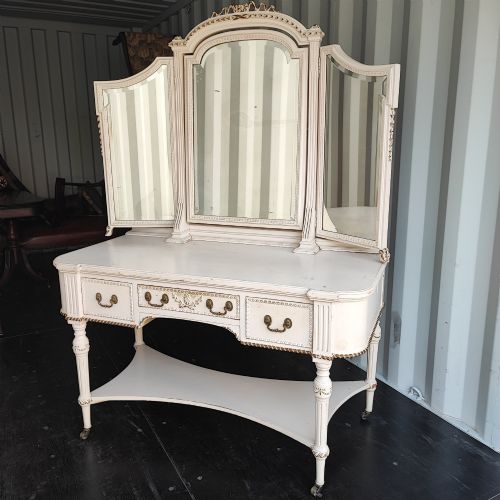
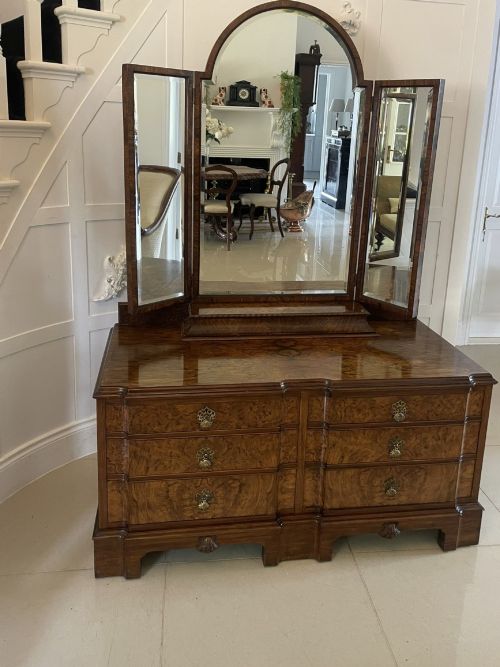
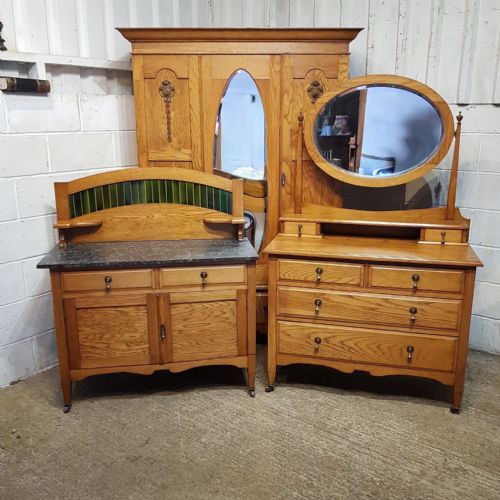
Makers produced these items in forms such as the duchess dressing table, pedestal vanity tables, and oak dressing chests equipped with adjustable shield or triple mirrors. Materials vary from rich burr walnut and mahogany to oak, pine, and maple, sometimes featuring marble tops or ebonised and inlaid details.
How they were made
Cabinet makers utilised dense hardwoods like mahogany, walnut, and oak as the structural foundation for these pieces, often applying figured veneers such as burr walnut to create striking visual patterns on drawer fronts and surfaces. Glass was expertly cast and silvered to form the accompanying swing, oval, or triple mirrors.
Construction techniques involved traditional joinery for the tables and chests of drawers, while mirror plates were secured within pivoting wooden frames supported by upright arms or integrated directly into the upper superstructure.
What varies in quality
The standard of a bedroom table with mirror depends heavily on the selection of timbers, where finely figured burr walnut or high-grade mahogany elevates the visual presence far beyond standard painted pine or simpler utility woods. The crispness of carved details and the clever integration of storage compartments distinguish workshop output.
Design sophistication also sets examples apart, ranging from plain functional chests to elaborate Arts and Crafts or Art Deco creations with sophisticated geometric lines, labelled maker attributions, and harmonising companion stools.
Wright and Hunter of Belfast·George Walton·Heals·Maurice Adams
The Bedroom Table with Mirror Glossary
- Toilet mirror
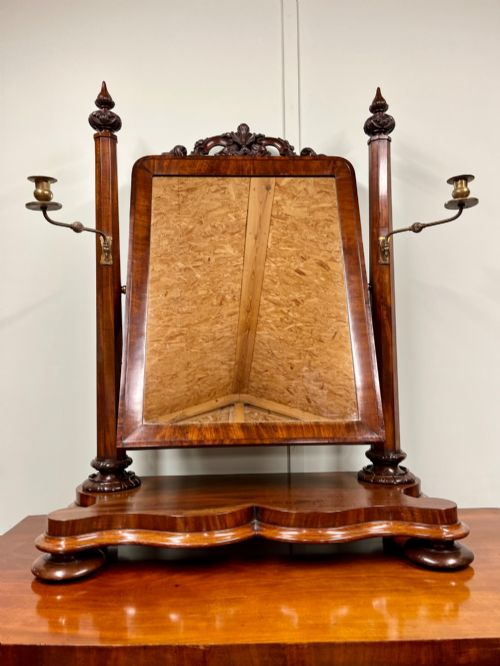
- A smaller tabletop mirror fitted with a small base or drawers, designed to sit upon a chest of drawers rather than a dedicated table.
- Duchess dressing table
- A grand nineteenth-century dressing table style featuring a large central mirror, often flanked by small drawers, above a curved surface.
- Burr walnut
- A highly prized wood veneer taken from the gnarled growths of a walnut tree, creating intricate, swirling grain patterns across furniture surfaces.
- Swing mirror
- A mirror plate mounted on pivots between two upright posts, allowing the user to tilt the glass to various angles.
- Dressing chest
- A lower chest of drawers fitted with an integrated mirror superstructure, combining clothes storage with grooming facilities.
Bedroom Table with Mirror: Frequently Asked Questions
What is a duchess dressing table?
A duchess dressing table is a large, ornate nineteenth-century form that typically incorporates a prominent central mirror framed by smaller trinket drawers and a curved lower surface. They were built to serve as both a functional grooming station and a grand focal point in a principal bedroom.
These pieces often utilise fine veneers like burr walnut or mahogany and frequently feature detailed carving. Their generous proportions suit spacious rooms where their architectural presence can be fully appreciated.
How do I date an antique dressing table?
Dating a dressing table relies on observing the prevailing style, construction methods, and timber choices of the period. Victorian and Edwardian examples often display rich mahogany or walnut, while 1930s pieces lean towards streamlined Art Deco forms in maple or figured walnut.
Hardware such as handles and the mounting style of the mirror also provide chronological clues. Examining drawer construction reveals whether machine tools or hand techniques were employed.
Where should I place a dressing table?
Positioning a dressing table near a natural light source ensures optimal illumination for grooming tasks. Placing it perpendicular or opposite a window maximises the daylight reflecting from the mirror into the room.
Consider the clearance needed for pulling out the chair or stool, as well as accessing drawers. Pairing the table with a matching stool or chair completes the arrangement.
What is the difference between a toilet mirror and a dressing table?
A toilet mirror is a compact glass in a wooden frame designed to sit independently on top of an existing chest of drawers or sideboard. A dressing table is a complete, standalone piece of furniture that incorporates the table, drawers, and mirror into a single unit.
While toilet mirrors offer a space-saving solution for smaller rooms, dressing tables provide a dedicated surface and greater storage capacity for everyday items.