


Duchess Vanity Table
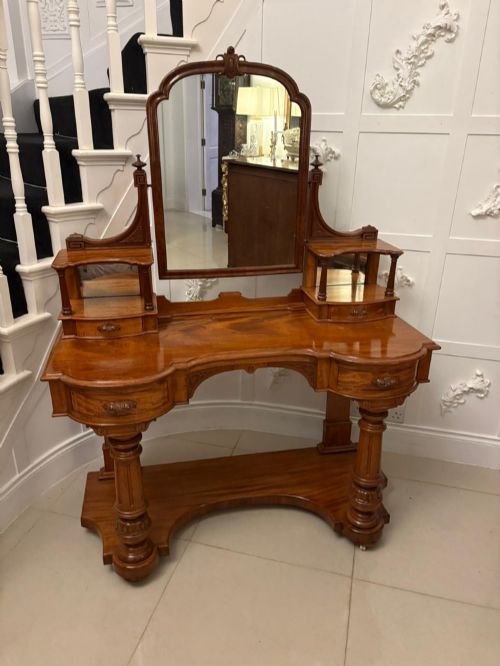
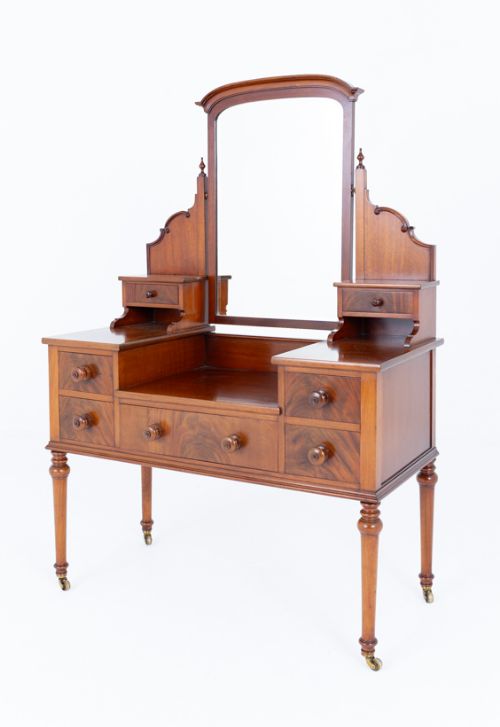
A duchess vanity table combines a central mirror with ample surface space, offering both a functional dressing station and a striking bedroom centrepiece.
Duchess Vanity Table
When searching for a duchess vanity table, buyers encounter nineteenth-century and early twentieth-century bedroom furniture designed for personal grooming and dressing. The pieces span Victorian and Edwardian periods, appearing frequently in burr walnut, mahogany, satinwood, and pine.
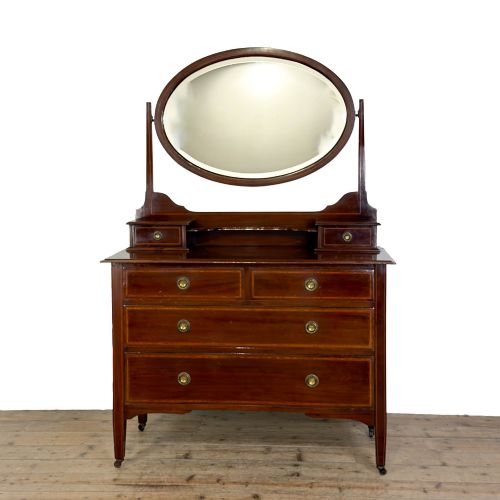
The most common formats on this page are substantial dressing tables and dressing chests incorporating pivoting mirrors, occasionally styled as duchess dressing tables or washstands. Origins range from English workshops to Scottish and French makers, encompassing styles from Gothic Revival to Victorian Rococo.
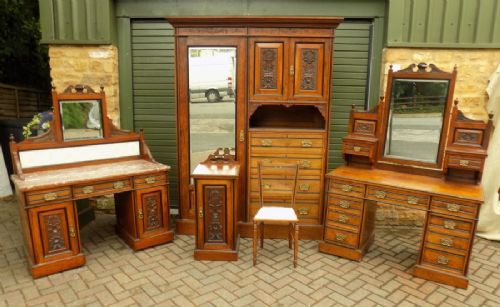
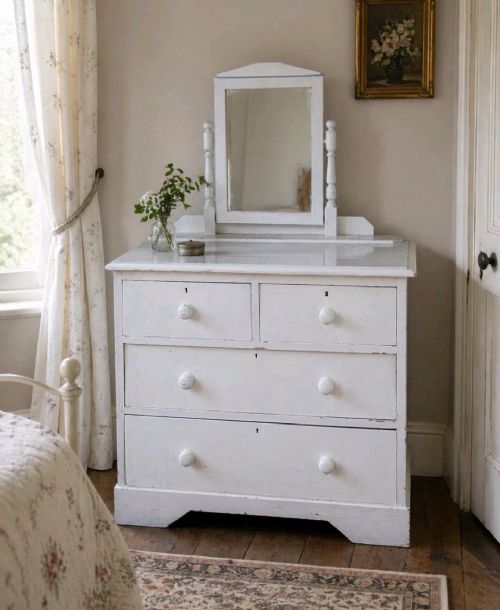
Beyond standard dressing tables, related forms include toilet mirrors and bedroom suites that share the timber veneers and carved details typical of the era. Buyers find both grand pedestal arrangements and simpler painted pine versions suited to domestic bedroom settings.
How they were made
Cabinet makers utilised dense hardwoods such as mahogany and walnut, frequently applying highly figured burr walnut or satinwood veneers to prominent surfaces like drawer fronts and mirror frames. Secondary timbers such as pine appear in internal construction and simpler painted regional pieces.
Surface ornamentation relied on traditional techniques including hand carving, marquetry inlay, and ormolu mounts, alongside brass hardware and glass mirror plates. Some pieces employ stencilled decoration or scumble glaze directly onto timber or pine bases.
Some nineteenth-century dressing tables hide tiny velvet-lined compartments meant for clandestine love letters and calling cards.
What varies in quality
The choice of timber veneer fundamentally separates standard examples from finer works, with heavily figured burr walnut and exhibition-grade satinwood indicating superior craftsmanship. Depth of hand carving and the integration of secondary materials like marble tops or silver gilt mounts further elevate specific pieces.
Structural complexity also defines the range, distinguishing simple stencilled pine chests from grand kneehole pedestal tables with original pivoting toilet mirrors and intricate marquetry inlay. Maker attribution, such as signed Edinburgh pieces, marks the upper tier of quality.
John Taylor of Edinburgh
The Duchess Vanity Table Glossary
- Duchess dressing table
- A large vanity table featuring a prominent central mirror, often flanked by small drawers or trinket compartments above a main desk surface.
- Burr walnut
- A highly prized timber veneer harvested from the wart-like growths on walnut trees, noted for its swirling, highly decorative grain patterns.
- Pedestal dressing table
- A form where banks of small drawers support the main writing or dressing surface on either side of a central kneehole space.
- Toilet mirror
- A smaller tabletop glass in a pivoting frame, designed to sit atop a chest of drawers or a dedicated dressing surface.
- Marquetry
- The art of applying decorative pieces of veneer to a structure to form intricate geometric or floral designs.
Duchess Vanity Table: Frequently Asked Questions
What is a duchess vanity table?
A duchess vanity table is a nineteenth-century dressing piece characterised by a large, fixed or pivoting mirror mounted above a surface with smaller trinket drawers.
These tables were designed for Victorian bedrooms to hold grooming equipment, cosmetics, and personal items while serving as a decorative focal point.
How do I date a dressing table?
Dating relies on observing timber choices, construction methods, and stylistic cues such as Victorian carving or Edwardian simplicity. Mid-nineteenth-century pieces often showcase solid mahogany or burr walnut veneers, whereas later examples may feature stencilled pine or lighter satinwood.
Hardware styles, mirror bevels, and secondary woods inside the drawers also help narrow down the decade of manufacture.
Are mirrors original to the tables?
Many surviving dressing tables retain their original pivoting mirror frames and glass plates, though glass was frequently replaced if damaged over generations.
Examining the fixings, timber ageing around the brackets, and the oxidation of the mirror glass helps determine whether the glass has been updated.
How do I care for antique wood?
Antique mahogany, walnut, and satinwood benefit from stable indoor humidity away from direct sunlight and heat sources to prevent timber splitting and veneer lifting.
Regular dusting with a dry, soft cloth preserves the polished finish, while traditional wax polishes applied sparingly maintain the lustre of nineteenth-century surfaces.