





Barware Serving Tray
A barware serving tray gathers glasses and decanters for pouring, bringing practical surface space and period character to a room.
Barware Serving Tray
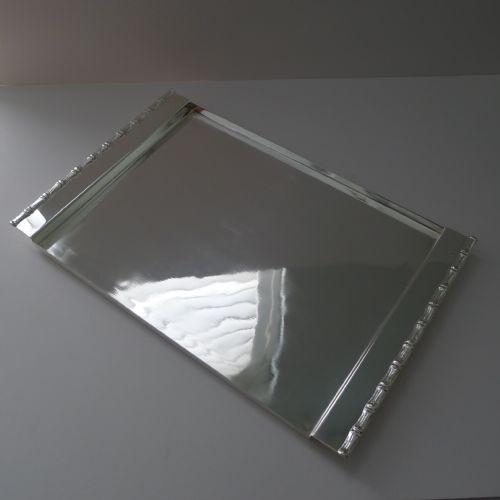
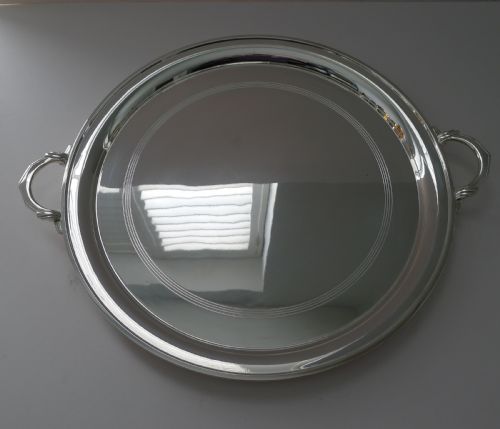
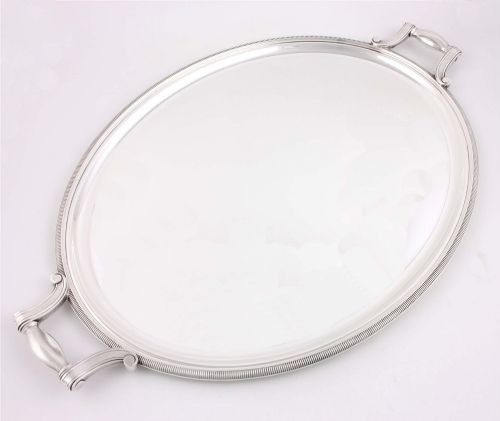
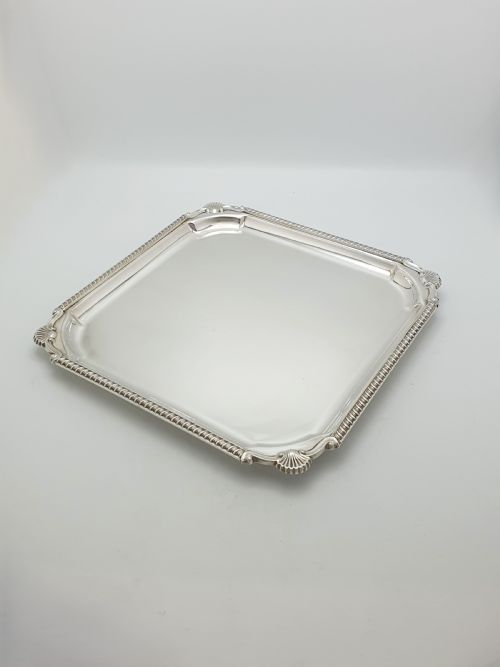
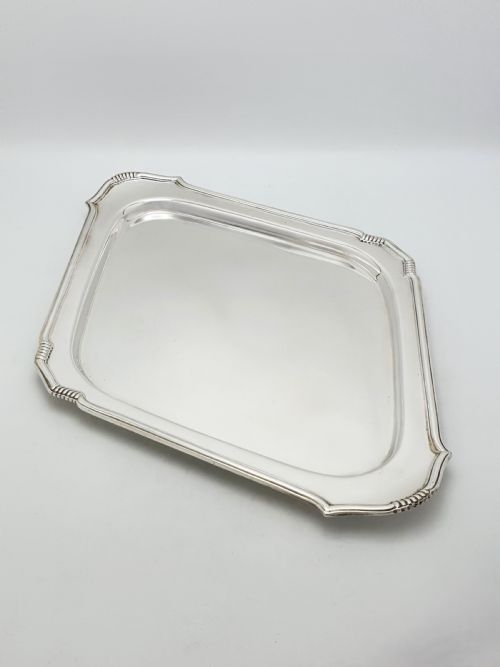
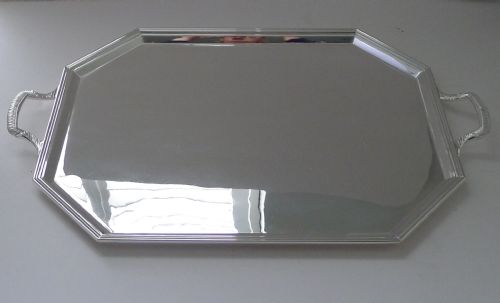
When you search for a barware serving tray, you encounter forms spanning from the Victorian and Edwardian eras through Art Deco and Mid-Century Modern periods. These pieces serve drinks or display glassware, appearing as circular salvers, oval platters, and geometric shapes with integrated or applied handles.
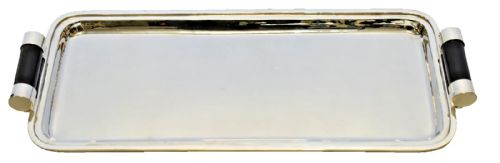
The version you meet most frequently on this page is the silver plated cocktail tray from the Art Deco period, often featuring engraved surfaces, raised borders, or mirrored glass inserts. Makers utilised metals like chrome and base metal alongside silver plate to shape these functional accessories.
Materials and construction
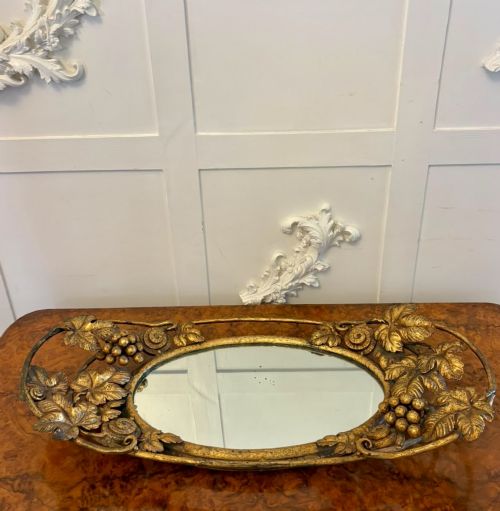
Silversmiths and manufacturers built these trays using silver plate, EPNS, and electroplated nickel silver over base metal or copper foundations, while other examples incorporate glass and wood such as mahogany and macassar. Metal frames receive hand-finished engraving, engine turning, or applied borders featuring shell, grape vine, and bamboo motifs.
Handles are cast separately and soldered or screwed to the body, ranging from simple metal loops to contrasting copper or bamboo grips. Mirrored glass trays rely on wooden or metal frames to secure the fragile base.
Listings span the nineteenth century through the mid-twentieth century, employing silver plate, copper, glass, and mahogany.
Quality differences
The distinction between tiers rests in the weight of the metal blank and the crispness of the border work and engraving. Heavier gauges resist bending and provide stability under heavy decanters, whereas lighter metal feels thin in the hand.
Makers known for fine silversmithing maintain clean solder joins, deep stamping marks on the underside, and thick plating that resists wear over decades of use.
Keith Murray For Mappin & Webb·Christofle·Hukin & Heath·J B Chatterley & Sons·Walker & Hall·James Dixon & Sons·John Collyer & Co·Roberts & Dore·Asprey·Elkington·Roberts & Belk·Atkin Brothers·Victor Saglier
The Barware Serving Tray Glossary
- Salver
- A tray, usually circular, traditionally used for presenting food or drinks. It often stands on small feet.
- EPNS
- Electroplated nickel silver, a common base metal method where a thin layer of silver coats a nickel silver core. This technique democratised domestic metalware.
- Engine turning
- A mechanical decoration technique producing precise geometric patterns on metal surfaces. It creates a textured field that hides fingerprints.
- Galleried tray
- A tray featuring an upright rim or pierced gallery around the edge to prevent items from sliding off. These rims range from low rails to high decorative walls.
Barware Serving Tray: Frequently Asked Questions
How do I clean a silver plated tray?
Wash the surface gently with warm soapy water and a soft cloth to remove dust and sticky residues. Avoid abrasive pads that wear through the thin silver plating.
Dry the metal thoroughly with a soft towel to prevent water spots. Use a specialist silver polish sparingly only when tarnish requires removal.
Can I use these trays for serving drinks?
These trays function well for carrying glasses, bottles, and barware across a room. Metal and mirrored surfaces wipe clean after use.
Take care with heavy crystal decanters on mirrored bases to prevent cracking the glass insert. Felt pads underneath protect wooden furniture from scratches.
How do I date an Art Deco tray?
Art Deco trays from the interwar decades display geometric lines, streamlined shapes, and motifs like sunbursts and stylized borders. Look for makers' marks and registration numbers stamped on the underside.
Materials such as chrome, mirrored glass, and Bakelite handles often point to this period. Stylistic cues like stepped corners confirm the design era.
What is the difference between silver plate and sterling?
Silver plate consists of a thin layer of pure silver bonded to a base metal like copper or nickel silver. Sterling silver is a solid alloy containing a high proportion of pure silver throughout.
Look for hallmarks on the reverse to identify metal purity. Plated items usually bear manufacturer marks indicating the plating process rather than silver purity standards.