



Silver Round Salver
A silver round salver is a formal serving plateau in solid metal or plate that grounds a room with its disciplined circular geometry.
Silver Round Salver
A silver round salver is a circular serving vessel designed to present glasses, decanters, and calling cards with formal elegance. These pieces appear in solid silver as well as silver plate and EPNS across Victorian, Edwardian, and Art Deco periods, extending into later mid-century designs.
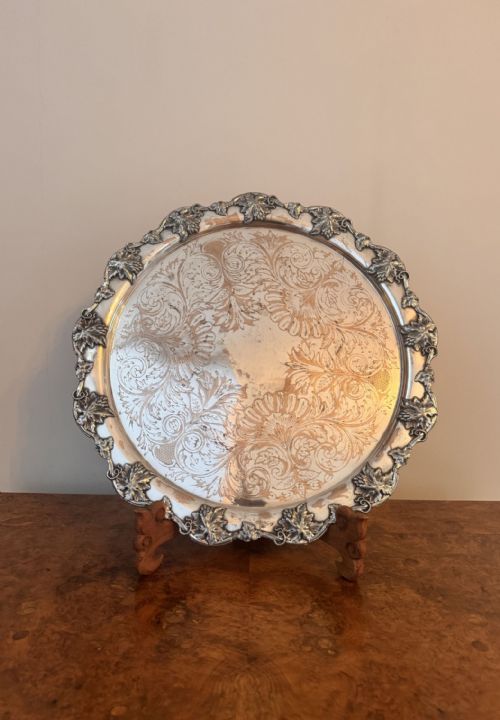
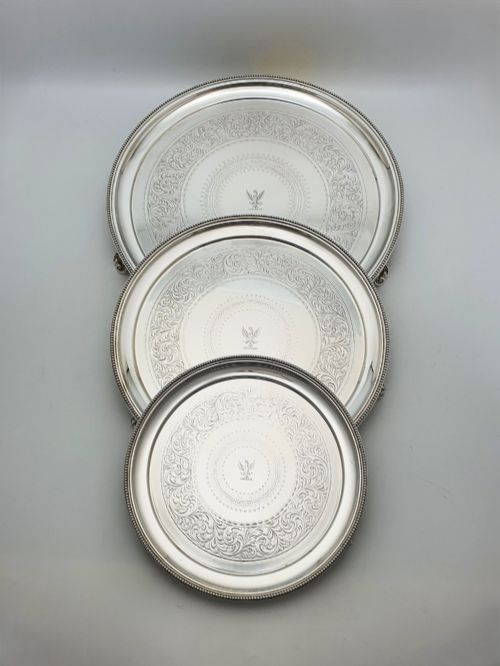
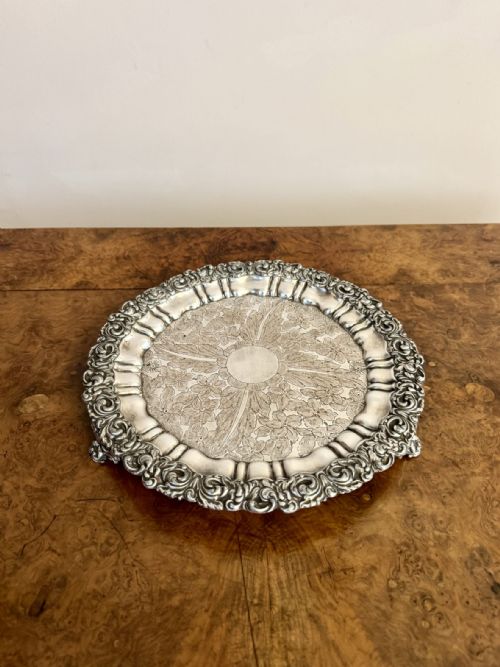
The version most frequently encountered on this page is the silver plated circular tray, often featuring an engraved surface, a raised detailed rim, and supportive feet. Makers ranged from prominent firms like Elkington and Walker & Hall to independent silversmiths operating in the nineteenth and twentieth centuries.
Forms span from intimate cocktail trays to enormous platters carrying family crests and intricate French Rococo Revival ornamentation. Buyers select them for domestic service, display, or traditional hospitality uses that bridge historical utility and decorative interior styling.
Materials and construction
These items are constructed predominantly from silver plate and EPNS over a base metal foundation, though select earlier examples are fashioned from solid sterling silver. Manufacturers applied silver coatings to base metals using contemporary plating techniques, ensuring durable reflective surfaces.
Surface decoration relies on manual or machine execution, incorporating engine turned patterns, hand engraving, and applied borders. Rims are frequently cast or stamped separately before being soldered or mounted to the central plateau, adding structural rigidity and tactile definition.
Materials range from solid sterling silver to silver plate, EPNS, and base metal foundations.
Distinctions in quality
Quality in a silver round salver is determined by the crispness of the engraved or chased ornament and the structural weight of the base metal. Superior examples exhibit deep, clear hand engraving and substantial gauge metal that resists flexing under load.
The distinction between ordinary and exceptional execution lies in the integration of the rim and feet. Finest work shows seamless construction, perfectly balanced proportions, and maker marks that denote reputable workshops such as Elkington or Walker & Hall.
Elkington·John Harrison·Walker & Hall·Victor Saglier·Smith & Sharp
The Silver Round Salver Glossary
- Salver
- A flat plate or tray, typically with feet, used for serving food or drinks. These circular serving vessels form the core of this category.
- EPNS
- Electroplated Nickel Silver. A common base metal core covered in a thin layer of silver through an electrolytic process.
- Engine turned
- A mechanical decorative technique producing precise geometric patterns of engraved lines. This surface work appears frequently on twentieth-century cocktail trays.
- Rococo Revival
- A nineteenth-century design style drawing on ornate asymmetry, naturalistic scrolling, and shell motifs. French interpretations display particularly flamboyant border detailing.
- Pierced rim
- An openwork gallery edge created by cutting or piercing decorative patterns through the metal sheet. It lightens the visual weight of the tray while retaining a secure perimeter.
Silver Round Salver: Frequently Asked Questions
How do I clean a silver plated salver?
Use a non-abrasive silver cream and a soft cloth to remove tarnish gently without wearing away the plated layer on the base metal.
Avoid harsh dips or scrubbing brushes that can damage engraved surfaces, engine turned patterns, and applied rim details.
Were these trays used for food or drinks?
Historical silver round salvers served primarily for carrying glasses, decanters, and calling cards in formal domestic settings.
Today, they function equally well as cocktail trays, tabletop displays, or serving platters for formal gatherings.
How can I tell Victorian pieces apart from Edwardian ones?
Victorian examples often display heavier ornamentation, including ornate engraving and French Rococo Revival styling, reflecting mid-nineteenth-century tastes.
Edwardian pieces tend toward lighter borders, cleaner circular geometries, and simpler beaded edges influenced by neoclassical revivals.
What does EPNS mean on a tray?
EPNS stands for electroplated nickel silver, which denotes a durable base metal core coated in a layer of silver.
This method became widespread in the nineteenth century, allowing makers to produce robust serving trays with the appearance of solid silver.