

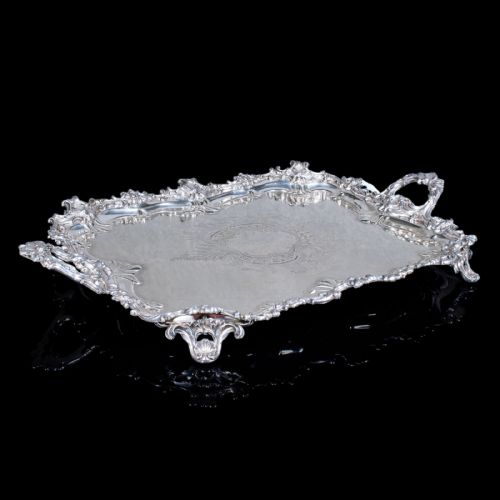


Victorian Silver Plated Waiter
A victorian silver plated waiter is a sturdy metal serving tray for drinks or afternoon tea, offering polished elegance for the home.
Victorian Silver Plated Waiter
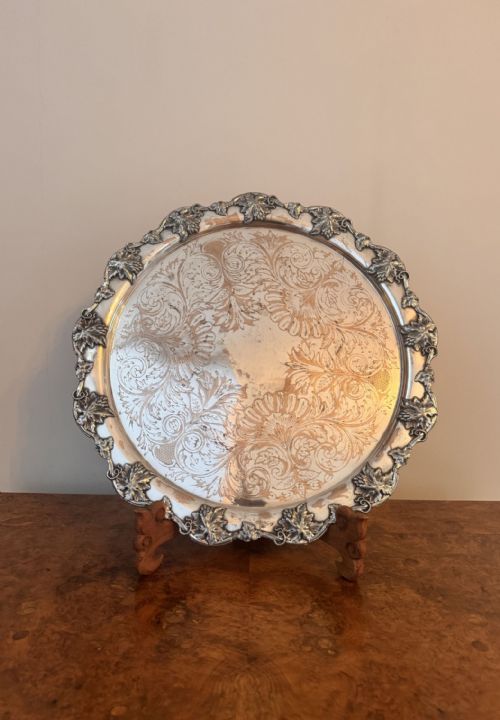
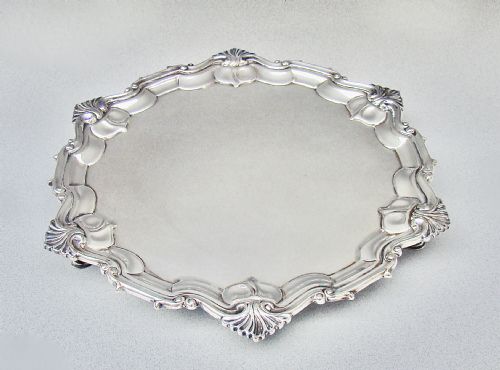
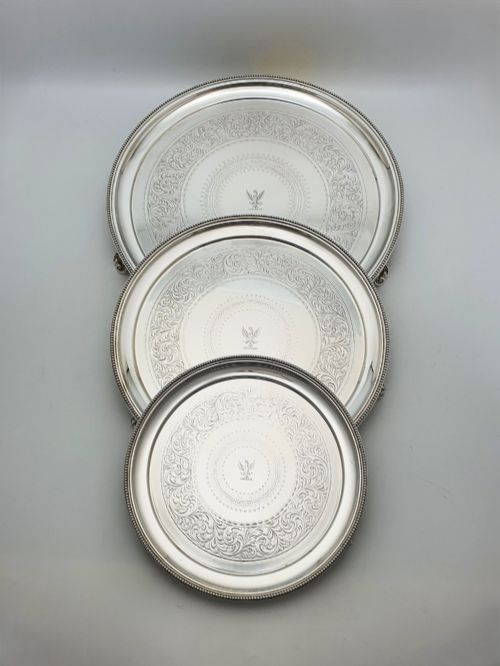
A victorian silver plated waiter is a flat metal serving tray designed for drinks, afternoon tea, or presentation purposes. These pieces appear in circular and oval forms, frequently featuring engraved surfaces and raised detailed rims.
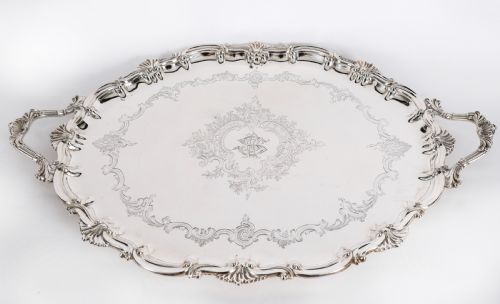
Most examples date from the nineteenth century, including specific years from eighteen fifty to nineteen hundred, alongside later additions. Buyers encounter round salvers and large serving platters with handles or reticulated galleries.
Originating largely from English workshops, these items serve practical functions as serving trays while functioning as decorative antiques. The selection spans straightforward round salvers to monumental presentation trays bearing family crests.
How they were made
These items utilise base metal, copper, nickel silver, and electroplated nickel silver as foundational materials. Artisans applied silver plate and Sheffield plate techniques to coat the base metals with a layer of silver.
Manufacturing methods involve shaping copper or nickel silver into circular and oval trays, followed by surface engraving and the attachment of raised rims. Some pieces incorporate pierced or reticulated galleries and sturdy handles.
Materials span silver plate, base metal, EPNS, nickel silver, Sheffield plate, and copper.
What varies in quality
Quality rests upon the crispness of the engraved surface decoration and the structural integrity of the raised rim or gallery. Superior items display deep, precise hand-engraving and substantial weight in the metal.
The durability of the silver plating over the copper or nickel silver base dictates longevity. Pieces produced by established makers demonstrate superior metal purity and balance.
William Hutton & Sons·Thomas Bradbury & Sons·Elkington·John Harrison·Padley Parkin·J Dixon & Sons·Fenton Russel·Walker & Hall·Lee & Wigfull·J.H. Potter·Philip Ashberry & Sons
The Victorian Silver Plated Waiter Glossary
- Waiter
- A small serving tray or salver used for carrying glasses or cups. These typically feature a raised edge and rest upon small feet.
- Salver
- A flat tray used for serving food or drinks, or for presenting letters and cards. In this context, it is synonymous with a waiter.
- EPNS
- Electroplated nickel silver. This designates a base metal of nickel silver coated with a layer of silver via electrolysis.
- Sheffield plate
- A method of fusing a thin sheet of silver to a thicker copper ingot before rolling them into sheets. This technique predates modern electroplating.
- Gallery tray
- A serving tray featuring an openwork metal gallery or pierced railing around the perimeter to secure items.
Victorian Silver Plated Waiter: Frequently Asked Questions
What is a silver plated waiter used for?
These trays serve drinks, afternoon tea, and small dishes in domestic settings. They also function as decorative display pieces on sideboards and tables.
Historically, they were used by household staff to present letters, cards, or calling cards to guests and hosts.
How do I clean a silver plated waiter?
Maintenance requires a soft cloth and a specialised silver polish formulated for plated items. Avoid abrasive pads or harsh chemical dips that strip the silver layer.
Regular, gentle wiping preserves the underlying copper or nickel silver base and maintains the reflective finish.
How do I date a silver plated tray?
Dating relies on maker marks, style markers such as Rococo Revival motifs, and manufacturing techniques like Sheffield plating versus electroplating. Many pieces bear stamped initials or hallmarks from nineteenth-century English silversmiths.
Comparing the edge decoration and engraving style against known production periods helps narrow the manufacturing decade.
Can I use an antique waiter for food?
Using these items for dry foods or bottled drinks is common practice in modern homes. Ensure the surface is thoroughly cleaned before food contact.
Acidic foods should not remain on silver plate for extended periods to protect the historic metal coating.