


Shell Handle Tray
These shell handle trays bring refined service and display to a room, uniting functional serving forms with sculptural maritime motifs.
Shell Handle Tray
A shell handle tray combines practical service with ornamental design, appearing most frequently in mahogany, silver plate, and sterling silver across Georgian, Victorian, and Edwardian periods.
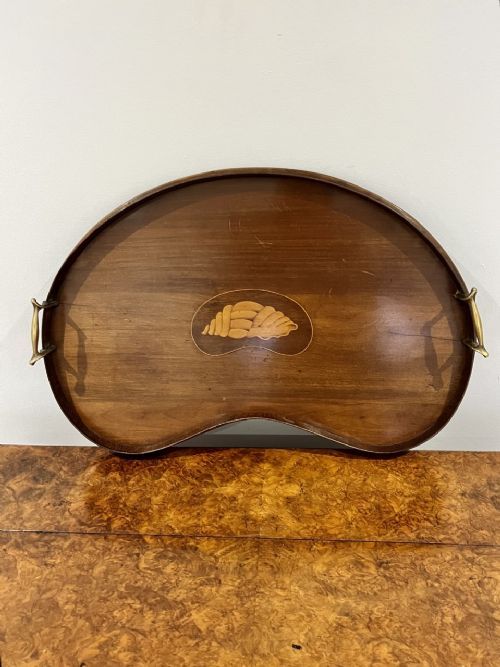
The evidence shows these pieces functioning as afternoon tea platters, serving dishes, decorative trinket trays, and cocktail trays in kidney-shaped or rectangular forms.
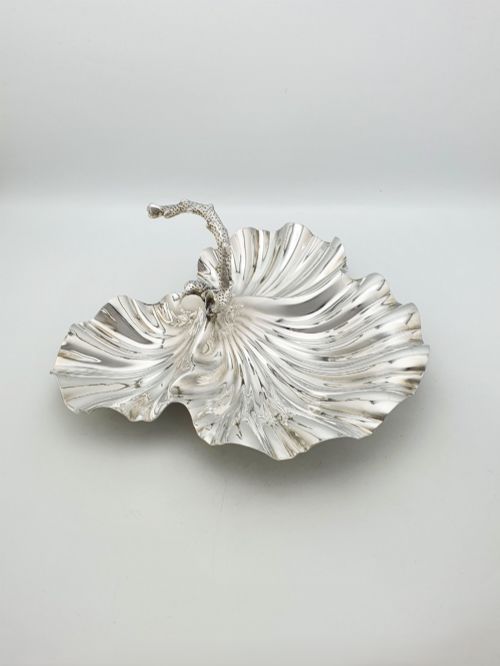
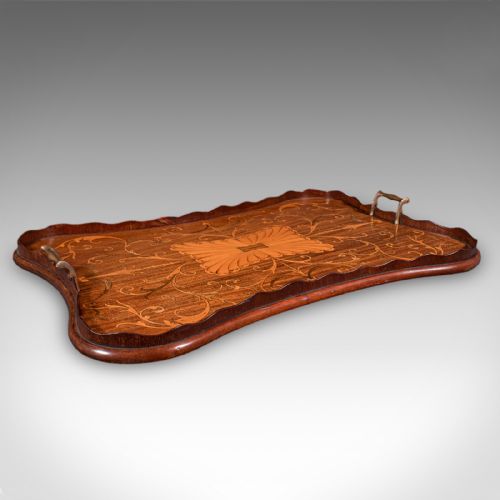
Makers utilised marquetry inlay, burr yew, and stylized coral handles alongside classic mahogany to create distinct serving wares.
Materials and construction
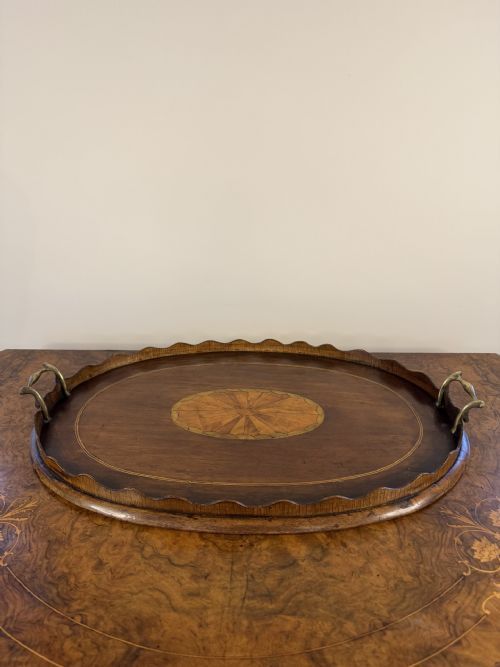
Cabinetmakers worked with solid mahogany, satinwood, and burr yew, often incorporating fine marquetry inlay to embellish the wooden surfaces of the trays.
Metal pieces rely on silver plate, electroplated nickel silver, and sterling silver, paired with cast or applied elements like coral and shell handles.
One Victorian designer clearly looked at a reef and decided your afternoon Earl Grey needed stylized coral for company.
Assessing the work
Quality rests in the precision of the cabinetwork and the crispness of the cast metal handles, distinguishing standard production from exceptional examples.
The sophistication of the timber figure, such as burr yew or satinwood, and the complexity of the marquetry inlay determine the standing of each piece.
Mappin & Webb·Victor Saglier·Royal Worcester
The Shell Handle Tray Glossary
- Marquetry inlay
- Decorative woodwork where small pieces of fitted veneer create pictorial or geometric patterns on the tray surface. This technique requires great precision from the maker.
- Electroplated nickel silver
- A base metal alloy coated with a layer of silver through an electrolytic process. It provided a durable alternative to solid silver for serving wares.
- Burr yew
- A highly figured wood grain obtained from the growths of a yew tree. It is prized for its swirling patterns in Edwardian and Georgian pieces.
Shell Handle Tray: Frequently Asked Questions
What were shell handle trays used for?
These trays served practical roles during afternoon tea, holding porcelain teapots, cups, and silver sugar basins in formal reception rooms. Smaller versions functioned as trinket trays for dressing tables.
Over time, their decorative qualities shifted them from utilitarian pantry items to displayed objects on sideboards and salone tables.
How do I date a mahogany tray?
Dating relies on timber selection, construction methods, and stylistic revival cues visible in the piece. Georgian and late Georgian items often display simpler geometric inlays, while Edwardian pieces frequently feature kidney shapes and burr yew.
Examining the underside and handles helps distinguish eighteenth-century foundations from later revival work.
Are silver plated trays durable?
Silver plated and electroplated nickel silver trays provide robust daily service when handled with appropriate care. The underlying metal alloys resist bending under the weight of heavy tea services.
Polishing requires non-abrasive cloths to preserve the integrity of the plated surface over decades of use.
What is French Rococo Revival style?
This decorative movement draws on eighteenth-century French design, featuring asymmetric curves, scrollwork, and naturalistic motifs like shells and foliage. It appeared frequently on nineteenth-century metalware.
On serving trays, this translated into elaborate cast handles and sculptural borders that echo natural forms.