
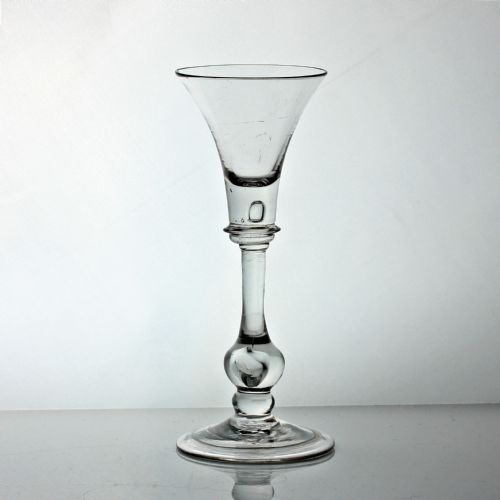


Baluster Stem Goblet
A baluster stem goblet is a heavy drinking vessel from the eighteenth century that collectors prize for its tactile weight and optical clarity.
Baluster Stem Goblet
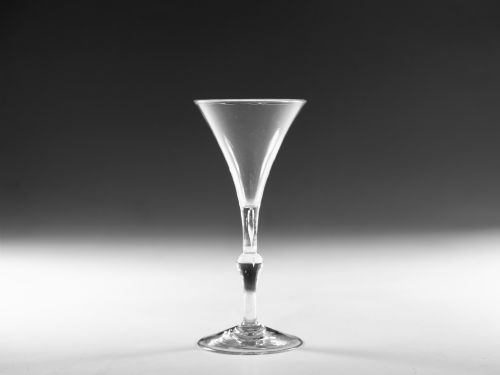
A baluster stem goblet is a drinking vessel defined by an architectural, knopped stem that supports an open bowl above a foot. You are most likely to meet eighteenth century examples originating from English glasshouses, alongside occasional nineteenth century rummers and Victorian glassware.
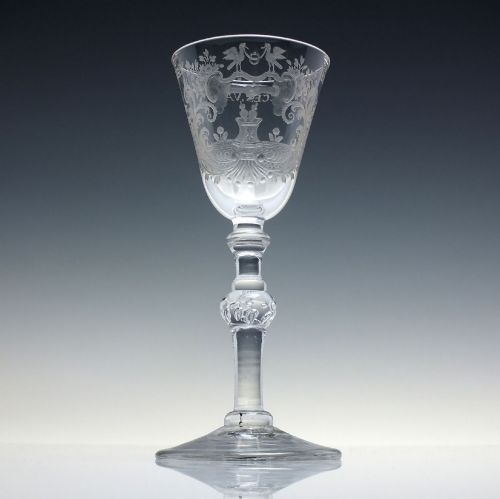
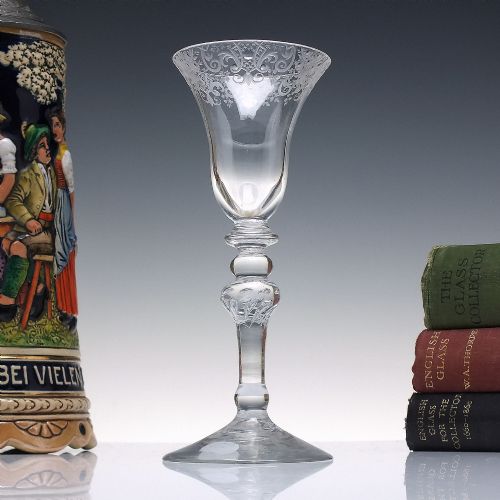
The form spans several distinct stem variations, including early heavy balusters, lighter balusters, and balustroid profiles with intermediate nodes. Bowls take various shapes from flared rims to deceptive depths, frequently decorated with wheel engraving or housing internal air tears.
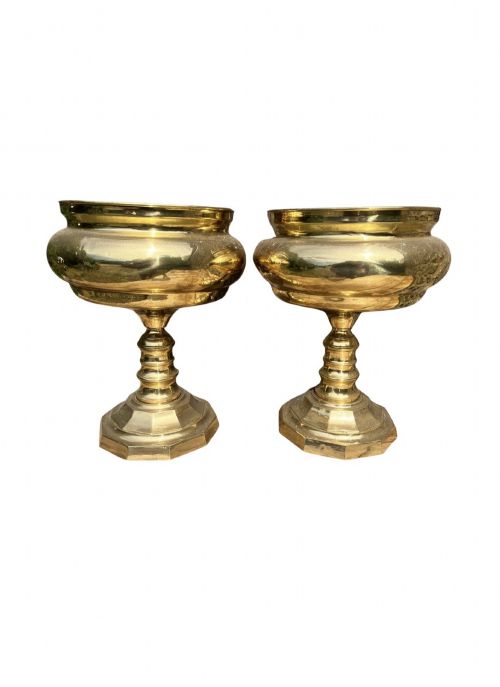
While most pieces in this category are fashioned from clear lead glass or flint glass, the selection also includes coloured glass items, nineteenth century brass vessels, and seventeenth century Bohemian examples.
Materials and Technique
Glassmakers utilised blown glass and heavy lead crystal, manipulating the molten material to form thick walls and substantial bases. The addition of lead oxide produced a brilliant clarity and a resonant ring when struck.
Stems were shaped using optical blowing and applied heat work, incorporating air bubbles known as teardrops trapped within the knops. Engraved decoration was subsequently applied using a wheel to cut floral, heraldic, or commemorative motifs across the bowl.
Some seventeenth century marriage goblets carry good wishes engraved by hand for newlyweds long forgotten.
Assessing Quality
Quality rests upon the proportion and tactile balance of the vessel, where the weight of the bowl matches the substance of the stem and foot. A well-formed baluster stem exhibits confident knop formation and fluid transitions rather than clumsy or heavy-handed joins.
Surface finish dictates value, visible in the depth and sharpness of wheel engraving alongside the chemical purity of the clear lead glass. Superior examples retain their original domed or folded feet, which provide both stability and period authenticity.
The Baluster Stem Goblet Glossary
- Baluster
- A swelling, architectural stem form derived from stair balustrades, featuring prominent knops and nodes.
- Balustroid
- A slender variation of the baluster stem that tapers downwards toward the foot.
- Teardrop
- An intentional elongated air bubble trapped inside the stem or knop of a drinking glass.
- Dram glass
- A small drinking vessel designed for consuming spirits, often featuring a thick bowl.
- Rummer
- A heavy, large-bowled drinking glass popular during the late eighteenth and nineteenth centuries.
Baluster Stem Goblet: Frequently Asked Questions
What is a baluster stem?
A baluster stem is a thickened, knopped support column beneath the bowl of a drinking glass. It borrows its architecture from classical balustrades.
These stems provide a heavy, tactile grip and were standard production for English glasshouses during the Georgian period.
How do I date an old goblet?
Dating relies on observing the profile of the stem, the shape of the bowl, and the construction of the foot. Early eighteenth century pieces feature heavier baluster forms.
Later examples transition into slender balustroids and nineteenth century rummers with broader, more utilitarian proportions.
What are air tears?
Air tears are elongated bubbles deliberately trapped within the glass during the blowing process. Makers positioned them inside the stem knops.
They catch the light and serve as a decorative element characteristic of Georgian lead glass manufacturing.
Are these glasses safe for use?
While these vessels are sturdy antiques made from lead glass or crystal, many collectors prefer display over daily use. The material is strong but vulnerable to thermal shock.
Hand washing in lukewarm water protects the historic surface and engraved details from modern detergent damage.