
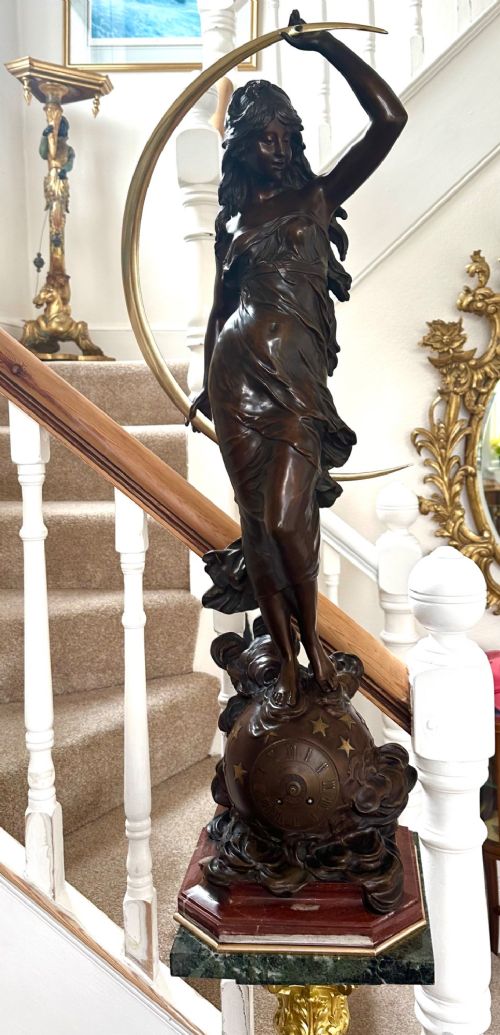


Auguste Moreau Bronze Sculpture
Auguste Moreau bronze sculpture captures the romantic spirit of nineteenth-century French artistry, offering collectors figural elegance rooted in classical mythology.
Auguste Moreau Bronze Sculpture
When you search for auguste moreau bronze sculpture, you encounter figural works originating from nineteenth-century France that typically depict mythological figures, cherubs, or allegorical subjects such as Selene, Aurora, and Cupid. These pieces frequently manifest in forms ranging from standalone statues to decorative mantel clocks and table lamps.
The selection on this page reflects the broader output associated with the Moreau artistic family, particularly the works of Auguste Moreau and Louis Auguste Moreau. Collectors regularly find both direct signatures and casts produced after their original models.
While many examples are cast in bronze, the inventory also includes alternative metallic mediums such as spelter and patinated metal, often mounted on stone bases like marble or onyx.
Materials and Casting Techniques
The primary medium for these works is bronze, complemented by the frequent use of spelter, a zinc alloy utilised during the nineteenth century for decorative figural casting. Patination techniques applied to the metal surfaces generate varied dark patina, silvered, and gilt finishes that define the contours of drapery and anatomy.
Many figures are paired with integral bases or architectural mounts fashioned from marble and onyx, providing structural stability and contrast to the metallic forms. Certain functional objects incorporate glass elements, particularly within table lamps and clock components associated with the figural sculptures.
Cupid occasionally trades his bow for a flute, proving that even mythological matchmakers appreciate a musical interlude.
Assessing Quality and Execution
The refinement of the chasing and the crispness of the surface detail distinguish superior casts from simpler production pieces. Skilled finishing after the casting process preserves the delicate facial expressions, hair texture, and flowing drapery characteristic of French nineteenth-century sculpture.
The integrity of the material and the character of the patination also dictate the distinction between a bronze cast and a spelter alternative. Original bases of matching marble or onyx, alongside signed inscriptions, contribute to the overall coherence and desirability of the piece.
Auguste Moreau·Louis Auguste Moreau
The Auguste Moreau Bronze Sculpture Glossary
- Patinated Bronze
- Bronze treated with chemical solutions to produce a specific surface colour and tone. This finish protects the metal and accentuates sculptural details.
- Spelter
- A zinc-based alloy commonly used as a cost-effective alternative to bronze in nineteenth-century decorative figures. It often received a bronze-like or silvered coating.
- Art Nouveau
- An international style of art and architecture prevalent in the late nineteenth and early twentieth centuries. It is characterised by organic, flowing lines inspired by natural forms.
- Mantel Clock
- A decorative clock designed to sit on the shelf of a fireplace mantel. These pieces frequently incorporate figural sculptures as part of their housing.
Auguste Moreau Bronze Sculpture: Frequently Asked Questions
How do I identify an authentic signature?
Signatures appear cast or engraved directly onto the base or body of the sculpture, usually taking the form of Aug. Moreau or Auguste Moreau.
Comparing the lettering style and placement against documented examples helps confirm the signature's authenticity.
What is the difference between bronze and spelter?
Bronze is a durable copper alloy that takes fine detail and patination exceptionally well. Spelter is a softer zinc alloy that feels lighter and requires careful handling to preserve its finish.
Both materials were used extensively for nineteenth-century French figural works.
How should I clean my sculpture?
Dust the surface gently with a soft, dry cloth to prevent the accumulation of particles. Avoid using chemical polishes or water, which can damage the patinated surface.
Professional conservation advice should be sought for deep cleaning or restoration.
Where were these sculptures made?
These works originated in France during the nineteenth and early twentieth centuries, produced within the vibrant Parisian artistic and foundry network.
Foundries used sand-casting and lost-wax methods to translate the sculptors' clay and plaster models into metal.