
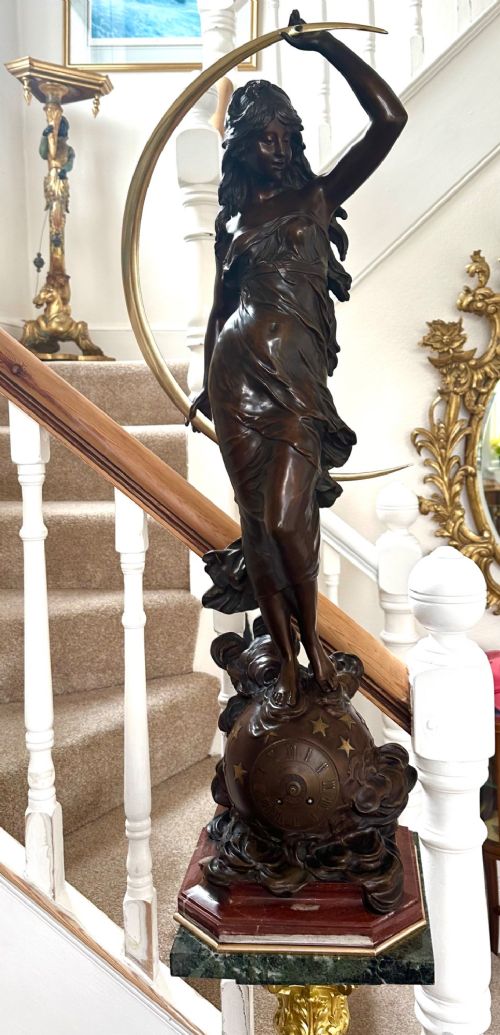


Auguste Moreau Statue
An auguste moreau statue brings the grace of nineteenth-century French sculpture into a room through classical figures cast in bronze and carved in marble.
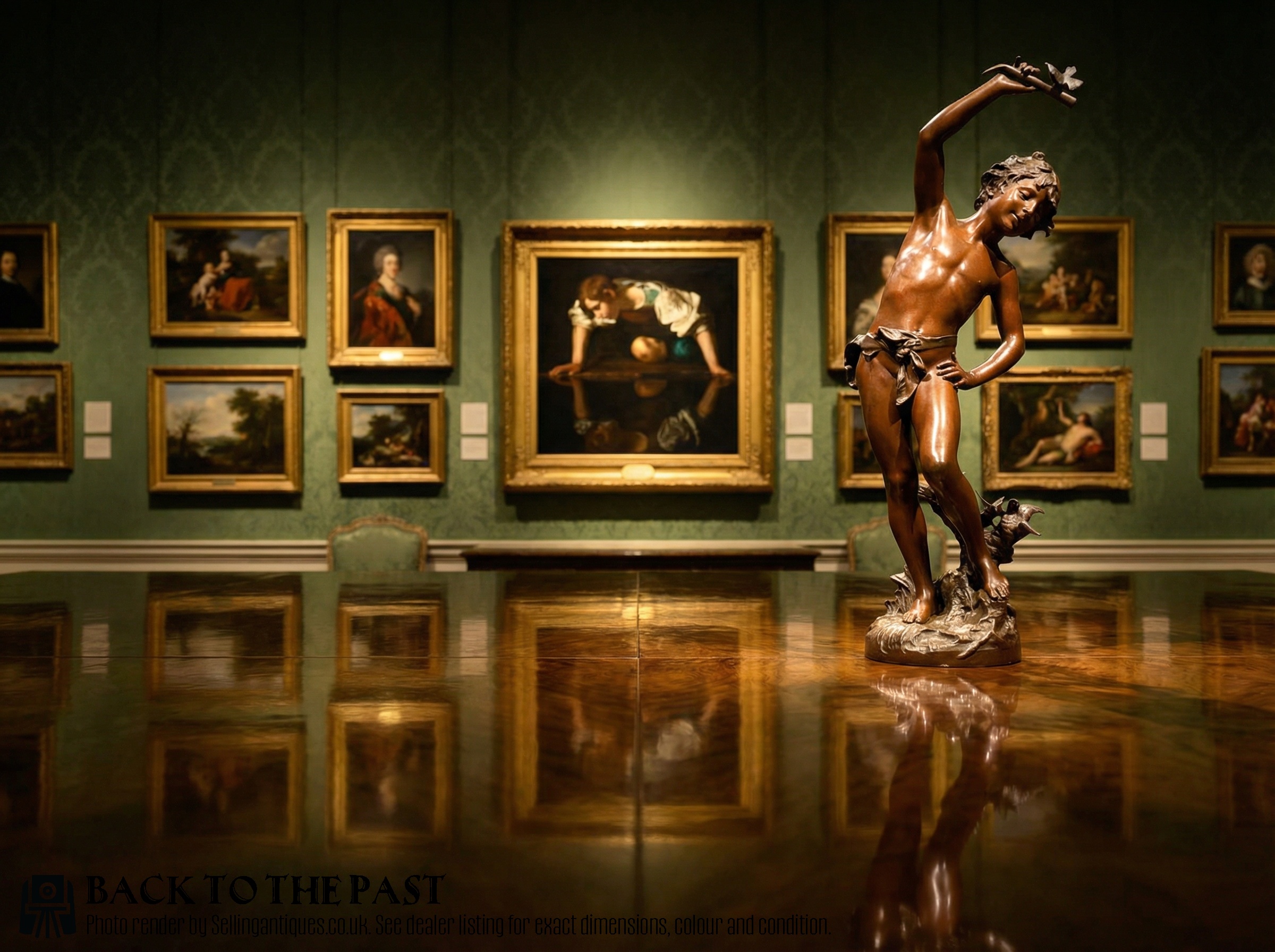
Auguste Moreau Statue
An auguste moreau statue captures the figurative spirit of nineteenth-century French sculpture, depicting mythological subjects, allegorical themes, and youthful figures such as Selene, Aurora, Cupid, and Eros. These pieces frequently emerge from the Victorian era and the Art Nouveau movement, translating classical narratives into domestic scale.
The inventory on this page ranges from substantial bronze sculptures of flute players and chariots to portrait busts carved from Carrara marble and figures cast in patinated metal or spelter. Works by Louis Auguste Moreau and pieces created after the artist sit alongside signed originals, reflecting the varied output of the Moreau family workshops.
Materials and construction
Foundry work dominates these listings, utilising cast bronze finished with dark patinas, gilt accents, or bronzed surfaces to accentuate the contours of drapery and muscle. Marble provides a contrasting medium for portrait busts, offering a smooth, pale surface carved to capture facial expression and hair.
Alternative metals such as spelter appear with patinated finishes, serving as a more accessible medium for figurative work during the late nineteenth century. Signatures are often cast or engraved directly into the base material alongside titles that identify mythological subjects.
Several figures carry musical instruments or ride chariots, proving that ancient deities enjoyed a very active social calendar.
Distinctions in execution
Material choice also defines the tier of a piece, with heavy cast bronze and carved Carrara marble representing the upper register of the medium. Spelter and patinated metal examples offer similar sculptural forms while employing more economical materials suited to broader production.
Auguste Moreau·Louis Auguste Moreau
The Auguste Moreau Statue Glossary
- Patinated bronze
- Bronze treated with chemical solutions to produce a specific surface colour, ranging from deep brown to metallic green. This coating protects the metal and defines the visual depth of the sculpture.
- Spelter
- A zinc alloy frequently used as a substitute for bronze in nineteenth-century figures. It accepts a painted or bronzed finish to simulate more costly metals.
- Carrara marble
- A type of white or blue-grey marble quarried in the city of Carrara in northern Italy. Sculptors favour it for its fine grain and luminous quality.
- Art Nouveau
- An international style of art and architecture that peaked in popularity around the turn of the twentieth century. It is characterised by organic motifs, sinuous lines, and flowing figurative forms.
- Chasing
- The manual refinement of a metal casting using small punches and hammers to sharpen details and remove surface imperfections. This finishing work bridges the gap between foundry production and finished art.
Auguste Moreau Statue: Frequently Asked Questions
Are these pieces original?
The selection includes period-signed sculptures alongside works produced after the artist during the nineteenth and early twentieth centuries. Each listing details the specific attribution recorded on the piece.
Signatures vary from cast inscriptions on the base to engraved maker marks associated with the Moreau family workshops and contemporary foundries.
What materials are most common?
Bronze and patinated metal form the majority of the figurative sculptures on this page. Marble appears in portrait work, while spelter represents alternative metal compositions from the period.
Surface finishes include dark patinas, gilt highlights, and bronzed coatings applied to accentuate anatomical detail and drapery.
How should I clean a bronze statue?
Dusting gently with a soft, dry microfibre cloth is sufficient for routine maintenance of bronze and metal surfaces. Avoid using commercial polishes, water, or chemical cleaners that can strip the original patina.
Marble components benefit from a gentle wipe with a damp cloth followed immediately by dry buffing, keeping moisture away from any adjoining metal joins.
What subjects do these statues depict?
Mythological figures, allegories of nature, and youthful genre subjects dominate the sculptural output. Common themes include classical deities, water carriers, nymphs, and representations of dawn or the breeze.
Titles often reference specific literary or classical allusions such as Selene, Eros, Aurora, and the dance of the nymphs.