





Bronze Cherub Sculpture
A bronze cherub sculpture brings classical mythology and playful winged figures into domestic interiors, spanning French foundry work and Italian Grand Tour pieces.
Bronze Cherub Sculpture
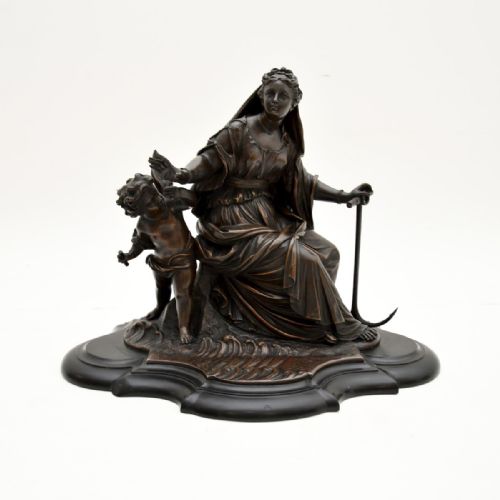
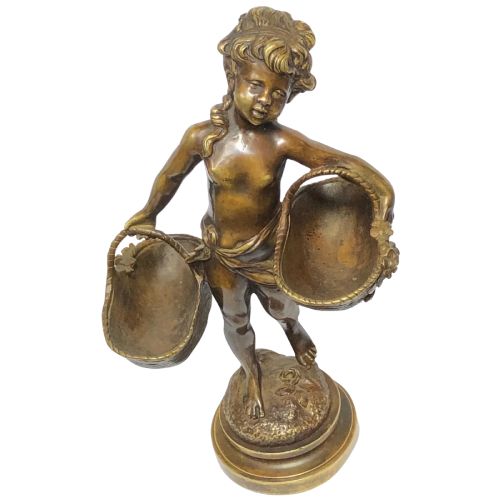
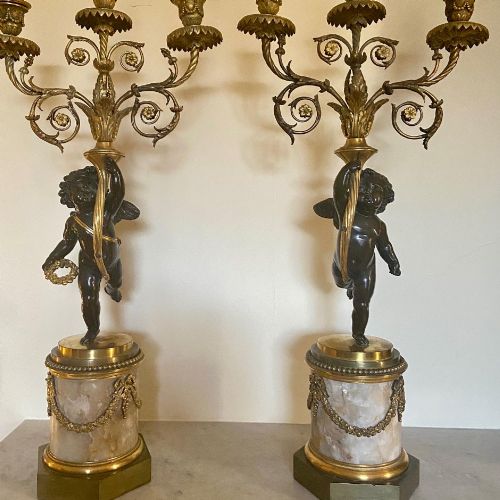
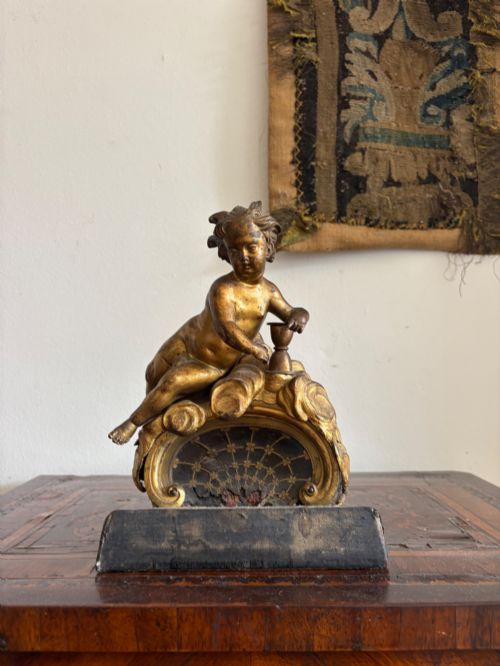
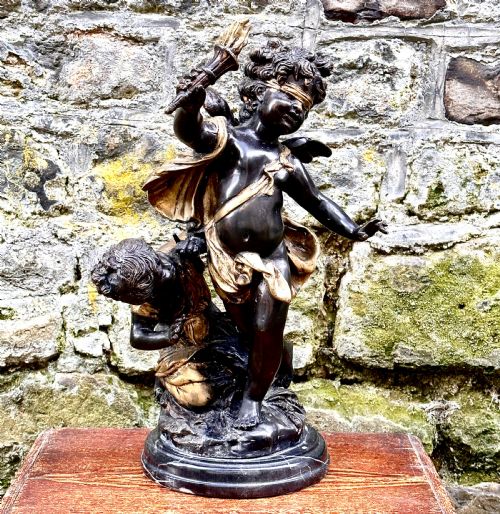
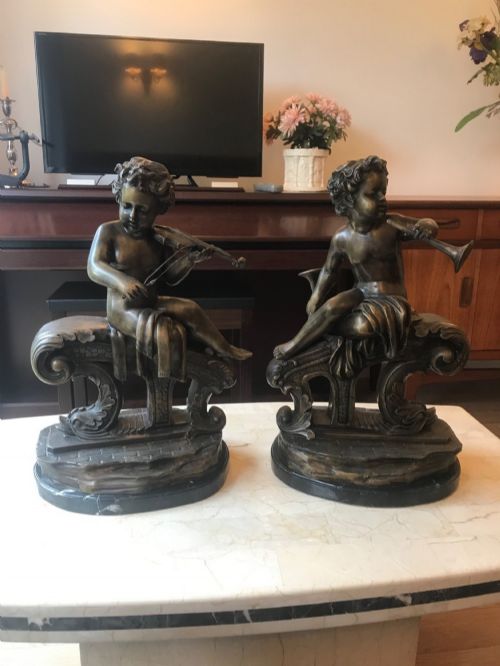
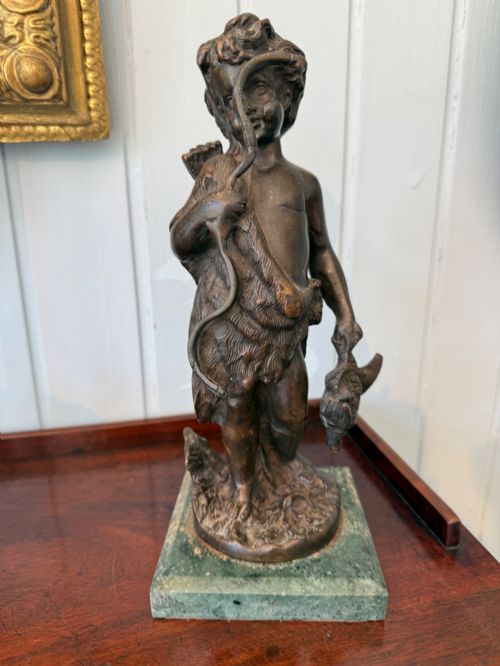
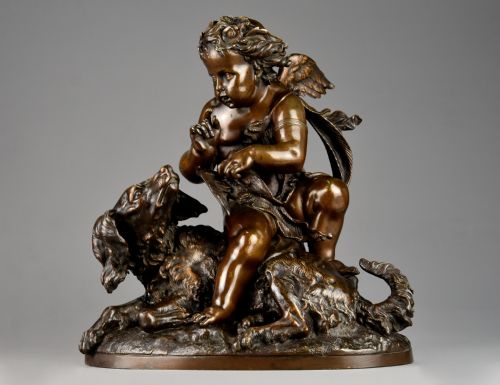
A bronze cherub sculpture depicts winged children, putti, or cupids engaged in musical, harvest, or mythological pursuits. Buyers exploring this category encounter figures cast as standalone statues, lamp bases, bookends, and clock mounts.
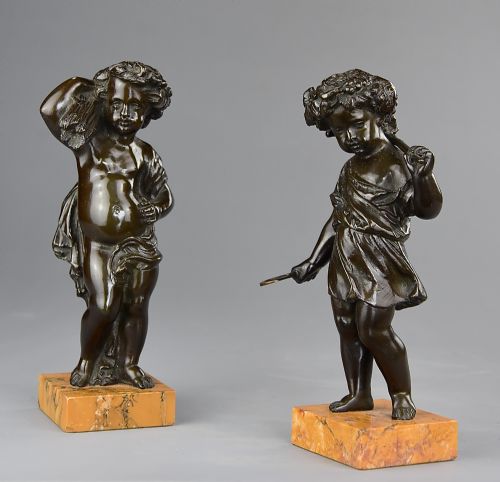
The majority of pieces originate from nineteenth-century French foundries and Italian workshops influenced by classical antiquity and eighteenth-century models. These range from small desk ornaments and finials to substantial paired allegorical figures mounted on marble bases.
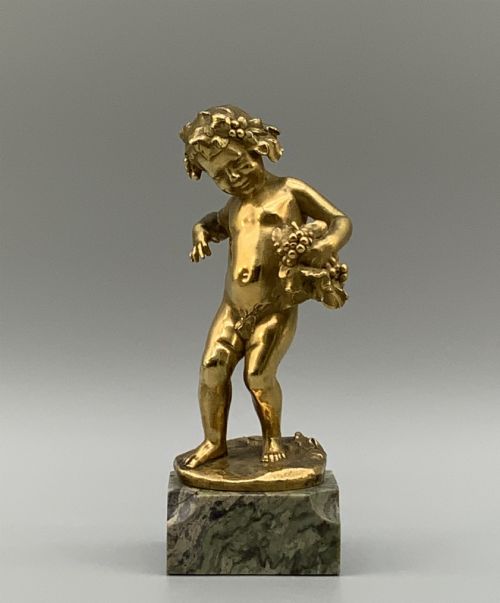
Makers frequently drew inspiration from classical mythology, depicting figures with grapes, bows, musical instruments, or animals. Collectors find both single decorative figures and symmetrical pairs designed for mantelpieces or side tables.
Materials and casting methods
Foundries utilised traditional lost-wax or sand-casting techniques to shape molten metal into complex anatomical forms. The resulting cast bronze was then chased with tools to sharpen details in hair, wings, and drapery.
Surfaces received different treatments, including chemical patination to produce rich brown or dark tones, or the application of gold leaf and ormolu. Certain French and Italian compositions also incorporate marble plinths, carved wood, and fluorspar to complement the metal.
Bronze Cherub Sculpture Retail Price Guide 2026
Typical asking prices for bronze cherub sculpture among the pieces listed under this phrase on Sellingantiques today, from the lower quarter to the upper quarter. They describe what is for sale here now, not the wider market.
Several bronze putti double as functional companions, holding up musical triangles, guarding books, or casually wrestling with family spaniels and goats.
Distinguishing quality in casts
Quality rests primarily on the crispness of the chasing work and the depth of the casting detail after the metal leaves the mould. Superior examples retain fine definition in facial expressions, feathers, and fingers without softness or blurred edges.
The choice and execution of the surface finish also separate standard productions from finer pieces. Skilful patination, well-preserved gilding, and the integration of solid marble or ormolu bases indicate careful workshop execution.
Charles Louis Malric·Susse Frères·Claude Michael Clodion·Francois Redmond·K and O·Leon Message·Jollet et Cie·Louis Auguste Moreau·Georges Van De Voorde·Charles Cumberworth·Carrier
The Bronze Cherub Sculpture Glossary
- Putto
- A plump, often winged male child figure frequently found in classical art. These figures appear widely in Renaissance and nineteenth-century decorative bronzes.
- Ormolu
- Gilt bronze produced by applying finely ground gold mercury amalgam to a bronze base. This technique creates a rich golden surface common on decorative mounts and clock garnitures.
- Patination
- The surface coloration of bronze achieved through natural ageing or chemical treatments. It protects the metal while producing varied brown, black, or greenish tones.
- Grand Tour
- Souvenirs collected by affluent travellers touring cultural sites in Italy during the eighteenth and nineteenth centuries. These include reduced bronze casts of classical sculptures and putti.
- Lost-wax casting
- A method where a metal alloy is poured into a mould created by replacing a wax model with refractory material. This process allows for intricate undercuts and delicate anatomical details.
Bronze Cherub Sculpture: Frequently Asked Questions
How do I identify a nineteenth-century cast?
Nineteenth-century bronzes generally exhibit heavier weight, hand-finished chasing marks in recessed areas, and patination that shows natural wear over decades. Foundry stamps and signatures from known French or Italian makers often appear near the base.
Closer inspection of the metal reveals casting seams that were laboriously filed down by hand before finishing. Modern reproductions often lack this level of manual surface refinement and precise anatomical definition.
What is the difference between a cherub and a putto?
Art historical terminology distinguishes between biblical cherubim and secular putti, though the terms are frequently used interchangeably in trade descriptions. Putti derive from classical mythology as attendants to deities like Venus or Bacchus.
Renderings of putti often feature them holding grapes, musical instruments, or hunting equipment. Cherubs, by contrast, originate in religious iconography, yet nineteenth-century bronze makers applied both labels broadly to winged children.
How should I clean antique bronze?
Maintenance requires only gentle dusting with a soft, dry cloth to remove surface particles. Avoid chemical polishes, abrasives, or water, as these can strip the original historical patina and damage the metal surface.
If a piece accumulates heavier grime, professional conservation advice is recommended. Preserving the original chemical or applied finish maintains the visual integrity and character of the sculpture.
Where were these sculptures displayed historically?
In nineteenth-century drawing rooms and libraries, bronze figures served as decorative mantel ornaments, bookends, and lamp bases. Pairs often flanked clocks or candelabra on formal salon surfaces.
Grand Tour bronzes were displayed in studies to signify cultural refinement and travel. Today, they transition easily onto sideboards, desks, and architectural brackets in contemporary interiors.