

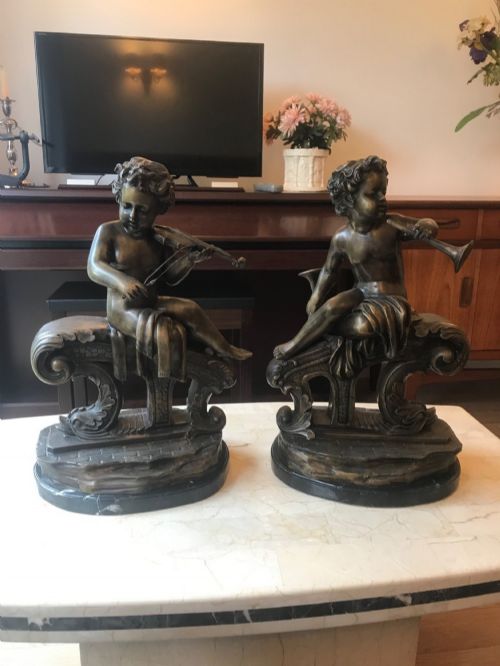
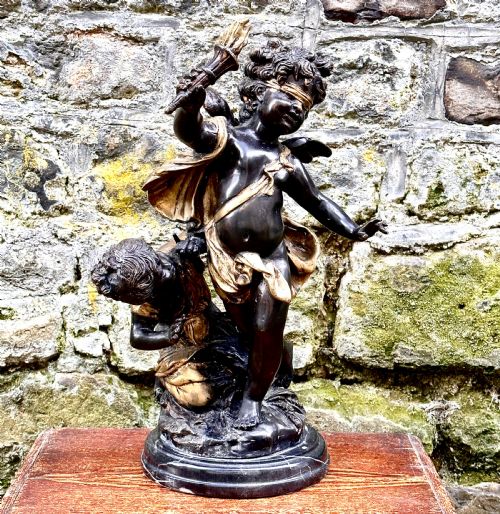
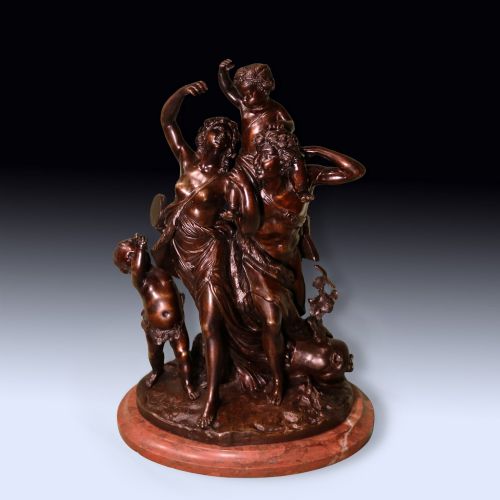
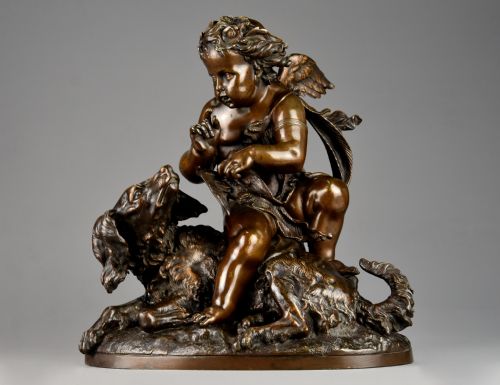


Bronze Putto Statue
A bronze putto statue captures the lively spirit of classical mythology, bringing winged infants and cherubs into nineteenth-century interiors.
Bronze Putto Statue
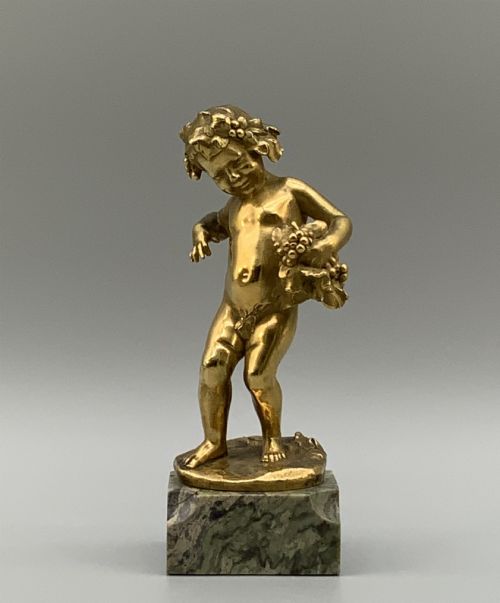
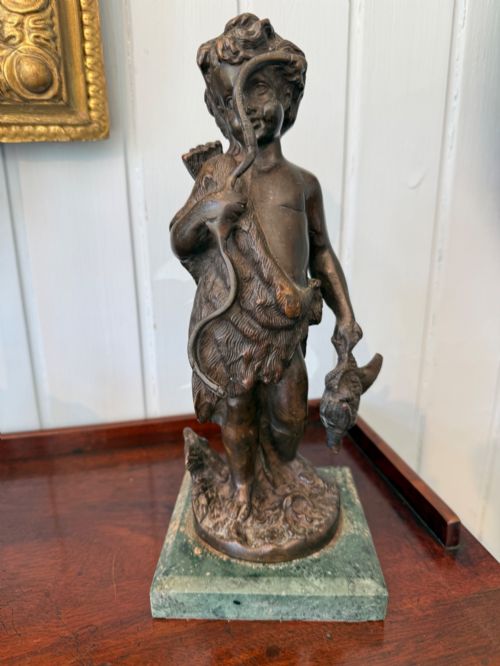
A bronze putto statue brings neoclassical and rococo revival forms into domestic spaces, drawing heavily on French and Italian design traditions. Buyers encounter figures playing musical instruments, gathering grapes, or holding bows, often modelled after classical sculptors like Clodion.
The selection ranges from small statuettes and finial ornaments to large mantel clocks, table lamps, and grand tour groups mounted on marble bases. French and English foundries dominate the offerings, spanning the Georgian era through to the early twentieth century.
Materials and casting methods
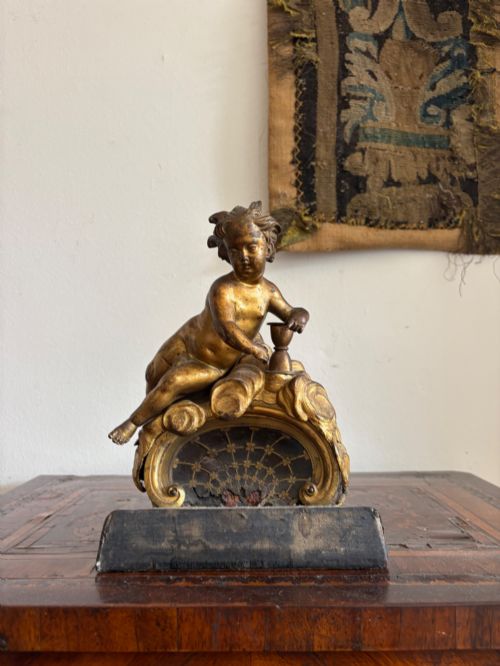
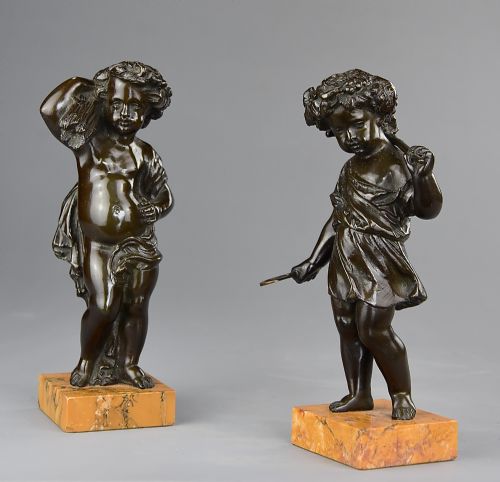
Foundries cast these figures primarily in bronze, utilising both patinated and gilt finishes alongside ormolu details. Marble frequently serves as a heavy base for figures and groups, while secondary materials like wood, glass, enamel, and even silvered bronze appear in clock cases and decorative mounts.
Casting techniques rely on traditional lost-wax or sand-casting methods, followed by meticulous hand-chasing to refine hair, drapery, and facial expressions. The resulting metal receives either a dark chemical patina or fire-gilding to achieve rich surface tones.
Listings feature materials including patinated bronze, gilt bronze, marble, and ormolu across the nineteenth and early twentieth centuries.
Assessing craftsmanship
The integration of secondary elements, such as fitted marble plinths, hand-painted clock dials, and signed foundry marks or artist signatures, elevates certain pieces above standard decorative castings.
Charles Louis Malric·Susse Freres·Louis Auguste Moreau·Charles Cumberworth·Bellenot Paris
The Bronze Putto Statue Glossary
- Putto
- A plump, often winged infant figure derived from classical art and frequently depicted in Renaissance and revival sculpture. These figures embody mischievous or allegorical traits.
- Ormolu
- Finely ground high-carat gold applied to a bronze object through a mercury amalgamation process. This technique creates a durable, luminous golden surface finish.
- Grand Tour
- A cultural journey undertaken by nineteenth-century Europeans to collect classical antiquities and bronze souvenirs. These acquired pieces often replicated famous sculptural groups.
- Patination
- The chemical or natural alteration of the bronze surface over time. A deliberate dark brown or green tone enhances the sculptural contours.
Bronze Putto Statue: Frequently Asked Questions
What is a putto?
A putto is a chubby, winged infant figure originating in classical mythology and frequently revived during the neoclassical and rococo periods. Sculptors rendered these figures as cherubs, cupids, or allegorical children.
In decorative art, they often represent harvest themes, music, or romantic play.
How do I identify Grand Tour bronzes?
Grand Tour bronzes typically emerge from nineteenth-century Italian or French workshops catering to travellers collecting classical replicas. They frequently feature detailed patination and are mounted directly onto heavy marble bases.
These pieces often depict well-known mythological figures and marine motifs.
Where were these statues placed?
Nineteenth-century interiors utilised these bronze figures as mantel clock mounts, table lamps, candlesticks, and standalone shelf sculptures. Smaller castings functioned as architectural finials or decorative doorstops.
Pairs were commonly arranged symmetrically on sideboards or mantelpieces.
What is the difference between gilt bronze and ormolu?
Gilt bronze describes any bronze object coated with a layer of gold, whether through leaf or chemical application. Ormolu specifically refers to mercury-gilded bronze common in French decorative arts.
Ormolu displays a distinct, warm lustre that resists tarnishing over centuries.