
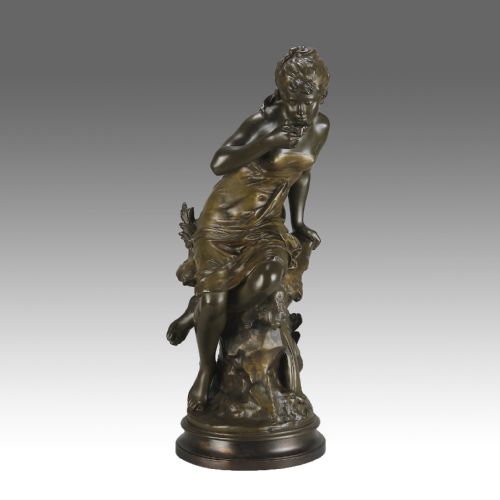


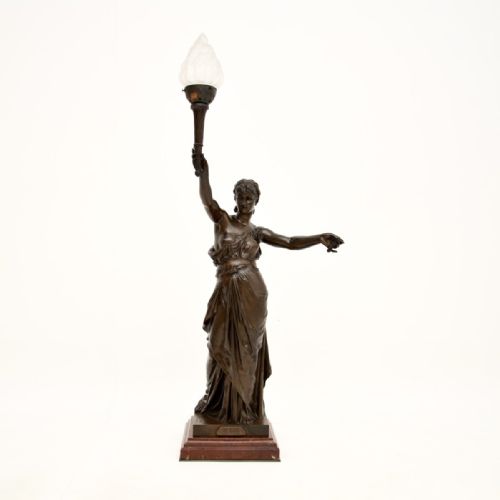
Allegorical Bronze Sculpture
These allegorical bronze sculpture pieces personify abstract ideas like harvest, peace, and progress, bringing classical narrative directly into the home.
Allegorical Bronze Sculpture
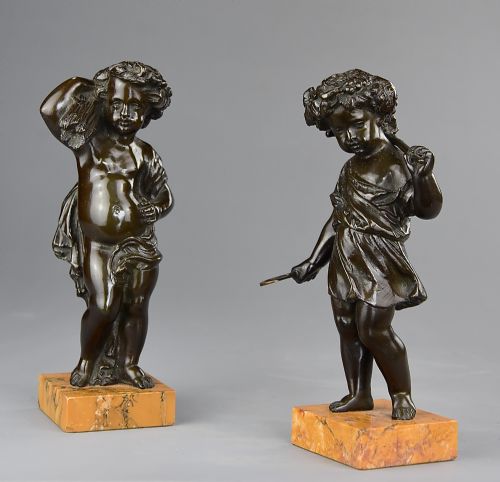
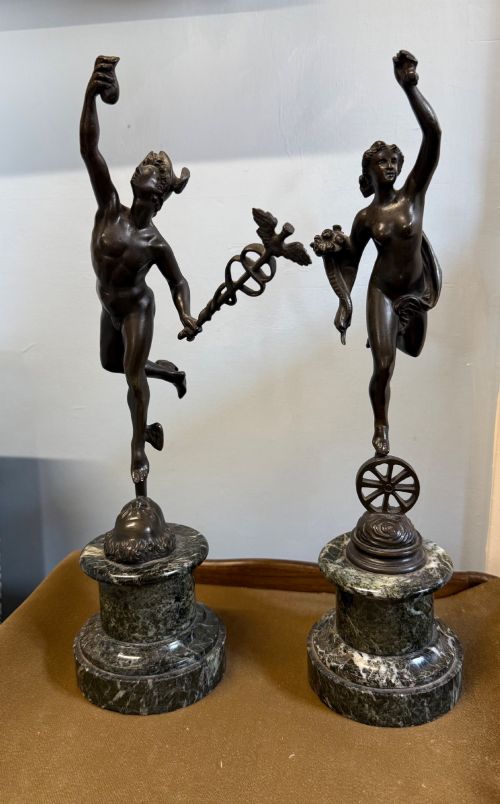
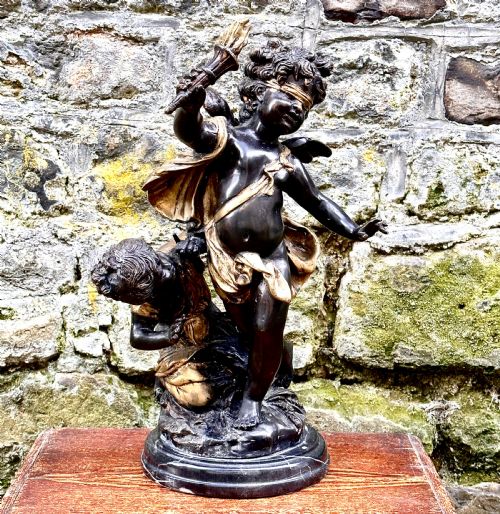
When you search for an allegorical bronze sculpture, you encounter figures personifying seasons, virtues, or mythological concepts such as Harvest, Pax, and Fortuna. The most common examples on this page are nineteenth-century French figures, often cast as pairs of putti, dancers, or classical maidens.
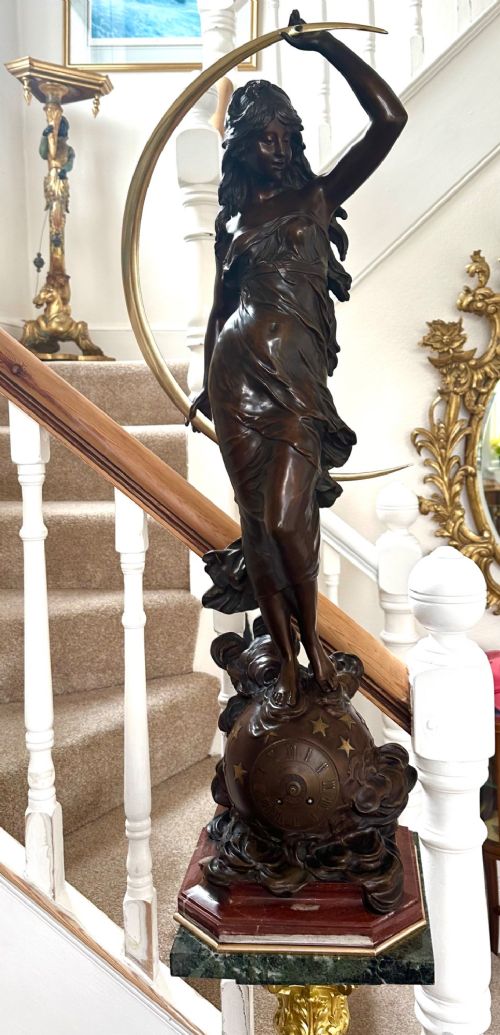
Many of these works draw directly upon mythological archetypes, depicting figures like Selene, Aurora, or Spring. They frequently appear integrated into functional objects such as mantel clocks, lamps, and clock garnitures, as well as standing independently on marble plinths.
The aesthetic spans several distinct French movements, moving from Neoclassical and Rococo Revival styles into the flowing organic lines of Art Nouveau. Makers frequently cast these figures after established sculptors, capturing classical academic ideals for bourgeois nineteenth-century interiors.
Materials and casting methods
Foundry work relied heavily on traditional bronze casting, producing patinated surfaces that range from deep dark tones to bright gilt bronze and ormolu. Spelter and cast metal also appear as alternative base materials in place of solid bronze.
Sculptors mounted these metal figures firmly onto heavy bases constructed from various stones, most notably white and green marble. Enamel and wood details occasionally complement the metalwork, particularly within complex clock garnitures and lamp bases.
Even allegorical figures of hard labour need a rest; harvest putti and dancers frequently pause mid-task with remarkably tidy hair.
Distinctions in execution and finish
The choice of secondary materials marks a clear division, with heavy turned green or white marble plinths and gilt ormolu mounts indicating higher-tier production. Foundries known for rigorous standards, such as Barbedienne, achieved superior patination and assembly compared to anonymous commercial workshops.
August Moreau·Mathurin Moreau·Emile Louis Picault·Ernst Barrias·Barbedienne·Jean-Jules Cambos·Victor Paillard
The Allegorical Bronze Sculpture Glossary
- Allegory
- The representation of abstract ideas through human figures or narrative scenes. Sculptors used these symbolic motifs to embody concepts like liberty, literature, or the seasons.
- Patina
- The chemical colouration applied to the surface of the bronze. This finish deepens the metallic tones and protects the metal over decades of exposure.
- Ormolu
- Gilding technique involving finely ground gold applied to a bronze base. It provides a bright, durable golden surface characteristic of Louis XVI and revival styles.
- Spelter
- A zinc alloy utilised as an economical alternative to bronze. It often mimics the weight and appearance of bronze once patinated.
- Putto
- A plump naked child figure, often winged, derived from classical art. They frequently appear in pairs representing harvest, music, or comedy.
Allegorical Bronze Sculpture: Frequently Asked Questions
What is an allegorical sculpture?
An allegorical sculpture depicts a human figure that represents an abstract concept, such as agriculture, justice, or the seasons. Artists use symbolic attributes like wheat sheaves, chariots, or scrolls to communicate the deeper meaning.
These pieces allowed nineteenth-century homes to display classical learning and refined taste through decorative art. They range from small tabletop figures to monumental clock garnitures.
How do I identify Art Nouveau pieces?
Art Nouveau pieces feature flowing, organic lines inspired by natural forms rather than strict classical symmetry. Hair, drapery, and plant motifs tend to whip and curve dynamically.
This style emerged strongly toward the end of the nineteenth century, contrasting sharply with earlier rigid Neoclassical interpretations.
Were these sculptures made as pairs?
Many nineteenth-century figures were cast as balanced pairs representing complementary concepts, such as day and night or harvest dancers. These matching sets were designed to flank mantel clocks or architectural focal points.
Single figures also appear frequently, often standing independently on marble plinths or integrated into lamp bases.
What is the difference between bronze and spelter?
Bronze is a durable copper alloy that accepts rich patination and holds crisp casting details across centuries. Spelter is a softer, lighter zinc-based metal that was used to produce more affordable decorative figures.
Spelter pieces often show lighter weight and different surface wear compared to solid bronze castings.