


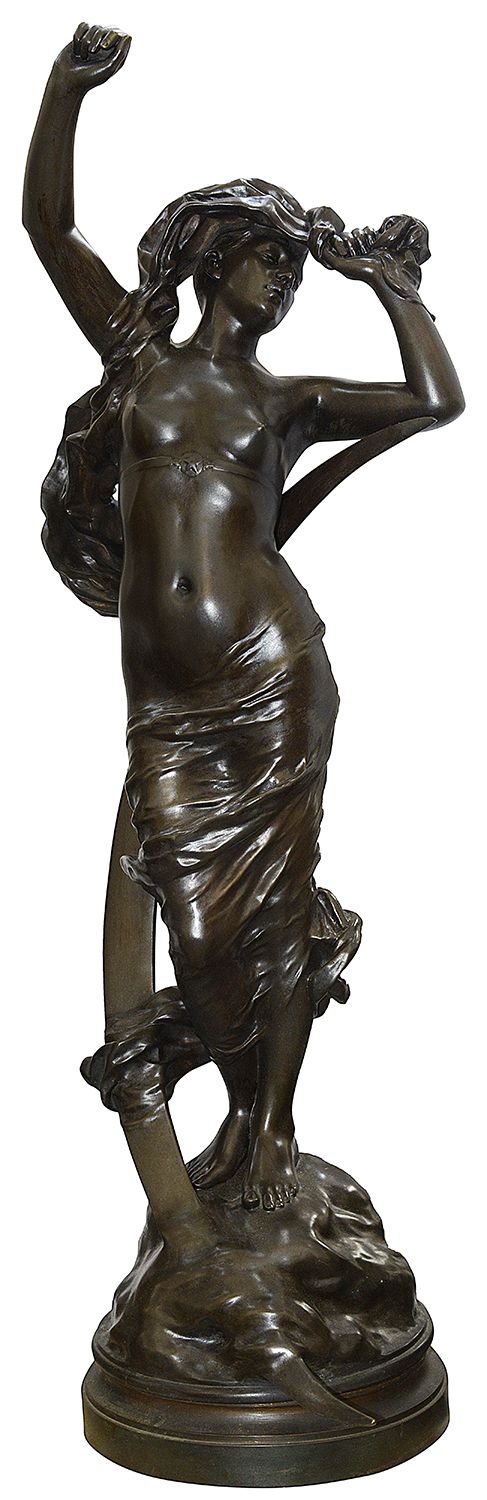


Dark Bronze Nymph Sculpture
A dark bronze nymph sculpture brings classical mythology and fluid movement into a room through enduring cast metal.
Dark Bronze Nymph Sculpture
A dark bronze nymph sculpture represents mythological female figures cast in metal, appearing in forms ranging from freestanding figures to figural vases across the nineteenth and early twentieth centuries. These pieces emerge from French classical, neoclassical, rococo revival, and art nouveau traditions.
The most common examples on this page date to the nineteenth century, capturing maidens, dancers, and pipers in patinated bronze. Makers working in Paris during this period utilised traditional casting methods to render drapery, foliage, and the human form with great care.
Materials and construction
Foundry workers cast these figures in bronze before applying chemical patination to achieve deep brown, black, or greenish dark tones on the metal surface. Many examples incorporate marble bases or plinths to support the weight of the cast metal.
Several nymphs are caught mid-dance or playing pipes, proving that ancient Greek spirits knew how to hold a rhythm.
Assessing quality in cast bronze
Quality rests in the crispness of the chase work and the sensitivity of the modelling, where finer casts retain sharp definition in hands, drapery folds, and facial expressions without obscuring the original sculptor's intent. The depth and subtlety of the patination layer also distinguish superior pieces from heavier, less nuanced applications.
The integration of the figure with its base, whether carved marble or cast bronze, indicates the standard of workshop production. Finer sculptures demonstrate balanced proportions and secure mechanical joints where separate cast elements meet.
Auguste Moreau·S. Kinsburger·Clodion·Charles Korschann·Eugène Désiré Piron·Houdebine
The Dark Bronze Nymph Sculpture Glossary
- Patinated bronze
- Bronze that has been treated with chemical solutions to produce a specific surface colour and finish. This dark coating protects the metal and defines the sculptural contours.
- Lost wax casting
- A method of metal casting where a molten metal is poured into a mould that has been created by means of a wax model. This technique allows for intricate detail in figurative work.
- Neoclassical
- A style spanning the eighteenth and nineteenth centuries that draws inspiration from the classical art and culture of ancient Greece and Rome. Figures often display restrained emotion and classical drapery.
- Art Nouveau
- An international style of art, architecture, and applied art most popular during the late nineteenth and early twentieth centuries. It is characterised by organic motifs and sinuous, flowing lines.
Dark Bronze Nymph Sculpture: Frequently Asked Questions
What periods do these sculptures date from?
The pieces seen here span the nineteenth century and the early twentieth century, incorporating dates from 1800 up to 1920.
French workshops produced the majority of these classical and art nouveau works during distinct historic revivals.
How should I clean a bronze sculpture?
Dust the surface gently with a soft, dry brush to prevent the accumulation of grit in recessed details.
Avoid using water, oils, or chemical polishes, as these substances can strip the patinated finish from the metal.
Are all these sculptures made of solid metal?
Many figures are cast using traditional hollow casting methods to reduce weight and material costs.
Heavier elements often include integrated marble bases or stone plinths to provide stability for the display.
How do I identify an art nouveau piece?
Art nouveau examples show flowing, organic lines inspired by natural forms rather than strict classical geometry.
Works by makers such as Charles Korschann often combine figurative sculpture with functional forms like vases.