
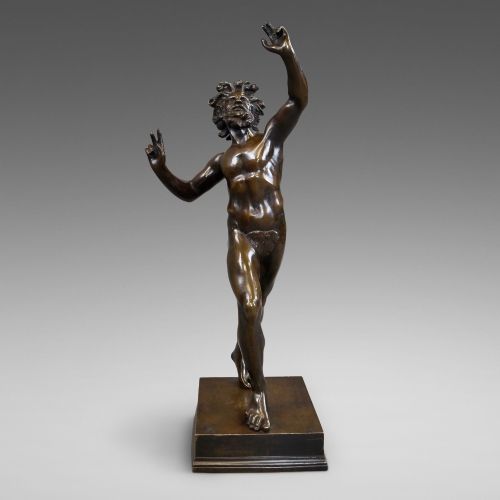


Bronze Dancing Figures Statuette
A bronze dancing figures statuette captures motion in metal, offering a lively centrepiece for a mantel or desk.
Bronze Dancing Figures Statuette
When you search for a bronze dancing figures statuette, you encounter sculptural works spanning the late nineteenth century through to the nineteen-thirties. These pieces capture movement through classical motifs, Grand Tour souvenirs, Art Nouveau maidens, and stylised Art Deco dancers.
The most common examples on this page draw inspiration from classical antiquity, such as the Dancing Faun of Pompeii, alongside spirited figures modelled by renowned sculptors of the early twentieth century. Subjects range from mythological figures like Bacchus and Pan to stylised modern dancers.
Forms appear on varied plinths, including marble and onyx bases, often utilising patinated or cold-painted finishes to accentuate the garments and postures of the dancing subjects.
How they were made
The primary method employed for these statuettes is the lost-wax casting technique, which allows for intricate details in the limbs, drapery, and facial expressions of the dancers. Molten bronze is poured into a prepared mould, capturing the dynamic energy intended by the artist.
Surface treatments play a vital role in defining the appearance of the metal, with patinated bronze, silvered bronze, cold paint, and gilt finishes applied to achieve specific tones and textures. Many figures are mounted onto heavy stone plinths of marble or onyx to provide stability and visual contrast.
Listings feature periods spanning from eighteen-seventy through to nineteen-thirty, encompassing nineteenth-century classical works and nineteen-twenties Art Deco pieces.
What varies in quality
The quality of the base material and the sophistication of the patination also dictate the standing of a statuette. Dense, well-figured marble or onyx plinths and richly layered patination indicate a higher grade of production compared to simpler spelter alternatives mounted on basic supports.
Auguste Moreau·D.H. Chiparus·Josef Lorenzl·Bruno Zach·Charlotte Monginot·Mario Korbel·Pierre le Faguays·S. Kinsburger
The Bronze Dancing Figures Statuette Glossary
- Patination
- The chemical treatment or natural oxidation applied to the surface of the bronze to alter its colour and tone. This process can yield rich greens, deep browns, or black finishes that enhance the sculptural depth.
- Spelter
- A zinc alloy frequently used as a less expensive alternative to bronze during the early twentieth century. It is often painted or bronze-plated to imitate genuine metal work.
- Grand Tour
- A nineteenth-century tradition where travellers collected classical souvenirs in Italy. These small bronzes replicated famous antiquities found in museums and excavations.
- Lost-wax casting
- A historic method of metal casting where a wax model is melted out of a ceramic mould to create a cavity for molten bronze. This technique permits high precision in complex figurative designs.
- Cold paint
- Pigment applied to a metal surface after casting without subsequent high-temperature firing. This technique adds colourful detailing to garments and accessories.
Bronze Dancing Figures Statuette: Frequently Asked Questions
Are these figures solid bronze?
Many statuettes are cast in solid bronze, though some examples employ alternative metals like spelter, particularly among twentieth-century works.
Heavier pieces usually indicate solid metal casting, while base materials like marble or onyx provide substantial weight to the overall object.
How do I clean a bronze statuette?
Dusting gently with a soft, dry cloth is generally sufficient for maintaining the surface of a patinated bronze figure.
Avoid using harsh chemical polishes or water, as these can strip away the historic patination or damage delicate cold-painted finishes.
What is a Grand Tour bronze?
A Grand Tour bronze is a nineteenth-century souvenir cast in Italy, reproducing famous classical sculptures for travellers exploring classical antiquities.
These pieces often replicate statues from the Museo Nazionale in Naples, such as the Dancing Faun.
How do I distinguish Art Deco from Art Nouveau?
Art Nouveau figures, dating around the turn of the twentieth century, typically feature flowing, organic lines inspired by natural plant forms and billowing drapery.
Art Deco works from the nineteen-twenties and thirties embrace geometric shapes, stylised symmetry, and high-kicking dynamic postures.