
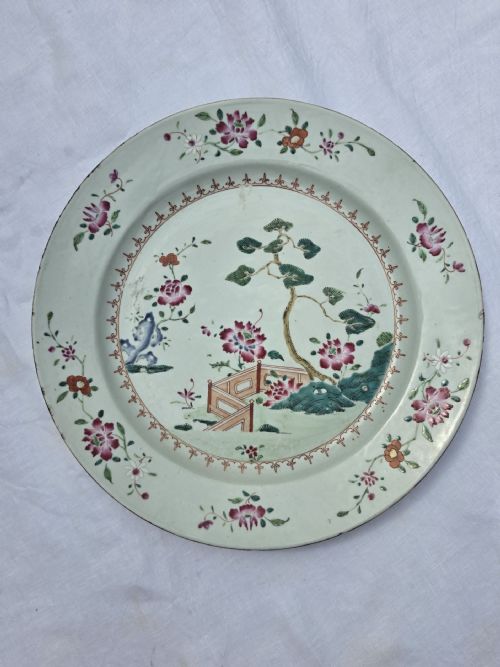


Asian Enamel Charger
An asian enamel charger brings decorative birds, dragons, and leaping koi into a room through meticulous metalwork.
Asian Enamel Charger
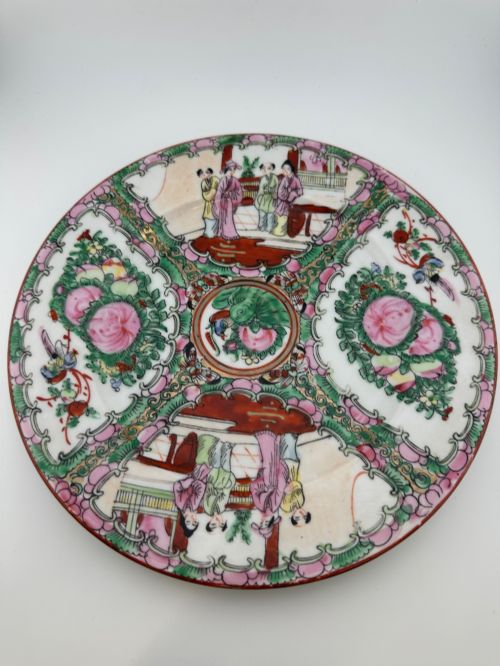
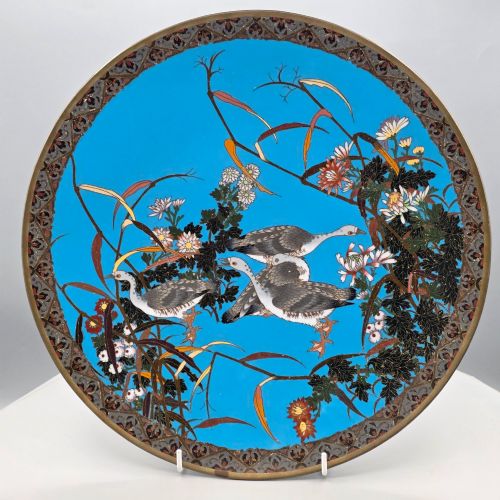
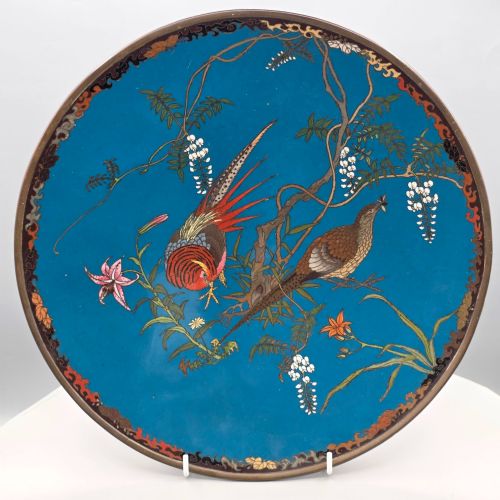
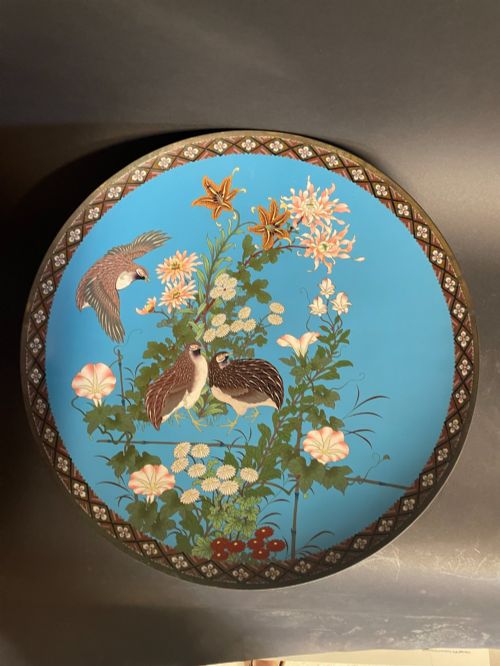
An asian enamel charger is a wide, flat or shallow dish designed primarily for display rather than service, often featuring intricate pictorial scenes. These large plates act as visual centerpieces, drawing the eye with detailed depictions of nature and mythology.
The versions most common on this page originate from the Meiji period and late Edo period in Japan, alongside Chinese export pieces from earlier centuries. They range from modest plates to substantial chargers spanning fifty centimetres across.
Materials and Techniques
The construction of a cloisonne piece relies on thin brass or copper wire bent into complex compartment outlines on a metal base. Artisans then fill these tiny cells with coloured enamel pastes before firing the object at high temperatures.
Porcelain variants utilise hand-painted glazes fired in kilns, sometimes incorporating famille rose enamels or iron-red pigments. Gilt highlights and bronze elements frequently complement the primary enamel surfaces.
Listings span multiple centuries, incorporating late Edo period examples alongside Meiji era cloisonne and eighteenth-century Chinese export porcelain.
Variations in Quality
The finesse of the wirework largely distinguishes superior execution from simpler output, as master artisans manage microscopic cells with absolute symmetry. Dense, multi-coloured compositions with smooth, polished enamel surfaces indicate high-level craftsmanship.
Subject matter also elevates a piece, with dynamic subjects like leaping koi, dragons, and Ho-o birds demanding greater skill than repetitive geometric patterns. The weight and rigidity of the underlying metal body contribute to the overall substance of the object.
Meizan·Kinkozan
The Asian Enamel Charger Glossary
- Cloisonne Enamel
- A metalwork technique where flat wire is soldered to a base to form compartments filled with vitreous paste. This method creates detailed borders between different colours.
- Charger
- A large decorative plate or dish historically used for ceremonial display rather than dining. These pieces measure significantly wider than standard dinner plates.
- Meiji Period
- A Japanese historical era spanning from 1868 to 1912, known for prolific decorative arts output. Works from this time often display extreme technical refinement.
- Famille Rose
- A palette of opaque rose-pink enamel introduced to Chinese porcelain decoration during the eighteenth century. It allowed artists to render subtle tonal gradations.
- Imari
- A style of Japanese porcelain decorated in underglaze blue and overglaze iron red, gold, and black. These items were widely exported to Europe.
Asian Enamel Charger: Frequently Asked Questions
How were chargers displayed?
These large plates were traditionally positioned on wooden stands or mounted on walls to showcase their intricate pictorial designs.
Their substantial diameters ensured they functioned effectively as prominent focal points within traditional interiors.
What is the difference between cloisonne and porcelain plates?
Cloisonne pieces utilise metal wires soldered to a copper or brass body to contain coloured enamel pastes. Porcelain alternatives rely on ceramic bases decorated with painted ceramic glazes.
Both formats achieve vibrant surface designs, but their foundational materials and tactile qualities remain distinct.
How do I identify Meiji period pieces?
Meiji period items typically exhibit dense, highly refined cloisonne work or intricate hand-painted motifs depicting natural scenes. The period spans the late nineteenth and early twentieth centuries.
Many examples from this era also bear artist signatures or workshop marks on their bases.
How should I clean my enamel charger?
Dust the surface gently with a soft, dry cloth to prevent the accumulation of particles within the wire channels or crevices. Avoid chemical cleaners and excessive moisture, which can damage exposed metal components.
Display the item away from direct sunlight to preserve the original vibrancy of the enamel colours.