
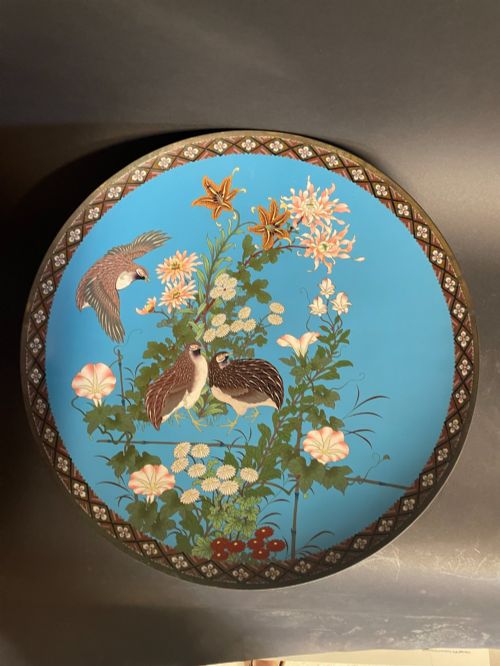


Large Cloisonne Plaque
A large cloisonne plaque delivers striking colour and intricate metalwork, bringing centuries of skilled craftsmanship directly onto a wall or stand.
Large Cloisonne Plaque
When you search for a large cloisonne plaque, you are looking at substantial decorative chargers, platters, and plates created across the nineteenth century. These impressive works originate primarily from Japanese workshops during the Edo and Meiji periods, alongside earlier Chinese Qing Dynasty examples.
The pieces on this page span diverse forms, including octagonal trays and wide circular chargers measuring up to fifty centimetres across. Subject matter ranges from detailed avian studies with birds on branches to powerful single-dragon designs and leaping koi.
While many examples employ traditional metal foundations, variations include ceramic bases utilising Totai techniques. Each object serves as a prominent focal point, reflecting the distinct aesthetic priorities of its period of origin.
Materials and construction methods
The creation of these works relies upon a robust core of copper or brass, shaped to form the plate or charger body. Artisans then apply fine copper or brass wire to outline the complex motifs, creating individual cells for the coloured enamel paste.
Once filled with enamel, the pieces undergo firing and polishing to achieve a smooth, lustrous surface where the metallic outlines contain each hue. Certain variations incorporate ceramic elements or integrate cinnabar lacquer alongside traditional enamel work.
Materials utilised across the available inventory include copper, brass, ceramic, and wood, combined with traditional enamel and wire work.
Distinctions in execution and design
Superior examples demonstrate exceptional precision in the placement of wirework, where intricate lines form cohesive, highly detailed imagery such as dragons, koi, or botanical scenes. The complexity of the subject matter and the crispness of the cell boundaries distinguish finer works from simpler productions.
Scale and ambition also define the upper tier, particularly massive chargers featuring signed maker details or specialised techniques like Totai shippo. The harmony of the enamel palette and the finish of the polished metal surfaces indicate the skill invested by the original workshop.
The Large Cloisonne Plaque Glossary
- Cloisonne Enamel
- A decorative metalwork technique where thin wires are soldered to a metal base to create compartments filled with coloured paste and fired. This method allows for intricate pictorial designs across chargers and plaques.
- Charger
- A large ornamental plate or platter designed primarily for display rather than dining use. These pieces often serve as the central canvas for elaborate Japanese and Chinese enamel work.
- Totai Shippo
- A variation of cloisonne where enamel is applied to a semi-translucent or ceramic body rather than solid metal. This technique creates distinctive textural effects visible in specific nineteenth-century pieces.
- Meiji Period
- An era in Japanese history spanning from 1868 to 1912 noted for remarkable advancements in decorative arts and metalwork. Pieces from this time often exhibit exceptional technical refinement.
- Edo Period
- The period in Japanese history preceding the Meiji era, lasting from 1603 to 1867. Early examples from this timeframe display traditional motifs and robust construction.
Large Cloisonne Plaque: Frequently Asked Questions
How do I hang a large plaque safely?
These heavy chargers require robust, specialised wall fixings designed to support substantial weight without damaging the rim or base. Ensure the mount secures the piece firmly by its edges while distributing the load evenly.
Consult a professional framer if the plaque lacks integrated hanging hardware to avoid putting stress on the copper or ceramic body.
Were these plaques made for export?
Many nineteenth-century chargers and plaques were produced specifically for international exhibition and export to Western markets during the opening of Japan and the late Qing Dynasty. Makers tailored the grand scale and dramatic motifs to suit European and American tastes.
Despite this commercial intent, the manufacturing standards remained exceptionally high, utilising traditional workshop techniques.
How should I clean my plaque?
Dust the surface gently with a soft, dry microfiber cloth to prevent particulate buildup in the wire compartments. Avoid using liquid cleaners, abrasives, or chemical polishes, which can harm the delicate enamel and exposed metal wires.
Keep the piece away from direct sunlight and high humidity to protect the integrity of the materials over time.
What does signed mean on these pieces?
Signatures on these works typically appear on the reverse or within the design as artist or workshop marks inscribed during the manufacturing process. These marks identify the maker or producing studio, adding historical context to the charger.
Not all authentic pieces carry a signature, as many fine items left workshops unmarked.