



Antique Bird Charger
An antique bird charger brings feathered subjects to large-scale ceramic and metal plates, offering detailed avian scenes from the nineteenth and early twentieth centuries.
Antique Bird Charger
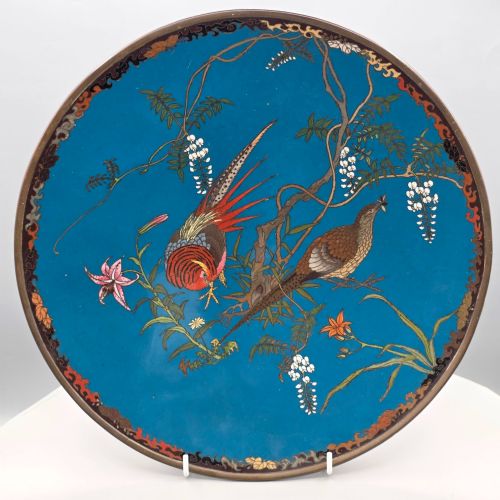
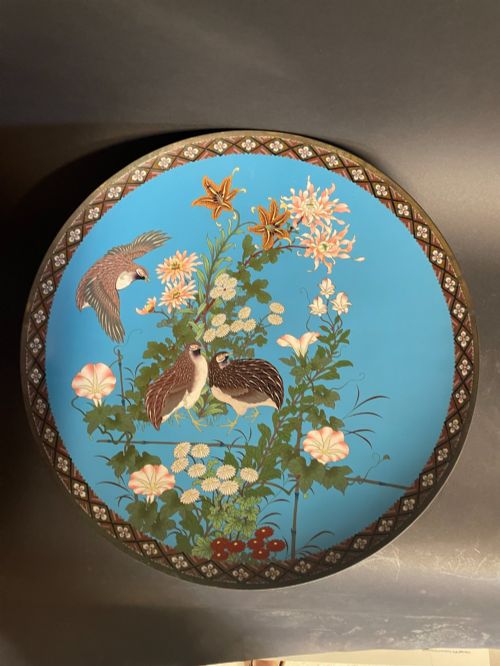
An antique bird charger is a large decorative plate or platter featuring avian motifs, commonly found in Japanese Meiji period cloisonne enamel and Imari porcelain. These substantial display pieces frequently measure over thirty centimetres across and depict subjects such as phoenixes, owls, and exotic birds.
Beyond Japanese imports, buyers encounter European works including English delftware, Mason's ironstone, Austrian majolica, and German porcelain from Meissen. These pieces utilise traditional techniques like hand painting and blue and white underglaze to render feathered wildlife across wide ceramic surfaces.
Materials and production methods
Many Japanese examples employ cloisonne enamel, where thin metal wires form individual cells on a brass or copper base before coloured paste is applied and fired. Other versions utilise porcelain bodies decorated with hand-painted glazes, cobalt blue underglaze, or ironstone earthenware.
Specialised variations incorporate totai shippo, applying cloisonne directly onto a porcelain body, or combine carved cinnabar lacquer with ceramic and metal foundations. European makers rely on earthenware and majolica glazes to achieve relief decoration and polychrome surfaces.
Current listings span the eighteenth through the early twentieth centuries, featuring enamel, porcelain, brass, and copper construction.
Assessing craftsmanship and design
Quality rests upon the precision of the execution, whether in the tightness of cloisonne wirework or the fine brushwork of hand-painted plumage. Finer pieces demonstrate careful attention to composition, integrating the bird with natural elements like branches, mount Fuji, or floral backgrounds.
The scale of the charger also influences distinction, with larger diameters and unusual octagonal forms requiring greater technical skill from the maker. Signatures from recognised workshops or periods add further evidence of superior studio output.
Meissen·Mason·Shozo
The Antique Bird Charger Glossary
- Charger
- A large decorative plate or platter intended primarily for display on a wall or cabinet rather than for table service.
- Cloisonne
- A decorative metalwork technique utilising thin wires to create compartments filled with enamel paste and fired.
- Imari
- A style of Japanese porcelain featuring distinctive cobalt blue, iron red, and gilt decoration.
- Totai Shippo
- A Japanese method where enamel cloisonne is applied directly onto a porcelain body rather than metal.
- Delft
- European tin-glazed earthenware, often produced in England and the Netherlands with blue and white designs.
Antique Bird Charger: Frequently Asked Questions
How were antique bird chargers displayed?
These large plates were typically exhibited on walls using specialist hanging wires or placed upright on sideboard shelves and cabinets for decorative impact.
Because of their substantial weight and detailed artistry, they served as focal points in Victorian and Edwardian drawing rooms rather than utilitarian tableware.
What birds appear most frequently?
Japanese examples frequently feature the ho-o bird, a mythical phoenix symbolising virtue and grace, alongside owls, ibises, and wading waterfowl.
European makers lean towards exotic birds with colourful plumage, often rendered among foliage or rendered in traditional blue and white patterns.
How do I date a Japanese cloisonne charger?
Meiji period pieces from the late nineteenth century generally display refined wirework and balanced compositions, moving away from earlier Edo period styles.
Examine the base metal and the clarity of the enamel colours, as technical proficiency evolved rapidly across the late nineteenth century.
Can these chargers be hung safely?
Wall mounting requires a properly sized spring hanger that distributes the weight evenly across the rim without putting pressure on the ceramic or enamel body.
Ensure the wall fixture is secure, given that larger cloisonne and porcelain chargers possess considerable weight.