
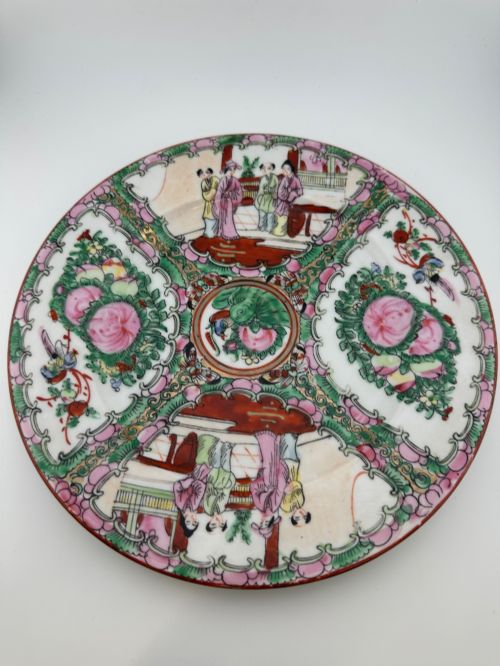
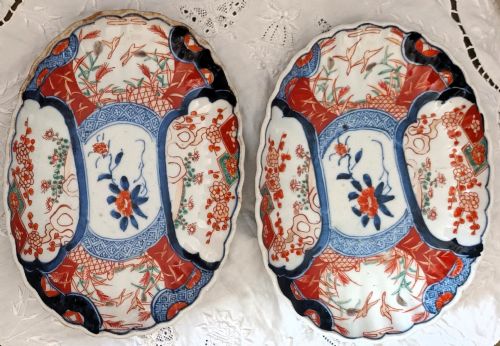


Asian Ceramic Wall Platter
These asian ceramic wall platter examples span from late seventeenth century dishes to twentieth century porcelain chargers, chosen for display.
Asian Ceramic Wall Platter
An asian ceramic wall platter covers decorative plates, chargers, and dishes originating primarily from Japan and China, designed for prominent display on interior surfaces. The pieces you encounter most frequently on this page belong to the Japanese Imari tradition and date from the nineteenth and early twentieth centuries.
Makers produced these large formats, including expansive chargers measuring considerable diameters, specifically to showcase detailed painting traditions. Forms range from scalloped edge plates to square plates and deep chargers, often depicting traditional motifs like the Seven Lucky Gods.
Materials and Technique
Potters utilised porcelain bodies fired at high temperatures to create durable foundations suitable for large plates and chargers. Cobalt underglaze provided deep blue foundational pigments beneath clear protective surfaces.
Workshops applied overglaze enamel in varied hues, supplemented by gold leaf and gilt detailing to catch the light. Hand painting ensured that every charger displays individual brushwork rather than mechanical repetition.
Several plates depict the Seven Lucky Gods sharing space on a single porcelain disc, proving that even deities enjoy good company.
Assessing Quality
Quality rests upon the precision of the hand painted brushwork and the complexity of the palette, where layered enamel and gold leaf display superior artistry. Pieces featuring finely executed figural scenes, such as the Seven Lucky Gods, stand apart from simpler geometric borders.
The crispness of the cobalt underglaze against the porcelain body indicates superior firing control and refined raw materials. Potteries like Fukagawa and Arita demonstrate technical mastery through balanced proportions and unwarped circular forms.
Fukagawa
The Asian Ceramic Wall Platter Glossary
- Charger
- A large decorative plate intended for display on a wall or sideboard rather than daily dining. These heavy circular vessels provide a wide canvas for intricate painting.
- Imari
- A style of Japanese porcelain featuring a distinct palette of cobalt blue, iron red, and gold. Artisans produced these colourful wares for export and domestic use.
- Meiji Period
- The era of Japanese history spanning from 1868 to 1912, noted for prolific porcelain production and international trade. Wares from this time often exhibit elaborate hand painted decoration.
- Aka-e
- Japanese ceramic decoration utilising red overglaze enamel. This technique frequently appears alongside blue and white elements on seventeenth century dishes.
- Cobalt Underglaze
- A blue pigment applied to the raw porcelain body before glazing and firing. This method ensures the colour remains permanent and protected beneath the glassy surface.
Asian Ceramic Wall Platter: Frequently Asked Questions
How do I hang a heavy charger?
Select a spring loaded brass hanger sized correctly for the diameter of the charger, ensuring it grips the rim securely without placing undue stress on the ceramic body. Mount the fixing directly into a wall stud to support the weight safely.
Verify that the wire or bracket behind the plate lies flat against the wall surface to prevent tilting. Period pieces require careful handling during installation due to their age and weight.
How do I date an Imari plate?
Examine the foot ring, glaze characteristics, and the intensity of the iron red and cobalt blue pigments. Earlier pieces from the Edo period often display heavier potting and subtle irregularities in the glaze.
Later Meiji and twentieth century examples tend to feature brighter enamels and more uniform porcelain bodies. Comparing the style of the scrolling foliate borders helps narrow the decade of production.
What is the difference between a plate and a charger?
A charger is significantly larger than a standard dining plate, generally measuring well over thirty centimetres in diameter. These substantial ceramic pieces served primarily as display items in traditional settings.
Plates were made in smaller formats for functional use or decorative wall placement. Both share similar porcelain materials and painting techniques within Asian ceramic traditions.
Can these pieces be cleaned safely?
Dust the surface gently using a soft, dry brush or a microfiber cloth to remove everyday particles. Avoid using water, detergents, or abrasive materials, particularly on pieces with gold leaf and overglaze enamel.
Enamel and gilt details applied over the glaze can be delicate and vulnerable to moisture. Regular light dusting preserves the surface finish without risking damage to the antique pigments.