


Asian Ceramic Display Urn
An asian ceramic display urn brings heavy colour and intricate hand-painted detail into a room, usually arriving as a grand floor vase or lidded vessel from the nineteenth century.
Asian Ceramic Display Urn
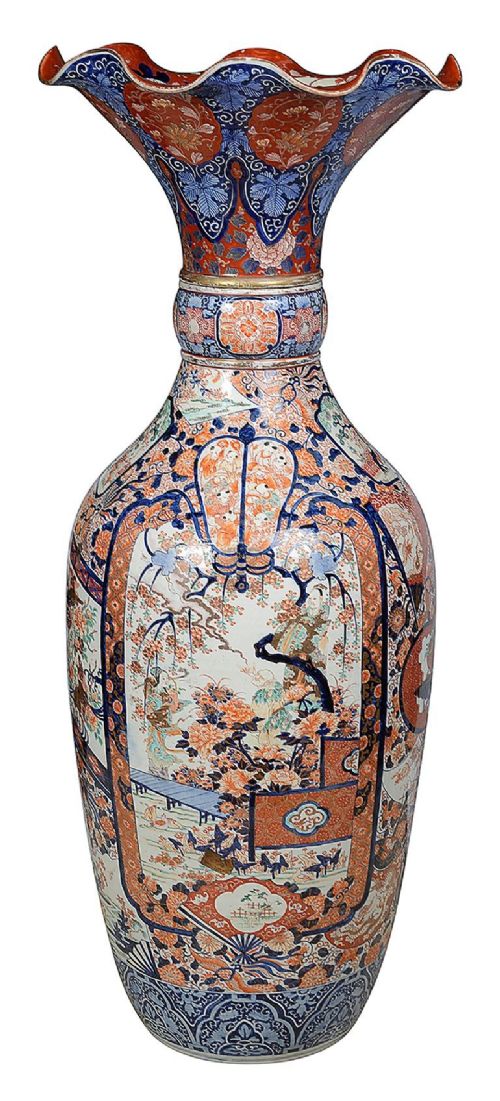
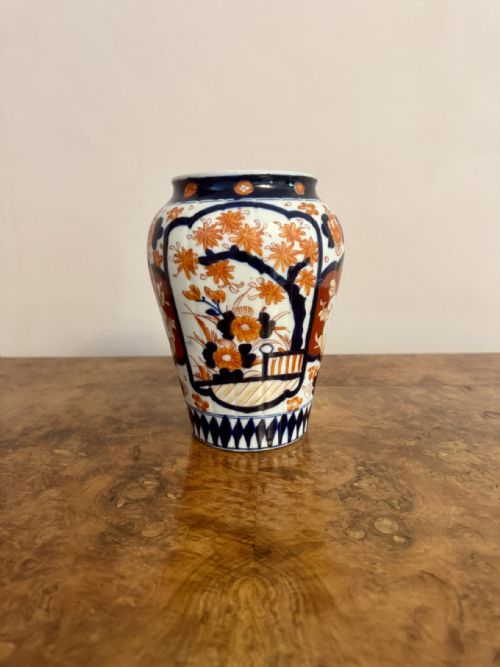
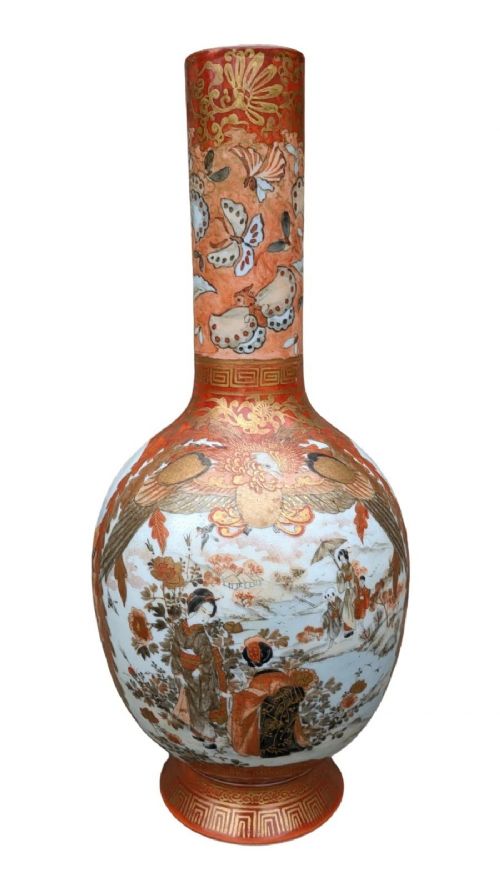
When you search for an asian ceramic display urn, you encounter large decorative vessels and floor-standing vases made in Japan during the nineteenth century. The selection leans heavily towards robust Imari patterns, finely detailed Satsuma earthenware, and vibrant Kutani pieces.
Most examples date from the Meiji period or span the later decades of the nineteenth century up to 1900. These range from miniature cabinet pieces to monumental jars standing well over a metre tall.
Makers often shaped these vessels with flared necks, hexagonal bodies, or integrated handles designed specifically to draw the eye in a principal room. Pairs appear frequently alongside single grand statement pieces.
Materials and construction
Potters shaped these vessels from dense porcelain and earthenware bodies, applying mineral glazes before firing the ceramic at high temperatures. Artisans then built up surface decoration using rich enamels, vibrant gold leaf, and intricate gilt highlights.
Some works incorporate specialised surface treatments such as lacquer layered over black paint or mounted ormolu accents. Workshops in regions like Kaga and Kyoto employed skilled painters to execute complex figural processions, landscapes, and traditional motifs.
A dragon occasionally coils around a Satsuma neck while tiny painted figures quietly ignore the beast to enjoy a tea ceremony.
Judging the work
The distinction between standard production and top-tier work rests on the precision of the brushwork and the density of the gilding. Master painters executed intricate figural scenes with distinct facial expressions and sharp linework rather than rushed, repetitive patterns.
Substantial scale combined with structural stability marks the upper tier, particularly in floor-standing vases that maintain perfect vertical balance. Signed pieces carrying the marks of known workshops or named artists demonstrate a higher level of individual studio oversight.
Kinrin Workshop·Chosei Mark·Seiko-en Chokei
The Asian Ceramic Display Urn Glossary
- Imari
- A traditional Japanese export style featuring a distinctive palette of underglaze blue, iron red, and abundant gold gilt over a white porcelain body. These patterns often combine floral arrangements with complex brocade motifs.
- Satsuma
- A type of Japanese earthenware characterised by a crackled ivory glaze and detailed polychrome enamels augmented with raised gold leaf. Artisans used this surface to depict dense figure groups, dragons, and landscapes.
- Kutani
- A style of Japanese ceramic originating from Kaga province known for bold, expressive colour schemes dominated by deep greens, blues, purples, and heavy gold gilet. Many pieces showcase meticulous narrative scenes or naturalistic flora.
- Edo Period
- The historical era in Japan spanning from 1603 to 1867, preceding the Meiji period and laying the technical foundations for nineteenth-century export ceramics. Pieces from this transition carry traditional forms.
- Meiji Period
- The era from 1868 to 1912 marked by the opening of trade with Western markets, which prompted Japanese workshops to produce large-scale decorative urns and vases tailored for European and American drawing rooms.
Asian Ceramic Display Urn: Frequently Asked Questions
How do I display a large floor vase safely?
Position these heavy vessels away from high-traffic walkways, opening doors, or unstable flooring where an accidental knock could cause a tip. Placing them directly on solid floor surfaces or sturdy occasional tables ensures proper weight distribution.
Keep the urn out of direct sunlight to protect the enamel colours and delicate gold leaf from fading over decades of exposure. Avoid damp environments that might affect the underlying earthenware or lacquer components.
What is the difference between Imari and Satsuma ceramics?
Imari ceramics use a hard porcelain body finished with a ringing glaze, featuring deep cobalt blue and iron red pigments under and over the glaze. They present a crisp, bright finish suited to bold geometric and floral patterns.
Satsuma pieces utilise a softer earthenware body covered in a fine crackle-patterned ivory glaze, serving as a canvas for dense pictorial scenes and raised gold work. They appear more matte and tactile compared to glossy porcelain.
How can I tell a Meiji period piece from an earlier one?
Examine the base and surface decoration for signs of industrial standardisation that emerged after trade opened in 1868. Meiji period works often feature denser, more ornate gilding and signatures from specific named artists or export workshops.
Earlier pieces tend to display simpler potting techniques, heavier bodies, and traditional kiln variations rather than the highly refined miniature detail seen in late nineteenth-century output.