




Satsuma Pottery Urn
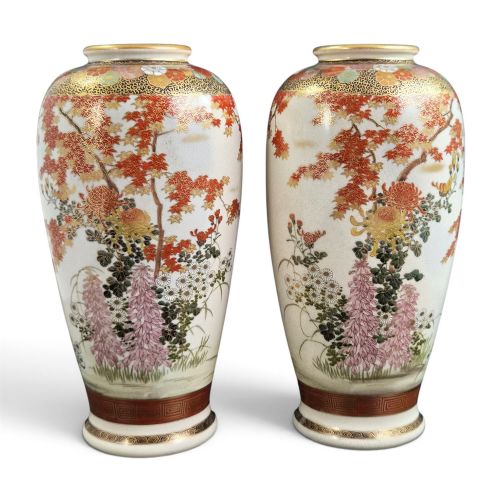
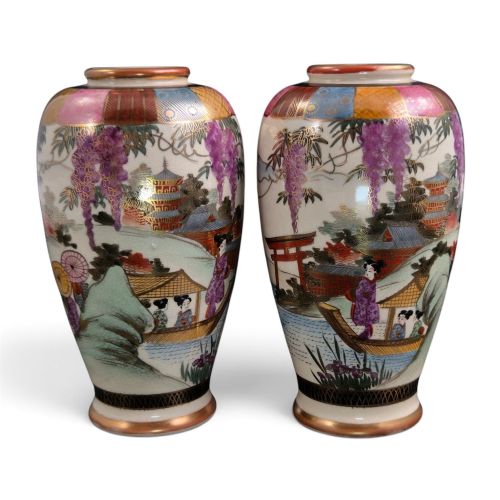
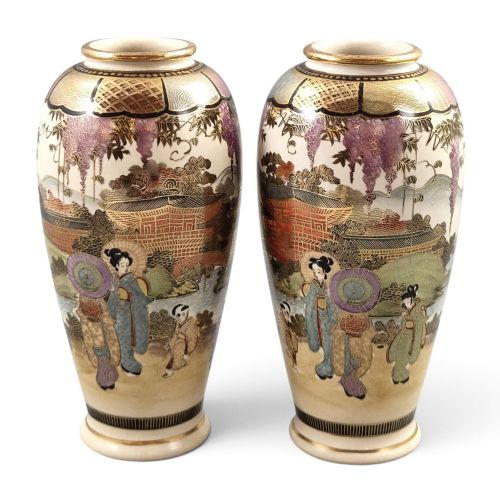
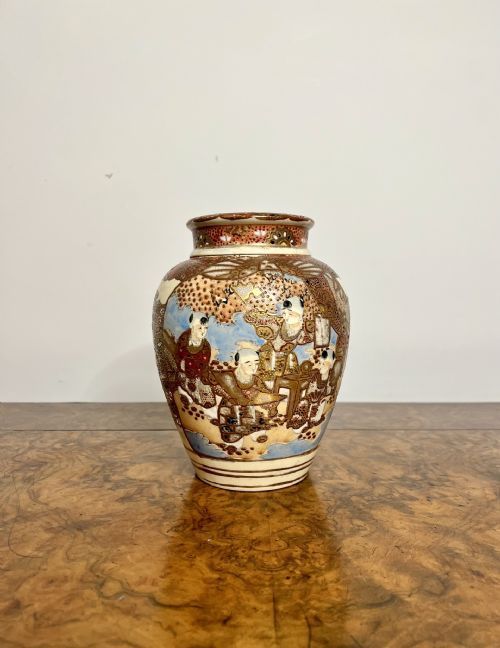
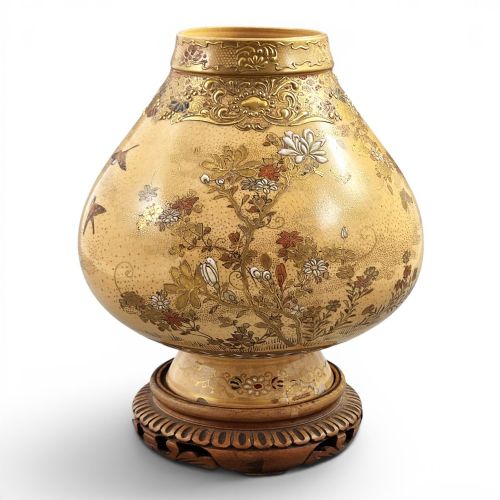
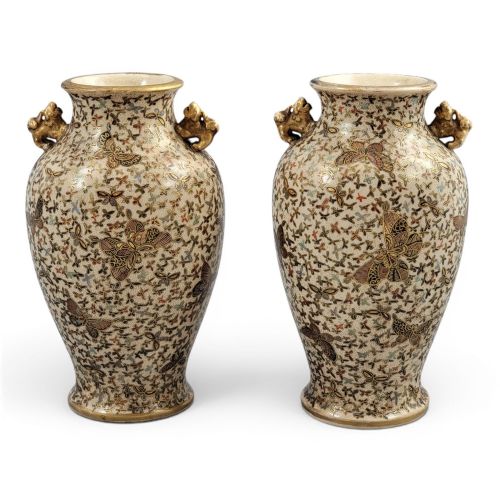
When you handle a satsuma pottery urn, you hold an intricate piece of Japanese ceramic history finished in fine gold leaf and enamel.
Satsuma Pottery Urn
A satsuma pottery urn embodies the traditional earthenware vessels produced in Japan and collected widely during the Meiji, Taisho, and Showa periods. Buyers hunting for a satsuma pottery urn will encounter decorative vases, lidded jars, and incense burners spanning the late nineteenth century through to the early twentieth century.
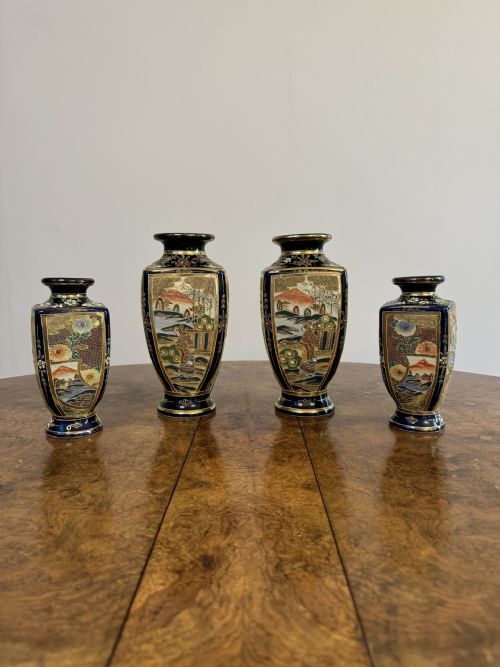
The pieces available on this page lean heavily towards baluster vases, ginger jars, and table lamps created in regional centres such as Kyoto and Kobe. These objects display the distinct cream-coloured crackle glaze characteristic of the tradition, paired with detailed hand-painted scenes.
Materials and Techniques
The foundational body of these works consists of earthenware shaped into various vessel forms, which then receives an absorbent, crackle-finish glaze. Artisans build the surface decoration using polychrome enamel pigments combined with generous applications of gold leaf and raised gilt moriage work.
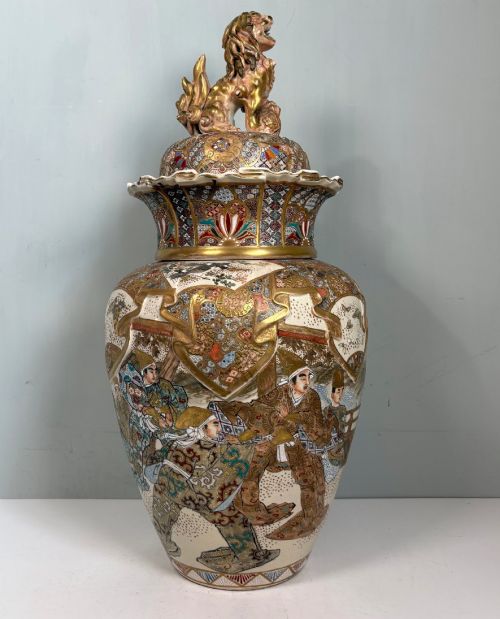
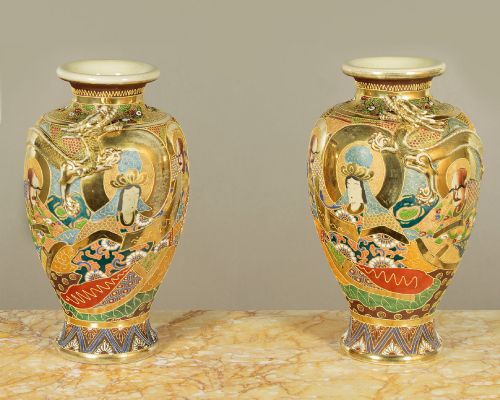
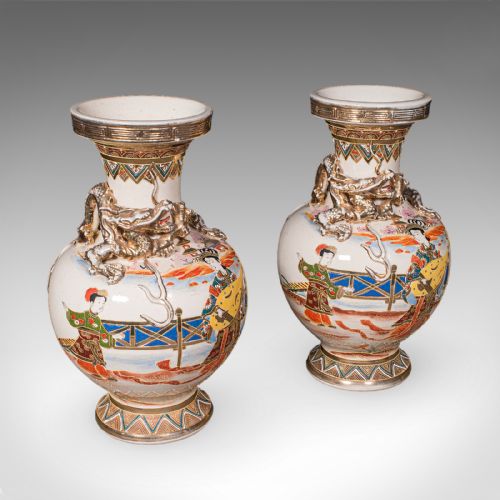
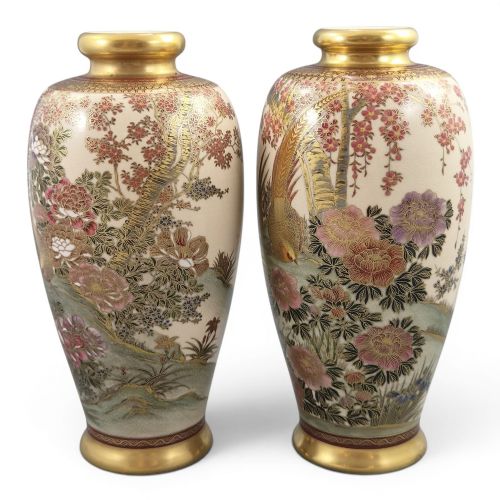
Painting techniques focus on intricate figures, court scenes, arhats, dragons, and botanical motifs like wisteria. Many examples feature artist signatures or workshop seals applied directly to the base beneath the glaze.
One exceptional vessel crams one thousand arhats and a dragon across its ceramic surface without losing a single smile.
Distinctions in Quality
Quality rests upon the precision of the brushwork and the density of the gilding across the earthenware body. Pieces originating from renowned workshops demonstrate superior control over the enamel palette and finer detail in complex figural processions.
The depth and execution of raised moriage decoration separate standard production items from exhibition-grade works. Greater refinement in the crackle glaze and crispness of signature marks likewise elevate the standing of an individual vessel.
Maruni Kobe·Shozan·Manpei·Kinkōzan·Kinzan·Hotoda·Chosei·Nanzan·Seiko-en Chokei·Kizan·Hakusan·Tagawa·Tashiro
The Satsuma Pottery Urn Glossary
- Moriage
- A decorative technique using piped clay to create raised relief patterns beneath the glaze. This method adds a tactile, three-dimensional quality to floral and figural elements.
- Earthenware
- Porous pottery fired at relatively low temperatures. Satsuma ware uses this specific ceramic body, which requires a specialised glaze to ensure stability.
- Koro
- A traditional Japanese incense burner fitted with a pierced cover. These vessels frequently feature tripod feet and delicate handles.
- Shimazu Mon
- The heraldic crest of the Shimazu clan, featuring a cross within a circle. This mark often appears on satsuma pottery associated with the Satsuma domain.
- Baluster
- A vase form characterised by a rounded body that tapers toward a narrow neck and flared rim. This silhouette provides a broad canvas for narrative painting.
Satsuma Pottery Urn: Frequently Asked Questions
What is satsuma pottery?
Satsuma pottery is a style of Japanese earthenware traditionally known for its ivory-coloured body and fine crackle glaze. Artisans decorate these ceramic surfaces with elaborate hand-painted polychrome enamel and gold.
Originally produced in the Satsuma province of Kyushu, the style evolved significantly during the Meiji period to cater to international export markets. Workshops in Kyoto and Kobe subsequently became major production centres for these highly ornamented items.
How do I date a satsuma urn?
Dating these vessels involves examining the style of decoration, the type of ceramic body, and any visible artist signatures or workshop marks on the base. Pieces from the nineteenth century often exhibit dense figural scenes and heavy gilt work.
Later examples stretching into the Taisho and Showa periods may show stylistic shifts towards simpler motifs or modified forms. Comparing the base signatures against known Kyoto and Kobe studio records helps narrow the production window.
How should I display satsuma urns?
Satsuma urns function best as focal points on stable surfaces where adequate lighting can highlight the gold leaf and enamel details. Placing them away from direct sunlight preserves the vibrant pigments of the painted scenes.
Some period pieces have also been converted safely into table lamps, allowing them to provide functional illumination while retaining their decorative ceramic bases. Handling should remain minimal to protect the delicate raised moriage and gilding.