
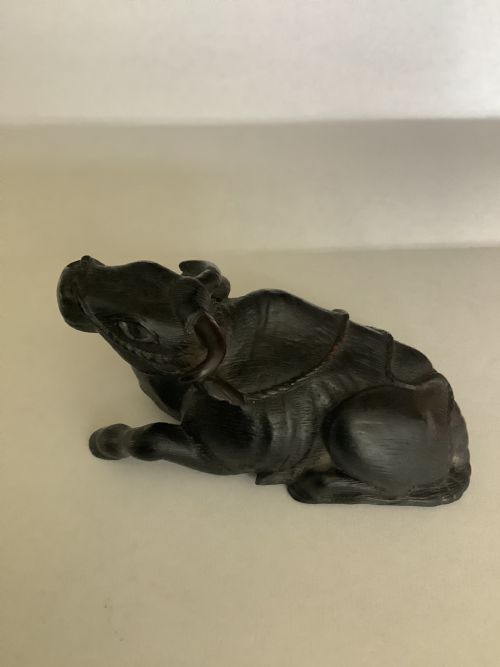



Asian Carved Wood Sculpture
When you search for asian carved wood sculpture, you are looking at centuries of hand-carved guardian figures, temple deities and deities from Chinese, Japanese and Southeast Asian workshops.
Asian Carved Wood Sculpture
An asian carved wood sculpture spans centuries of regional artistry, ranging from domestic tabletop pieces to monumental guardian kings from Chinese, Japanese and Southeast Asian traditions. The pieces most commonly met on this page include figures of Daoist immortals, Buddhist deities and temple guardians rendered in dense hardwoods.
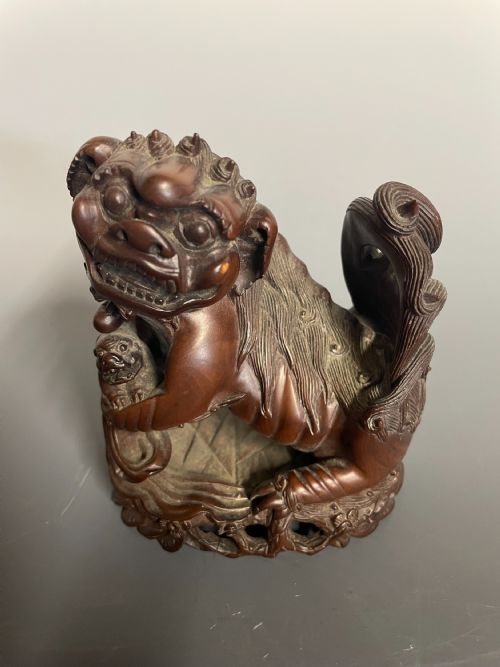
The material selection varies significantly by region and period, encompassing dense boxwood for miniature netsuke, gnarled rootwood for scholar's pieces, and heavily gilded or polychrome painted surfaces for ritual temple figures. Many works reflect distinct historical eras such as the Qing Dynasty or the Japanese Meiji period, capturing cultural motifs like Foo dogs and mythical animals.
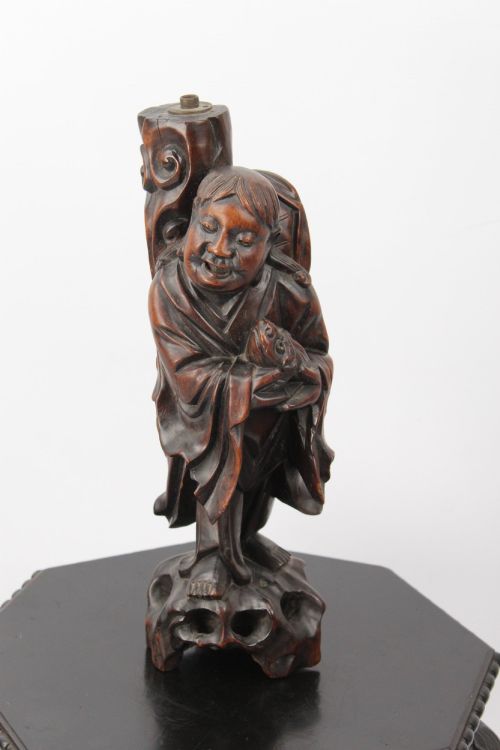
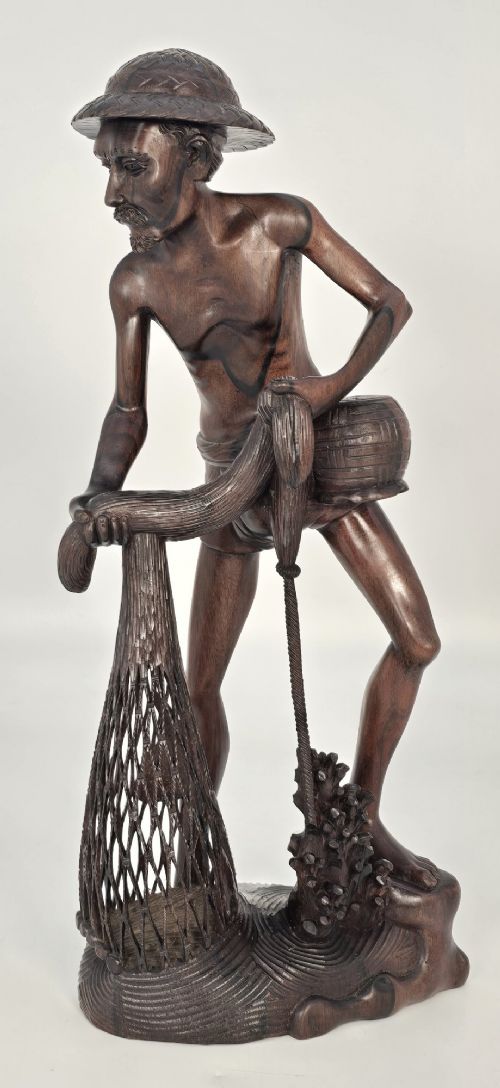
Form and function range widely from small hand-held okimono to large freestanding deities, reflecting diverse cultural practices across China, Japan, Burma and Tibet. Whether depicting a fisherman with a trap or a monumental Lokapala, each item carries specific iconography tied to Buddhist and Daoist traditions.
Materials and Techniques
Makers utilised dense natural materials, notably boxwood, rootwood and various heavy hardwoods, which allowed artisans to execute extremely fine, deep relief without fracturing. These timbers were often selected for their natural grain and weight, providing a stable base for intricate multi-figure compositions and detailed drapery.
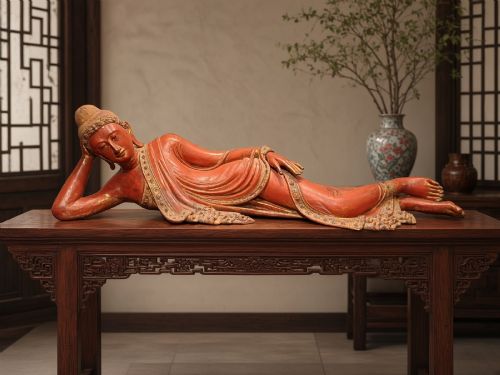
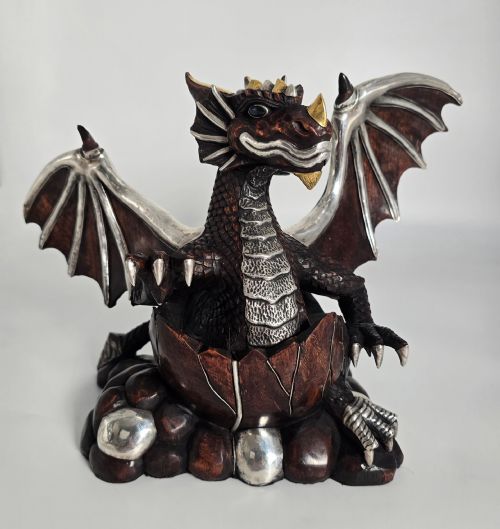
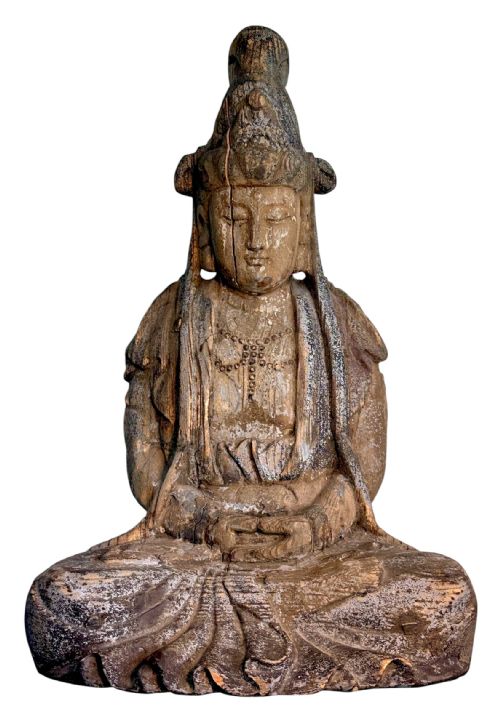
Surface embellishment played a central role in finishing many temple figures and ritual items, frequently involving layers of gold leaf, lacquer and polychrome paint over carved wood. In some instances, mixed metals and brass mountings were integrated into the design to accentuate specific decorative elements.
Carvers employed hand chisels and gouges to achieve both high relief and free-standing sculptural forms, exploiting the natural contours of rootwood and burr timber to shape asymmetrical bases. Miniature works like netsuke and okimono required microscopic precision, whereas larger temple guardians demanded robust structural joining and deep undercut chiselling.
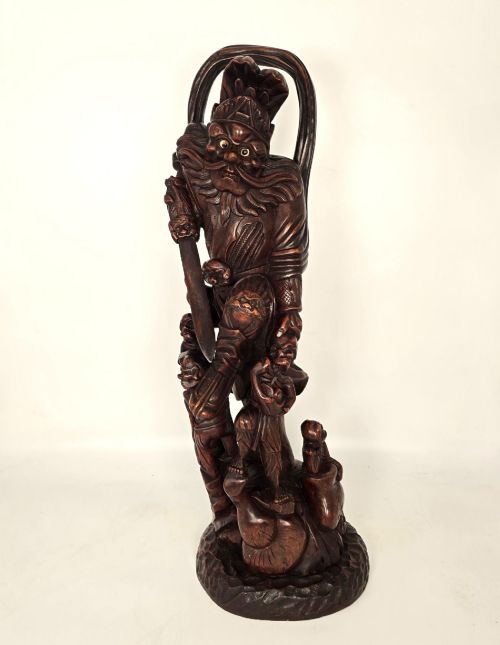
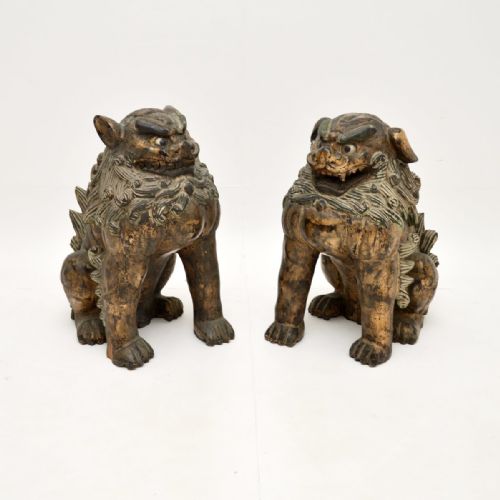
Several fierce temple guardians stand watch here, perfectly content to protect your modern hallway from minor household nuisances.
Assessing Quality and Execution
The distinction between ordinary and exceptional pieces rests upon the anatomical precision of the carving, the depth of the relief work and the subtlety of expression in the faces of deities or animals. Master carvers imbued figures with lifelike posture and detailed drapery that followed the natural tension of cloth, whereas lesser pieces remained stiff and formulaic.
Preservation of original surfaces, such as early polychrome pigments, delicate gold leaf and undisturbed patination, heavily influences the standing of a piece within its category. Works retaining their authentic historical finish without excessive overpainting demonstrate superior historical integrity and collector appeal.
Masayuki
The Asian Carved Wood Sculpture Glossary
- Netsuke
- A small carved toggle used to secure a pouch or small container to a traditional Japanese garment sash. These miniature sculptures often depict animals, legendary figures or everyday people.
- Okimono
- A Japanese decorative freestanding statuette designed for display on a household shelf or tokonoma alcove. They date frequently from the Meiji period and showcase exceptional skill in wood and boxwood.
- Foo Dog
- A symbolic guardian lion depicted protecting sacred spaces in Chinese architecture and sculpture. Statues typically appear in matched pairs representing male and female counterparts.
- Lokapala
- A traditional Chinese heavenly king or temple guardian sculpture positioned to ward off malevolent spirits. These monumental figures are often carved from heavy hardwood with dynamic, armoured stances.
- Polychrome
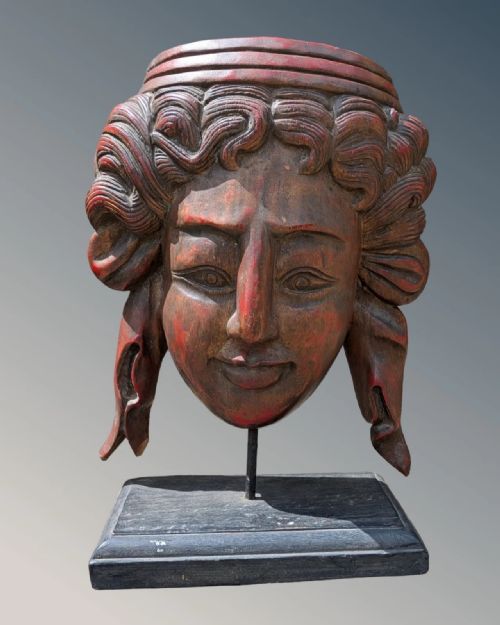
- A decorative surface finish employing multiple distinct colours of paint applied directly to wood. This technique brought ritual statues and temple masks to vivid life.
Asian Carved Wood Sculpture: Frequently Asked Questions
How were temple guardian figures used?
Monumental guardian figures were traditionally placed at the entrances of sacred buildings and temples to ward off evil spirits and protect holy grounds. Their fierce expressions and dynamic armour symbolised spiritual strength and vigilance.
Over time, these large sculptures found their way into private collections and secular interiors, where they served as striking focal points displaying master craftsmanship from historical Asian workshops.
What is the difference between a netsuke and an okimono?
A netsuke is a small, functional toggle featuring a cord channel used historically to fasten personal belongings to a Japanese kimono sash. They are intimate in scale and designed to be handled frequently.
An okimono, by contrast, is purely decorative and intended strictly for display on a stand or tabletop. These pieces are typically larger and allow for more elaborate compositional arrangements.
How do you identify rootwood carvings?
Rootwood carvings utilise the natural, gnarled contours and twisted grain of tree roots to dictate the final form of a scholar's object, table or figurative sculpture. Artisans often incorporated natural burls and hollows into the design.
This approach meant no two pieces were alike, as the carver worked collaboratively with the organic shape of the timber rather than imposing a strict geometric template.
What do Daoist immortal sculptures represent?
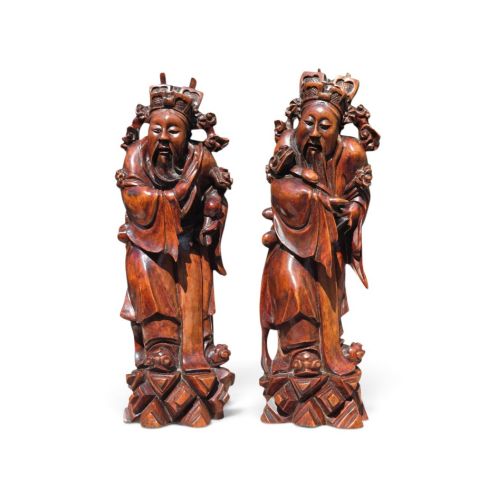
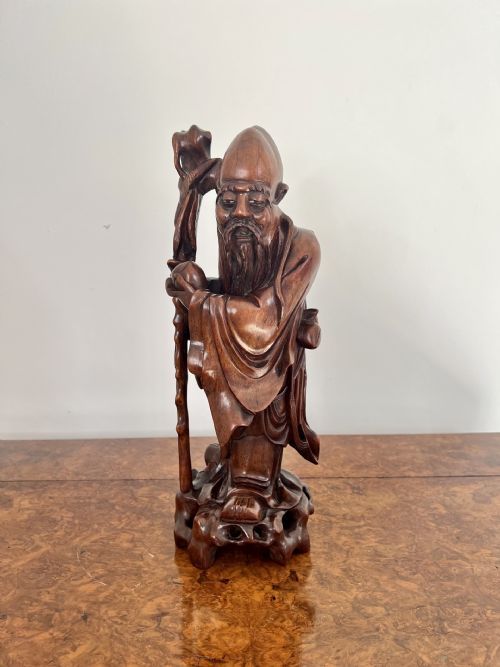
Sculptures of Daoist immortals depict legendary figures associated with longevity, wisdom and spiritual attainment in Chinese culture. Characters like Liu Hai or the Daoist immortals are frequent subjects in antique wood sculpture.
Displaying these figures in a scholar's study or home was believed to invite auspicious fortune and intellectual clarity, reflecting deep philosophical traditions.