


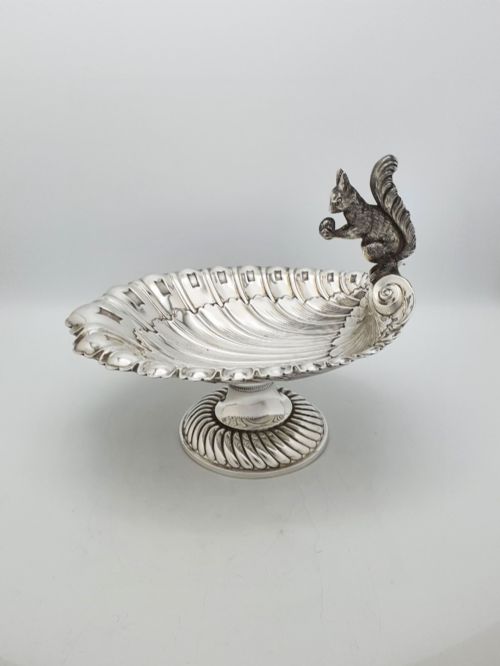


Art Nouveau Silver Dish
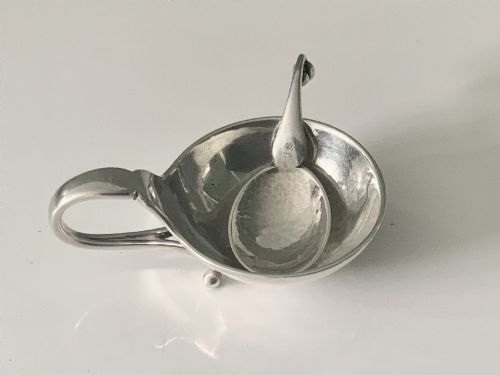
An art nouveau silver dish captures the organic fluidity and sinuous natural forms characteristic of the turn of the twentieth century, bringing distinctive decorative elegance to any tabletop.
Art Nouveau Silver Dish
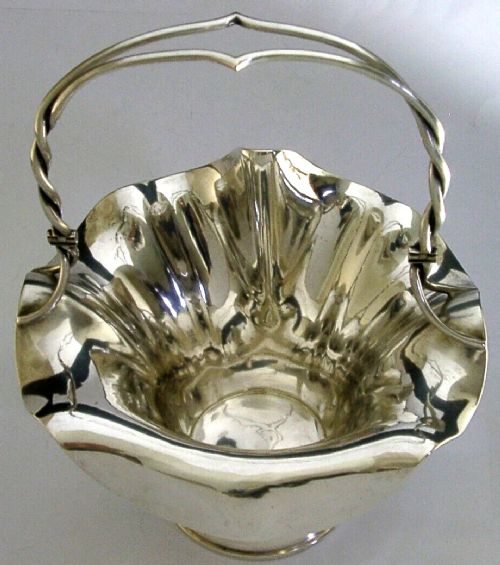
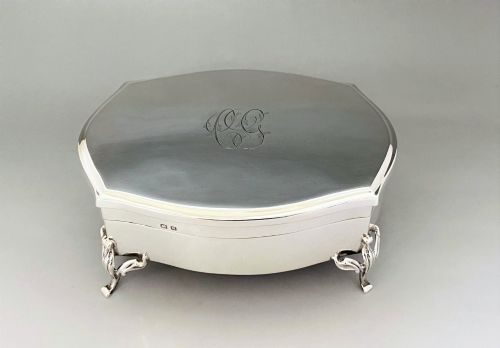
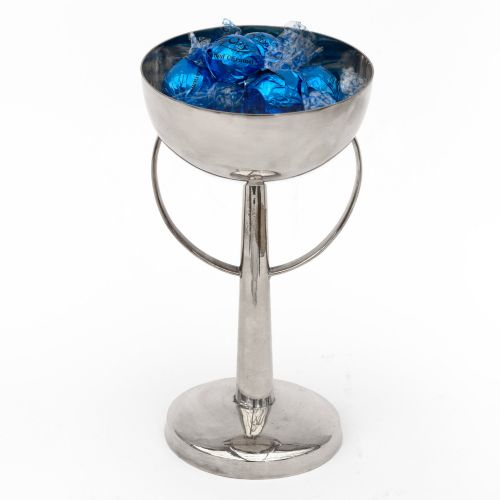
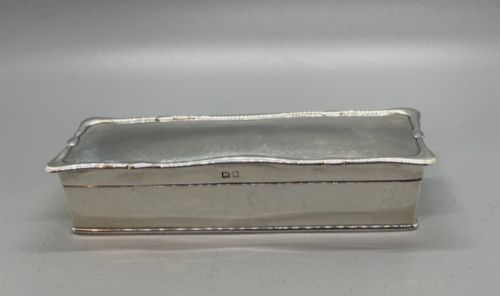
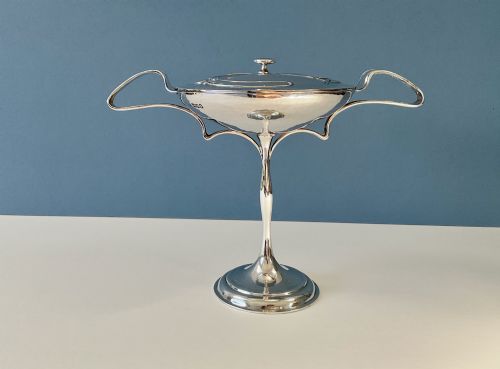
When searching for an art nouveau silver dish, buyers encounter various domestic forms including bon bon dishes, card trays, tazzas, baskets, and trinket boxes originating from the late nineteenth century through the Edwardian period. These items reflect the international stylistic movement spanning British, German, and Austrian workshops, frequently manifesting in sterling silver, silver plate, and pewter combinations.
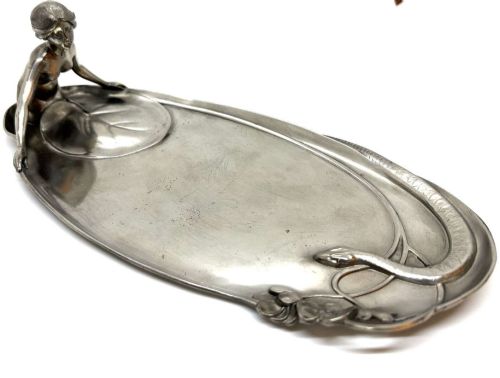
The most common examples on this page are silver-plated and pewter centrepieces or card trays produced by continental manufacturers like WMF, alongside British sterling silver dishes bearing hallmarks from Birmingham, Chester, and London. Forms range from simple pin trays to elaborate figural stands incorporating original green, ruby, or clear glass liners.
Objects span several stylistic crossovers, including Arts and Crafts, Jugendstil, and Austrian Secessionist designs. Makers often integrated natural motifs such as maidens, flowers, clover, and scrolling foliage directly into the structural handles and borders of the tableware.
Materials and production techniques
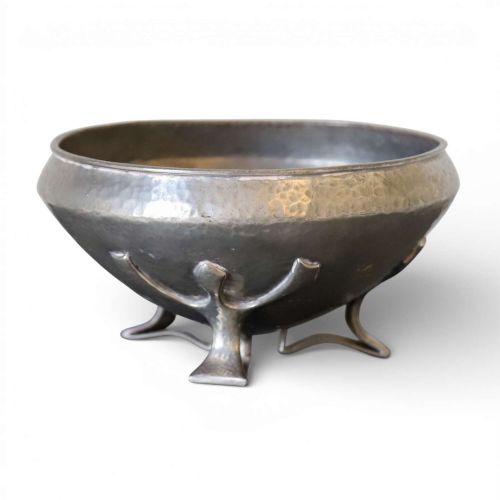
Silversmiths and metalworkers utilised solid sterling silver, silver plate on base metals, Britannia metal, and pewter to shape these vessels, often combining metal frames with blown or cut glass liners. Techniques included heavy casting for figural card trays and centrepieces, alongside hand hammering on pewter bodies by Arts and Crafts practitioners.
Makers achieved the characteristic fluid lines through meticulous stamping, repoussé work, and chased surface detailing that emphasised whiptail curves and organic motifs. Silver-plated items typically utilised a thick electroplated coating over a durable base metal core, while pewter and Britannia metal pieces relied on alloy casting to hold crisp, sculptural relief.
Art Nouveau Silver Dish Retail Price Guide 2026
Typical asking prices for art nouveau silver dish among the pieces listed under this phrase on Sellingantiques today, from the lower quarter to the upper quarter. They describe what is for sale here now, not the wider market.
Forms on this page range from delicate pin trays and card receivers to large multi-piece fruit stands with coloured glass liners.
Determinants of quality
Quality in these vessels rests upon the crispness of the cast or chased botanical and figural relief, the weight and gauge of the metal, and the presence of original components such as glass inserts or matching spoons. Pieces exhibiting deep, hand-finished detailing on organic motifs distinguish themselves from mass-produced lighter variants.
The reputation of the producing foundry or silversmith, combined with clear hallmarks or maker stamps, elevates a piece significantly. Intact silver plating without excessive wear to the base metal and original, undamaged coloured glass liners preserve the integrity and visual balance intended by the designer.
WMF·Liberty & Co·Georg Jensen·Henry Matthews·Thomas Bishton·Mappin Brothers·Roberts & Belk·Wilkens & Sohne
The Art Nouveau Silver Dish Glossary
- Tazza
- A shallow bowl or dish mounted on a stem and foot, frequently utilised for presentation or serving sweetmeats during the Edwardian era.
- Bon bon dish
- A small decorative vessel designed specifically for holding sweets or confectionery, often featuring pierced or openwork botanical designs.
- Repoussé
- A metalworking technique where the artisan hammers the metal from the reverse side to form a raised design in relief on the front.
- Jugendstil
- The continental German-language variant of the Art Nouveau movement, heavily represented by workshops such as WMF.
- Britannia metal
- A specific tin-based alloy utilised as a base metal for silver plating and pewter-style casting during the late nineteenth and early twentieth centuries.
Art Nouveau Silver Dish: Frequently Asked Questions
What were art nouveau silver dishes used for?
These vessels served various domestic functions in wealthy households, ranging from holding visiting cards in hallways to presenting bon bons, fruit, or small trinkets in reception rooms. Many incorporated glass liners to safely hold damp foods or condiments during dining.
Smaller examples functioned as pin dishes or trinket trays placed upon dressing tables, while larger footed tazzas and centrepieces acted as prominent decorative table focal points.
How do I identify a Jugendstil piece?
Jugendstil items originate from German-speaking regions and share the broader stylistic vocabulary of Art Nouveau, focusing heavily on plant stems, abstracted seed pods, and stylized female figures. Look for stamps such as WMF or continental silver fineness marks alongside characteristic flowing, asymmetric lines.
These continental pieces often utilise silver-plated Britannia metal or pewter combined with vibrant coloured glass inserts, distinguishing them from traditional British sterling silver work.
Are glass inserts usually original?
Original glass liners fit the contours of the metal frames precisely, matching the exact manufacturing period and style of the outer basket or tray. Ruby, green vaseline, and clear cut glass were standard factory pairings for specific metal models.
Replacements often sit unevenly within the mount or display glass types inconsistent with early twentieth-century production methods.
How should I clean my silver dish?
Maintain silver and silver-plated items using a soft microfiber cloth and a mild, non-abrasive silver polish formulated to preserve antique surfaces. Avoid aggressive scrubbing on raised repoussé details or electroplated areas to prevent wearing through to the base metal.
For pewter or Britannia metal components, use warm soapy water and dry immediately, avoiding standard silver dips which can damage base metal alloys.