
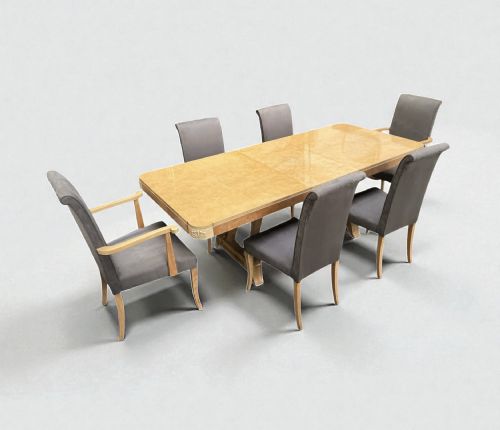


Art Deco Dining Set
When you search for an art deco dining set, you seek matching tables and chairs built during the modernist interwar decades.
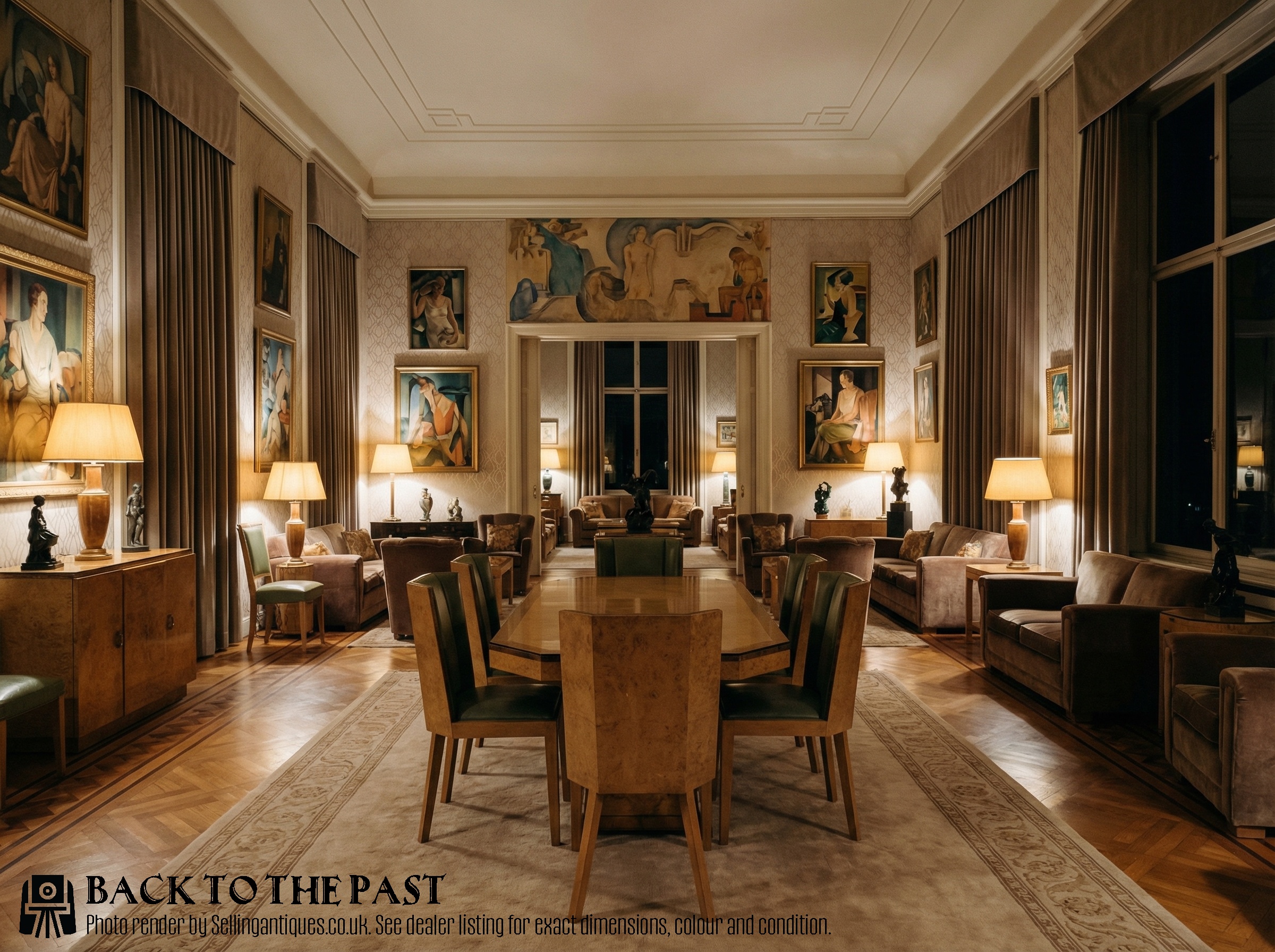
What an art deco dining set is
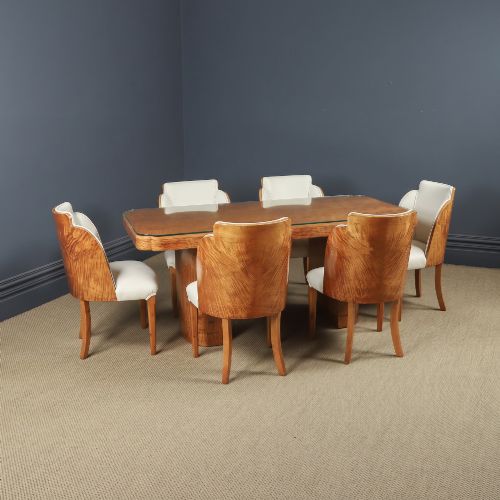
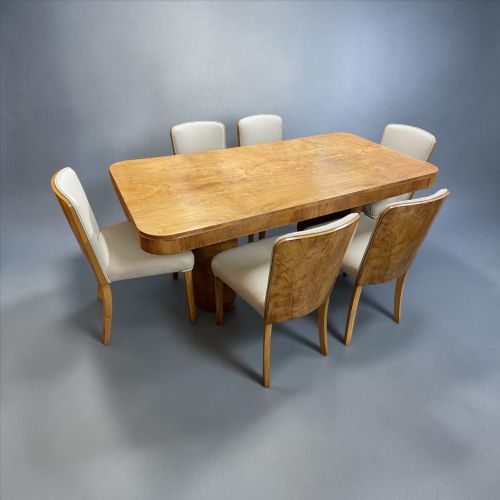
An art deco dining set comprises a dining table accompanied by a set of chairs, designed in the characteristic style of the nineteen twenties, nineteen thirties, and nineteen forties. These suites range from intimate four-seater groups to larger settings seating eight, ten, or twelve diners.
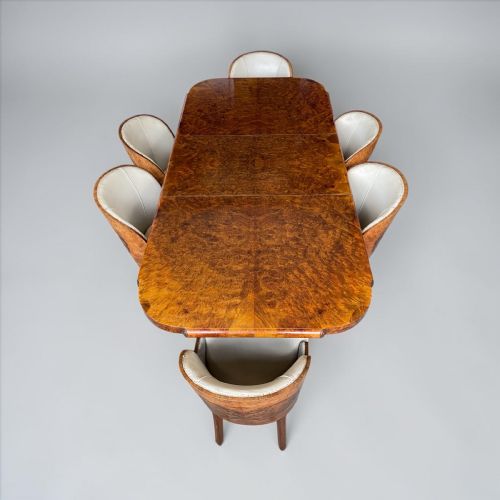
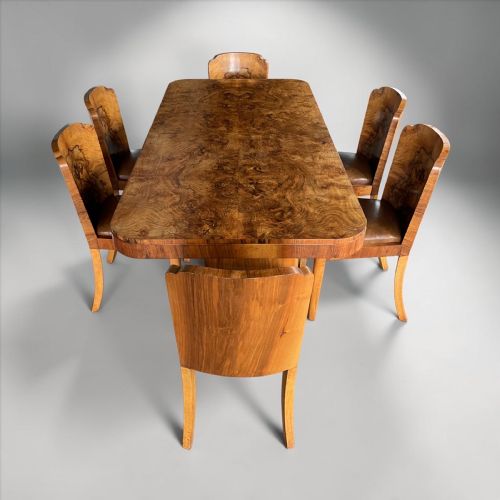
The most common configurations found here combine a substantial dining table with six matching chairs, executed in walnut, burr walnut, oak, or bird's eye maple. Pieces frequently originate from British workshops and include distinctive seating forms such as cloud back chairs.
Complete suites bring together unified design aesthetics for the dining room, pairing tables with upholstered chairs featuring leather, fabric, velvet, or vinyl coverings. Makers and designers of the period applied geometric lines and polished wood veneers to create these cohesive dining arrangements.
How they were made
Cabinet makers utilised choice timbers such as walnut, burr walnut, oak, mahogany, and bird's eye maple, often applying decorative veneers over solid secondary woods. Frames were constructed using sturdy hardwoods like beech and oak to support the frequent use of dining chairs.
Upholstery techniques involved padding seats and backs with materials then covering them in leather, velvet, fabric, or simulated leather. Wood surfaces were finished to high polishes that emphasised the natural grain patterns of walnut and maple veneers.
Retail Price Guide 2026
Typical UK retail prices for art deco dining set, calculated from the Sellingantiques database of over a million retail prices indexed since 2003. This retail price guide relies exclusively on Sellingantiques data; no external sources or auction records are used, so the figures do not describe the wider market.
What varies in quality
The selection of timber veneers defines the visual appeal of a suite, with highly figured burr walnut or bird's eye maple sitting at the upper end of the scale compared to plain oak or mahogany. Matching grain patterns across table tops and chair backs demonstrate superior cabinet making.
Construction methods and designer attribution elevate certain suites, particularly those produced by recognised makers such as Epstein or Hille. The complexity of chair designs, such as cloud back forms or suites with armchairs included, alters the standing of a dining set.
Harry and Lou Epstein·Hille·G. Norman·Mundus Kohn
The Art Deco Dining Set Glossary
- Burr walnut
- A veneer taken from the warted growth of a walnut tree, showing intricate swirling grain patterns. It was heavily favoured by interwar cabinet makers for grand dining furniture.
- Bird's eye maple
- A figured timber exhibiting small circular eyes disruptions in the grain, giving a dotted appearance. This light wood created striking contrasts in dining suites.
- Cloud back
- A rounded, undulating chair back profile shaped like a stylised cloud. This silhouette defines many high-end lounge and dining seats from the period.
- Veneer
- A thin slice of decorative wood glued over a stable secondary timber base. This technique allowed makers to display expensive grain patterns economically across large table tops.
- Bentwood
- Wood softened by steam and bent into curved shapes for chair frames. It appears in utilitarian and cafe seating styles from the early twentieth century.
Frequently Asked Questions
How many chairs typically come with a set?
Most surviving suites include either four or six chairs, though larger sets of eight, ten, or twelve chairs exist for spacious dining rooms.
Tables are proportioned to match the accompanying chair count, often featuring extension mechanisms for larger gatherings.
What woods were used for these dining suites?
Walnut and oak form the foundation of most dining sets from this era, supplemented by exotic veneers like burr walnut and bird's eye maple.
Mahogany and beech also appear frequently in chair frames and secondary construction timbers.
How do I identify a maker on a dining set?
Look for paper labels, stamps, or branded signatures beneath table frames and under chair seats where workshops marked their output.
Distinctive design signatures, such as cloud back upholstery or specific veneer matching, often point towards known firms like Epstein or Hille.
What upholstery materials are original to the chairs?
Leather, velvet, and woven fabrics were standard coverings utilised by makers during the interwar decades.
Many chairs have since been reupholstered to preserve usability while retaining period-appropriate textures and colours.