



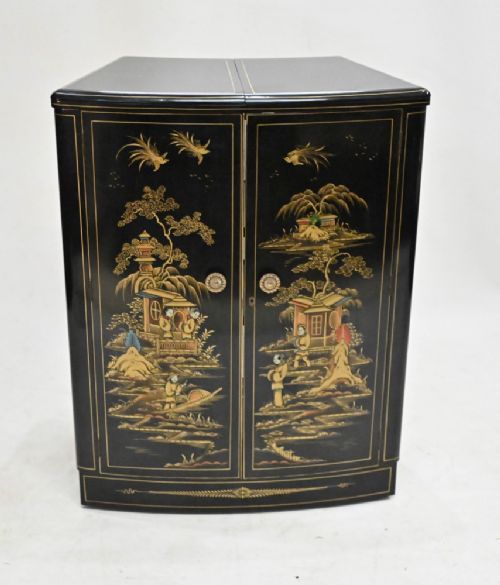
Art Deco Cocktail Bar
An art deco cocktail bar brings the glamour of the interwar lounge into a modern home through architectural lines and rich, figured woods.
Art Deco Cocktail Bar
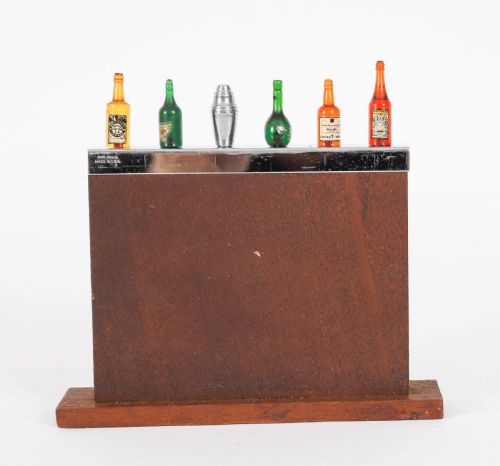
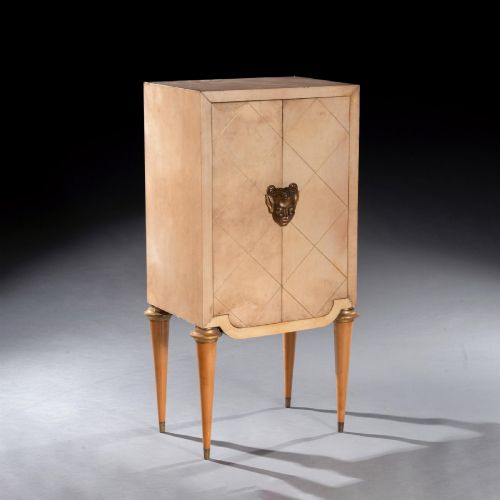
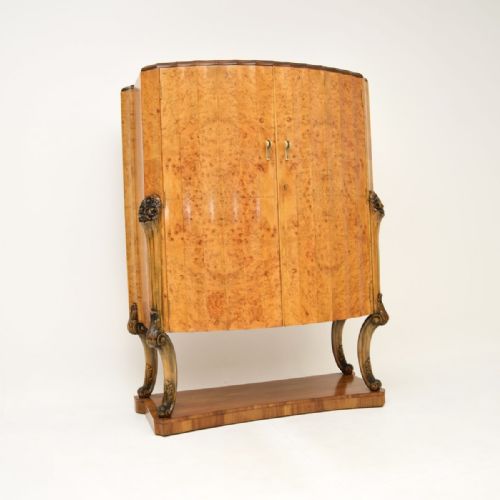
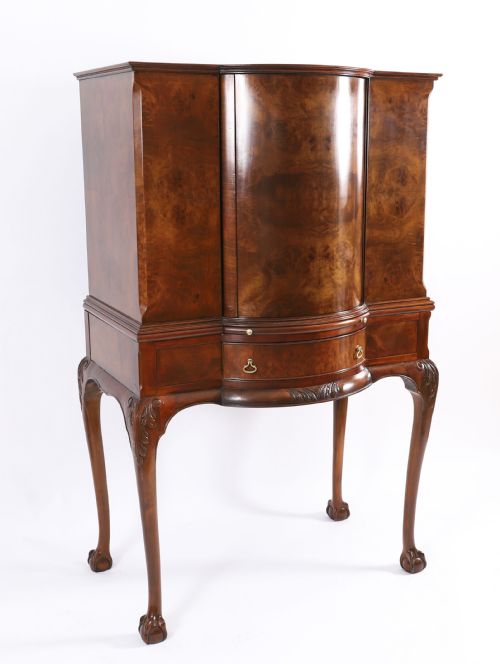
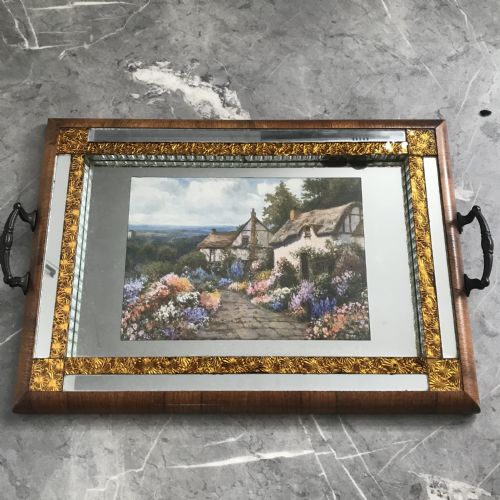
An art deco cocktail bar encompasses substantial drinks cabinets, freestanding dry bars, rolling carts, and smaller tabletop barware.
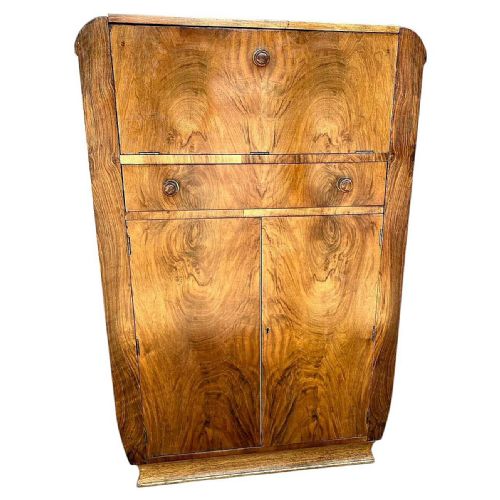
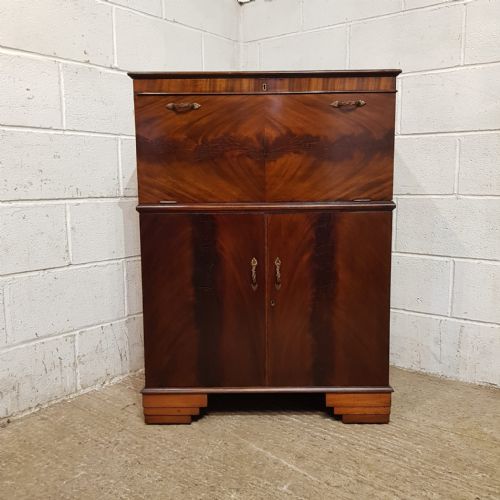
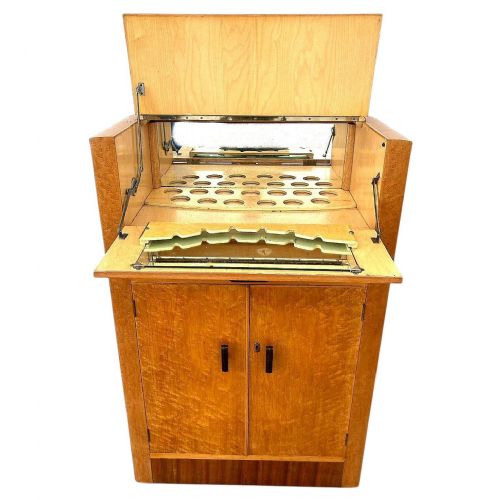
Cabinets feature fall-front panels, revolving bodies, or illuminated interiors designed to house glassware and bottles securely.
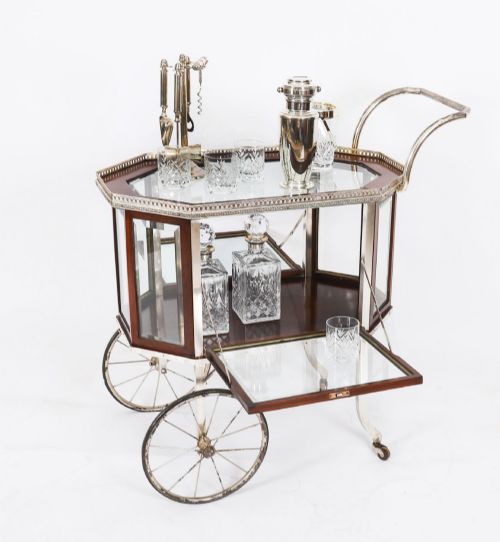
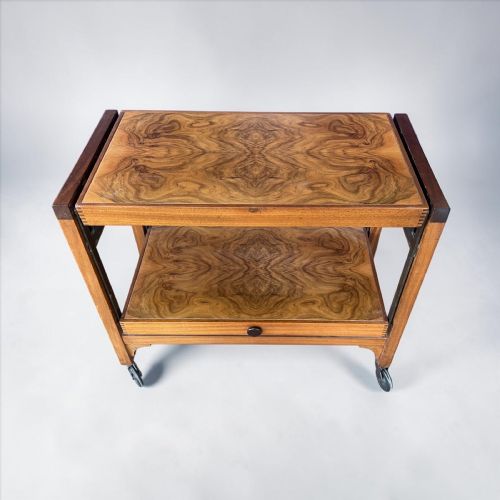
Movable pieces range from two-tier serving trolleys to metamorphic tables that expand for hosting guests.
English and French workshops dominate the selection, utilising rich veneers and polished metals to define the entertaining space.
Evaluating Craftsmanship
The sophistication of the veneer matching across curved doors and bow fronts separates master cabinet work from simpler production.
Integrated mechanisms, such as pop-up bottle shelves and revolving internal carousels, demonstrate the mechanical ambition of the maker.
The weight and finish of cast metal mounts, handles, and accompanying silver-plated barware indicate the original grade of manufacture.
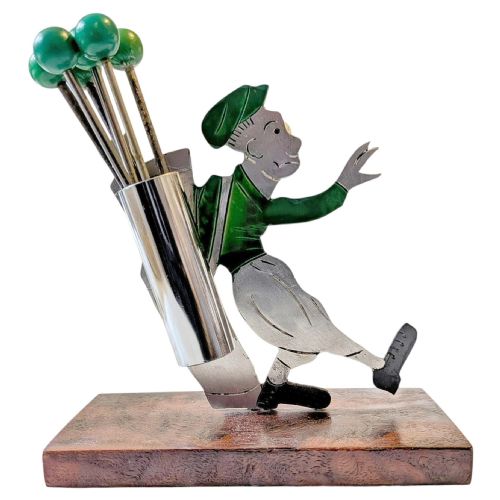
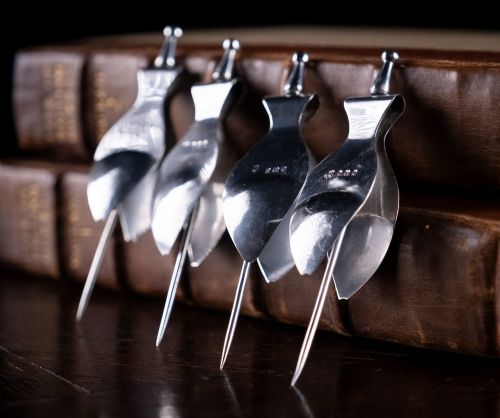
French novelty cocktail stick sets depict comical golfers and skiers ready to spear an olive.
Harry and Lou Epstein·Maurice Jallot·Maison Bagues·Hille·Barker Brothers
The Art Deco Cocktail Bar Glossary
- Burr walnut
- A figured timber harvested from the tree's growth growths, displaying swirling knot patterns highly prized for cabinet doors.
- Fall-front
- A hinged writing or serving surface that drops down to horizontal, frequently lined with mirror glass or laminate for mixing drinks.
- Dry bar
- A dedicated piece of furniture designed for storing spirits and glassware without integrated plumbing.
- Chinoiserie
- A decorative style employing lacquered surfaces and oriental motifs popular during the interwar period.
- Metamorphic
- Describing furniture that transforms in shape or function through folding or sliding mechanisms.
Art Deco Cocktail Bar: Frequently Asked Questions
How do I use an antique cocktail cabinet?
Drop the fall-front flap to create a temporary mixing shelf while accessing bottles stored on the internal tiered racks.
Store glassware on the lower cabinet shelves and utilise the mirrored back panels for serving presentation.
Were these cabinets electrified originally?
Certain luxury models featured internal lighting systems wired to illuminate the glassware compartment automatically upon opening.
Inspect the wiring carefully and consult an electrician to ensure compliance with modern safety standards before plugging in.
What is the difference between a bar cart and a drinks cabinet?
Carts provide open, mobile shelving with castors for wheeling beverages between rooms during social gatherings.
Cabinets offer enclosed, secure storage for locking away valuable bottles and maintaining a neat exterior appearance.
How do I identify a piece by Epstein?
Look for heavy burr walnut veneers, cloud-shaped or bow-front profiles, and robust proportions typical of London cabinetmaking.
Many pieces also feature distinctive internal layouts designed specifically for entertaining.