


Fitted Cocktail Bar
A fitted cocktail bar brings period elegance to home entertaining through dedicated compartments for bottles, glassware and mixing accessories.
Fitted Cocktail Bar
A fitted cocktail bar serves as a dedicated storage unit for drinks, glassware and barware, designed to keep everything required for hosting close at hand. When searching for a fitted cocktail bar, buyers encounter various forms including cocktail cabinets, drinks cabinets and drinks trolleys.
The pieces available span several distinct periods from the early twentieth century, with Art Deco examples frequently appearing alongside revival styles. Formats range from bureau forms and corner units to substantial sideboards and freestanding cabinets.
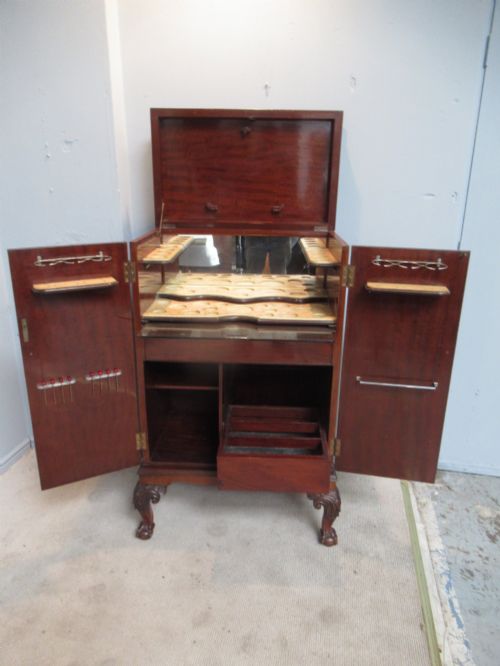
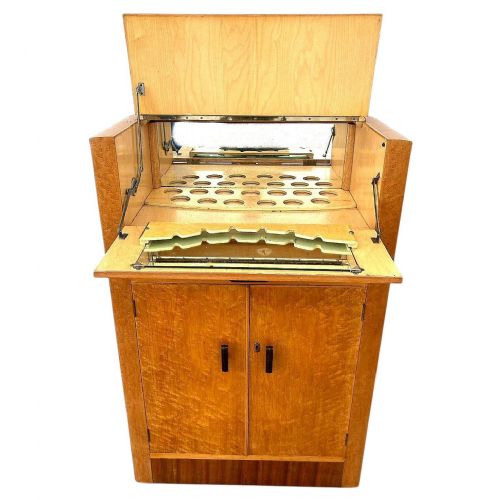
Origins trace back to English craftsmanship, incorporating specific period designs such as Chippendale style mahogany alongside striking burr walnut and bird's-eye maple Art Deco creations.
Materials and construction
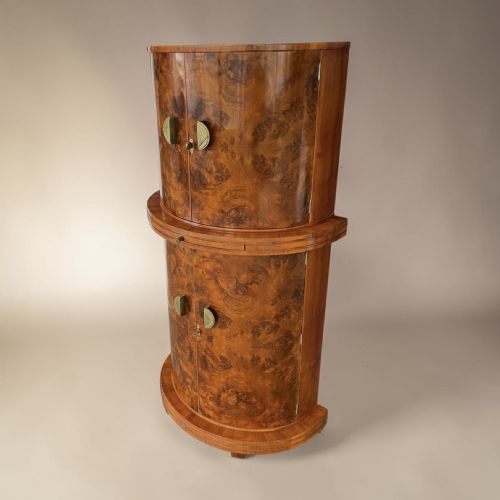
Cabinet makers utilised a selection of fine timbers including walnut, burr walnut, mahogany and oak to construct the primary carcases. These rich woods often featured highly figured veneers to create striking visual patterns across the exterior doors and panels.
Interiors and functional elements incorporate glass, mirror, brass and chrome details. Mirrors and glass shelves enhance the display of glassware, while metal hardware provides sturdy hinges, handles and trim.
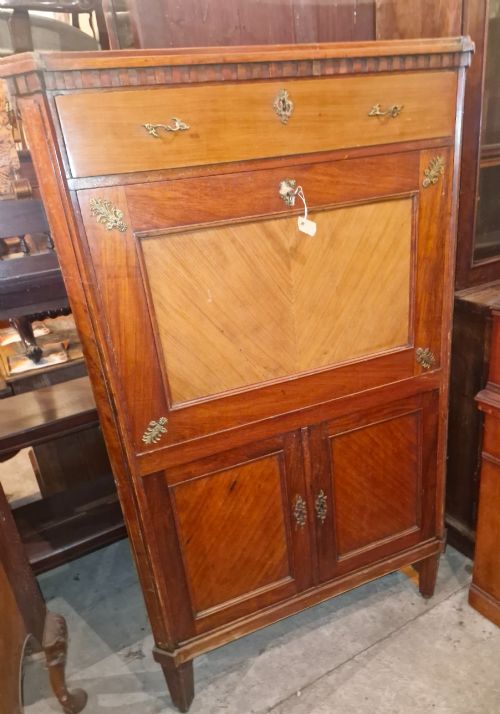
The furniture styles represented span Art Deco, French Empire, Chippendale Revival and Victorian designs.
Assessing quality
Quality reveals itself in the selection of wood veneers and the precision of the cabinet work. Pieces featuring book-matched burr walnut or bird's-eye maple demonstrate superior material choice by the maker.
The sophistication of the internal fittings distinguishes standard items from exceptional ones. Well-designed interiors include pull-out mixing slides, specialised bottle racks, integrated lighting and fitted mirror backs that elevate the piece.
Harry and Lou Epstein·Waring and Gillow
The Fitted Cocktail Bar Glossary
- Burr walnut
- A timber harvested from walnut tree growths, producing intricate, swirling grain patterns that were highly prized by twentieth-century cabinet makers.
- Art Deco
- A design style from the early twentieth century characterised by sleek geometric shapes, streamlined forms and luxurious materials.
- Chippendale Revival
- A furniture style drawing inspiration from eighteenth-century designs, featuring classic mahogany construction and traditional decorative motifs.
- Metamorphic
- A descriptive term for furniture that transforms from one form into another, such as a bureau opening to reveal a hidden cocktail interior.
- Drinks trolley
- A mobile serving cart fitted with wheels, designed for transporting bottles and glassware between rooms.
Fitted Cocktail Bar: Frequently Asked Questions
What is a fitted cocktail bar?
A fitted cocktail bar is a specialised cabinet or trolley designed specifically for storing bottles, decanters, glasses and mixing equipment. These pieces combine decorative exterior cabinetry with functional internal compartments tailored for home entertaining.
Most examples date from the early twentieth century, reflecting the growing popularity of cocktail culture during the Art Deco period. They often include drop-down mixing flaps, mirrored backs and dedicated bottle storage.
How do I use a cocktail cabinet?
Cocktail cabinets serve as functional drink stations and display pieces in living spaces or dining rooms. The drop-down flap provides a convenient surface for pouring drinks, while internal shelving holds glassware and accessories.
When positioning the cabinet, consider placing it near seating areas where entertaining takes place. Ensure the interior lighting and mirrored surfaces are utilised to showcase glassware collections.
What woods were used in these cabinets?
Cabinet makers utilised a variety of fine hardwoods suited to the prevailing aesthetic of each decade. Walnut and burr walnut dominate the Art Deco selection, offering rich, swirling grain patterns.
Mahogany and oak appear in both Victorian and revival pieces, providing a darker, more traditional appearance. Exotic veneers like bird's-eye maple were also chosen for high-end decorative impact.