




Art Deco Bar Cupboard
An art deco bar cupboard brings theatrical flair to entertaining, storing glassware and spirits behind striking veneered doors.
Art Deco Bar Cupboard
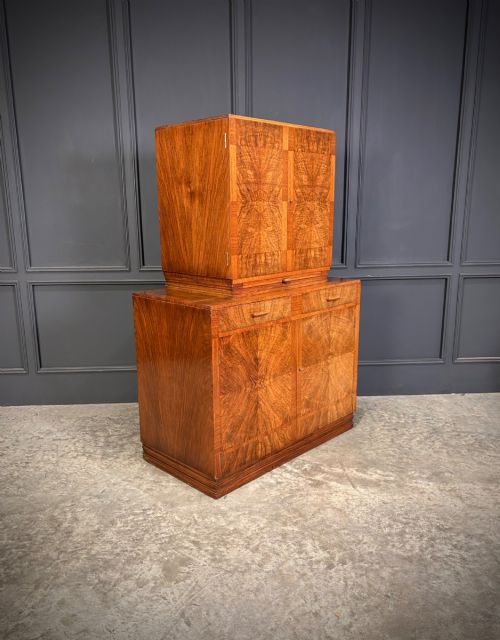
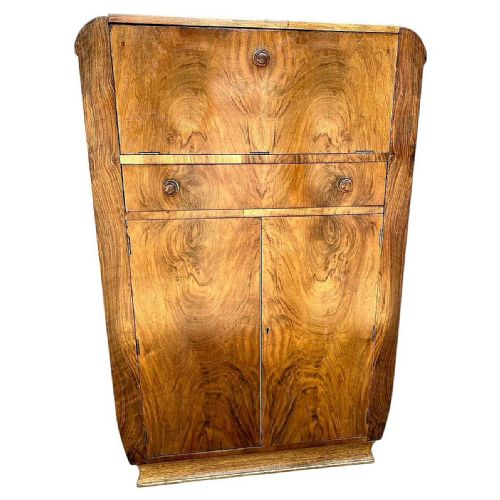
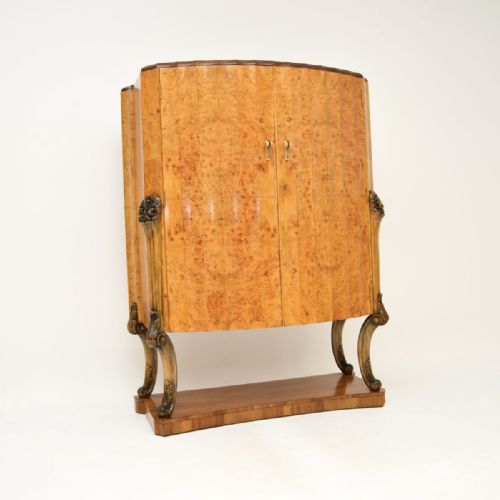
An art deco bar cupboard combines practical storage for bottles and glassware with bold architectural form. These pieces emerge predominantly from the nineteen thirties, though some examples date from the twenties or forties.
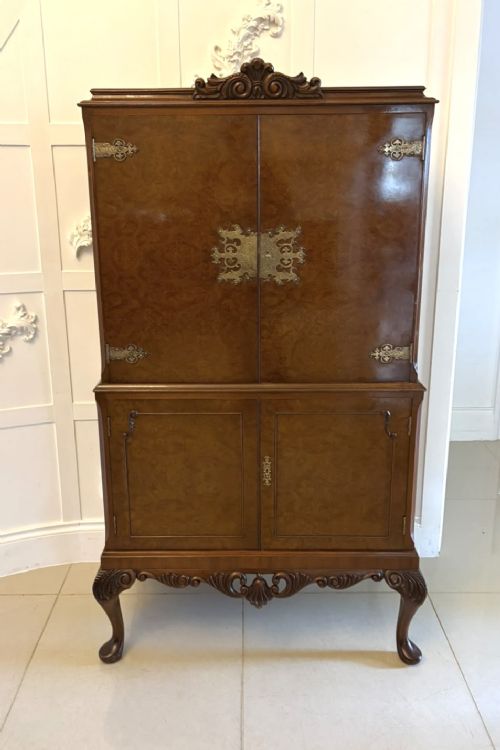
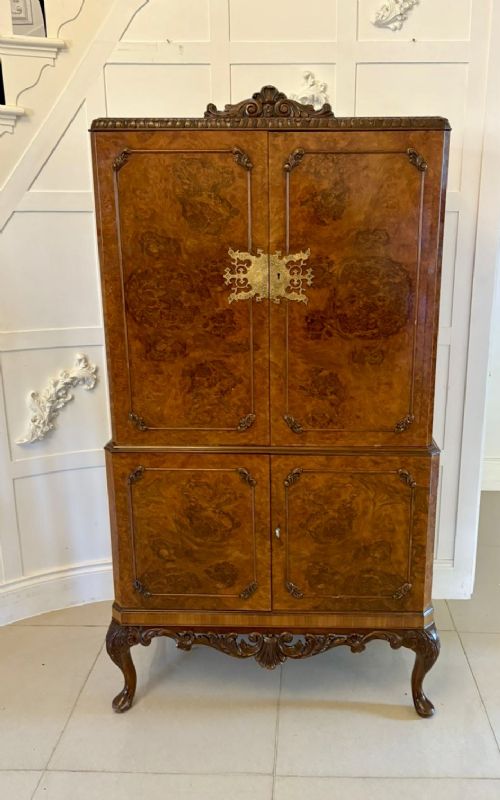
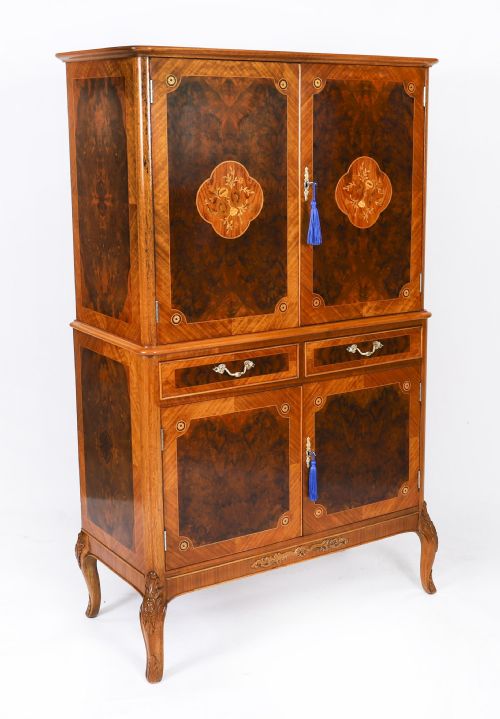
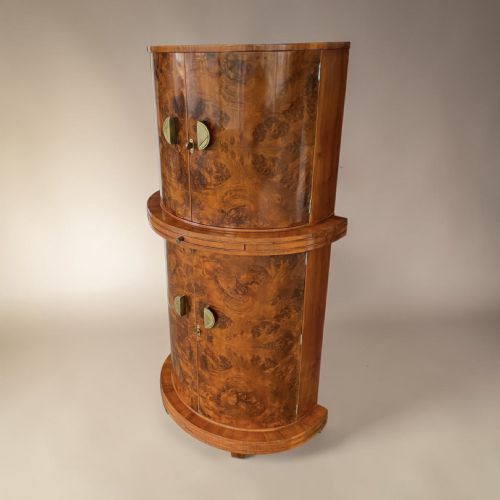
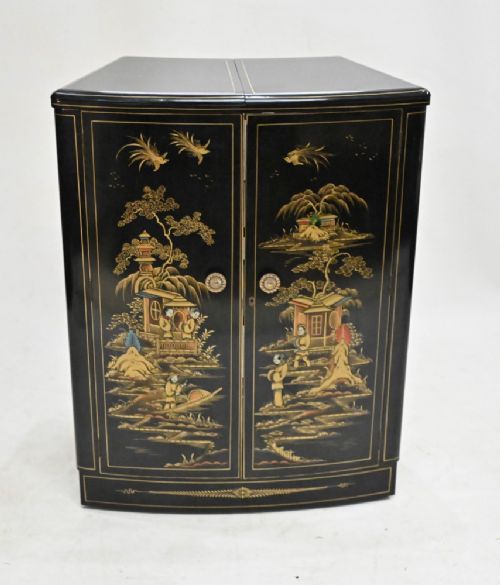
The standard version met here is a cocktail cabinet rendered in burr walnut or figured walnut. Makers also utilised mahogany, oak, and specialised finishes like parchment inlay or lacquered chinoiserie.
Forms range from double bow front cabinets and corner units to pieces set upon stands. Interiors frequently incorporate mirrored sections, glass shelves, and pull-out slides for mixing drinks.
Assessing Quality and Execution
The choice of veneer sets the baseline for visual impact, with tightly figured burr walnut commanding the eye. Greater skill shows in the continuity of grain matching across doors and drawers.
Execution of internal fittings distinguishes standard production from exceptional workshops. Fitted glass shelves, sliding trays, integrated lighting compartments, and solid brass mounts elevate the piece.
Art Deco Bar Cupboard Retail Price Guide 2026
Typical asking prices for art deco bar cupboard among the pieces listed under this phrase on Sellingantiques today, from the lower quarter to the upper quarter. They describe what is for sale here now, not the wider market.
Listings feature pieces spanning from the Victorian era through the nineteen twenties, thirties, and forties, dominated by burr walnut.
Epstein·Hille·Waring and Gillow·Maurice Jallot·Liberty's of London
The Art Deco Bar Cupboard Glossary
- Burr walnut
- A prized wood veneer harvested from tree growths, displaying swirling, knotty patterns. It forms the primary visual signature of many cocktail cabinets.
- Marquetry
- The art of applying pieces of veneer to a structure to form decorative patterns. Craftsmen use this technique to create geometric or pictorial designs on cabinet doors.
- Chinoiserie
- European decorative art influenced by Chinese styles and motifs. Lacquered versions of this finish appear on select drinks cabinets.
- Parchment inlay
- A decorative surface treatment utilising stretched animal skin applied to panels. This material appears on French cabinets from the period.
- Cocktail cabinet
- A dedicated piece of furniture designed for storing spirits, wine, and glassware. These units often feature pull-out mixing slides and mirrored interior backs.
Art Deco Bar Cupboard: Frequently Asked Questions
What is inside an art deco bar cupboard?
Interiors typically feature glass shelving, mirrored backs, and pull-out slides designed for preparing drinks. Many include specialised racks for bottles and stemware.
Some variations incorporate fitted compartments for cocktail shakers and juicers alongside storage for glassware.
How do I care for walnut veneer?
Keep wooden surfaces away from direct sunlight and excessive heat sources to prevent the veneer from drying out. Dust regularly with a soft, dry cloth.
Avoid using silicone polishes or excess moisture on antique wood finishes to preserve the natural sheen.
Where should I place a cocktail cabinet?
Position the piece in a principal reception room or dining space where its decorative doors can remain closed when not in use. Ensure adequate clearance for drop-down or swing doors.
Because many units feature mirrored interiors and glass shelves, placing them near ambient light enhances the interior display.
Are these cabinets suitable for modern bottles?
Most standard spirits bottles fit comfortably on the interior shelves, though exceptionally tall bottles may require placement on specific tiers. Fixed shelf heights vary between individual makers.
Reviewing the internal layout helps determine which sections accommodate taller wine or champagne bottles.