




1920s Walnut Drinks Cabinet
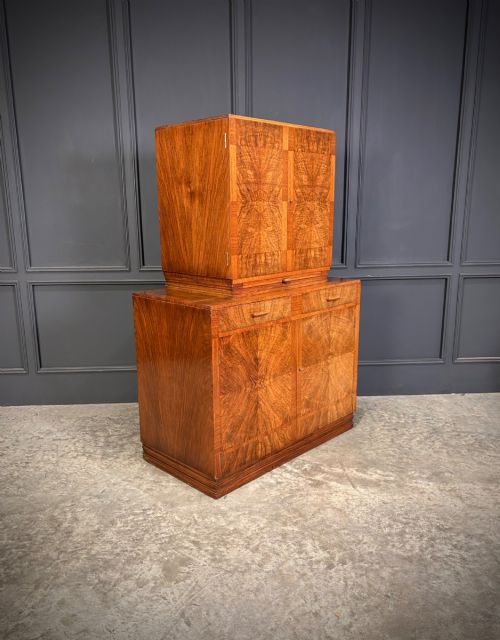
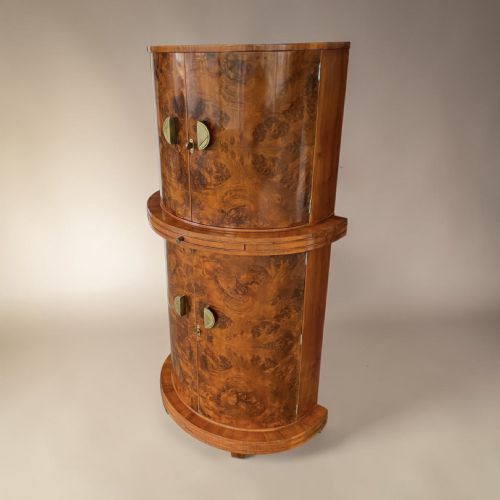
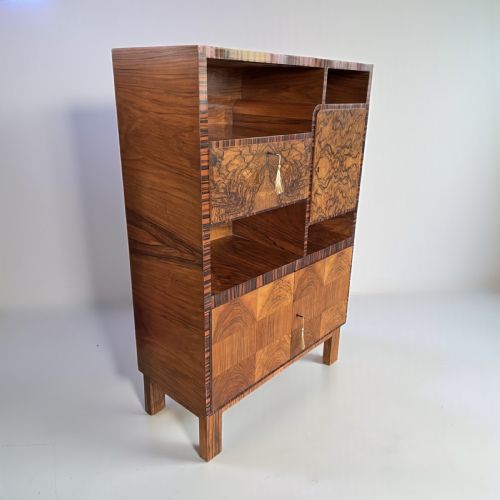
A 1920s walnut drinks cabinet is a sophisticated entertaining piece defined by rich burr grain and clever compartments, built to anchor a period room.
1920s Walnut Drinks Cabinet
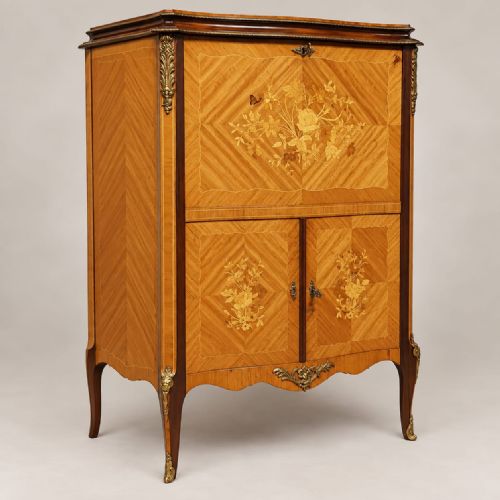
When you search for a 1920s walnut drinks cabinet, you encounter specialist cocktail cabinets, dry bar cabinets, and sideboards designed for hosting. These pieces span the 1920s and 1930s periods, emerging from both British workshops and international makers.
The version you meet most frequently on this page is the burr walnut cocktail cabinet, often housing pull-down flaps, mirrored interiors, and specialised bottle storage. Alongside these, sideboards and display tables appear to serve similar hospitality functions within the home.
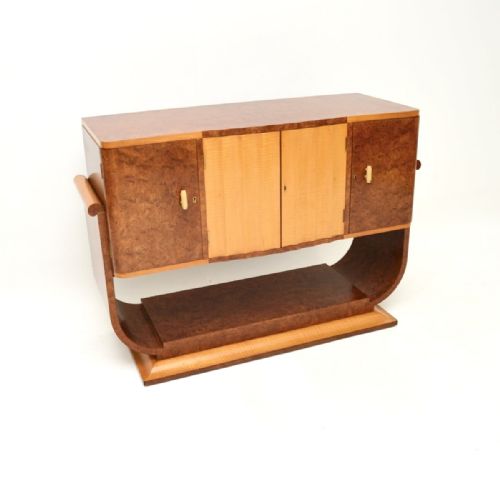
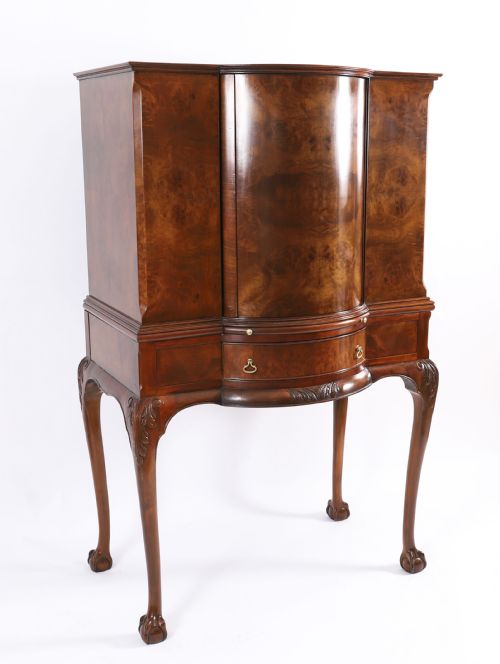
Makers of the era drew upon diverse stylistic influences, ranging from bold Art Deco geometry to traditional Queen Anne Revival curves and Colonial forms. This stylistic variety ensures that each cabinet offers a distinct visual presence while fulfilling the primary role of drink storage.
How they were made
Cabinetmakers utilised walnut and highly figured burr walnut veneers applied over solid foundations to achieve striking symmetrical patterns across doors and drop-fronts. Secondary woods like sycamore and rosewood frequently appear on interior surfaces, contrasting with the dark exterior grain.
Brass hardware such as hinges, handles, and locks provides structural definition and operational durability to doors and folding surfaces. Glass panels are integrated into display sections and serving trays, while specialist internal mechanisms facilitate revolving designs or metamorphic action.
1920s Walnut Drinks Cabinet Retail Price Guide 2026
Typical asking prices for 1920s walnut drinks cabinet among the pieces listed under this phrase on Sellingantiques today, from the lower quarter to the upper quarter. They describe what is for sale here now, not the wider market.
Certain revolving cabinets allowed hosts to spin their entire dry bar around to reveal hidden bottles with a theatrical turn.
What varies in quality
The sophistication of the veneer matching determines the visual impact of the front elevation, with book-matched burr walnut creating symmetrical patterns that elevate the piece. Superior examples display seamless grain continuity across multiple doors and drawers.
Internal complexity and the integrity of fitted compartments separate standard storage from exceptional cocktail cabinets. The presence of original mirrored backs, glass shelving, pull-out slides, and intact revolving mechanisms indicates higher tiers of original manufacture.
The 1920s Walnut Drinks Cabinet Glossary
- Burr walnut
- A prized wood veneer harvested from the irregular growths of walnut trees, producing swirling, highly decorative grain patterns. This material forms the primary visual signature of many cocktail cabinets.
- Art Deco
- A design style dominant in the 1930s characterised by sleek geometric shapes, stylised motifs, and streamlined elegance. Cabinets from this movement favour clean architectural lines.
- Queen Anne Revival
- A traditional design movement resurrecting early eighteenth-century aesthetic traits, notable for cabriole legs and restrained ornamentation. Such pieces offer a more classic alternative to Deco designs.
- Veneer
- A thin layer of superior wood adhered to a stable secondary timber base to create decorative surfaces without warping. This technique allows cabinetmakers to utilise expensive burr walnut efficiently.
- Metamorphic
- A descriptive term for furniture that transforms in function or shape through folding or sliding mechanisms. In drinks cabinets, this permits surfaces to expand for serving.
1920s Walnut Drinks Cabinet: Frequently Asked Questions
What is inside a 1920s walnut drinks cabinet?
These cabinets typically house mirrored back panels, glass shelves for glassware, and wooden racks designed to hold bottles securely. Many feature pull-down flaps that serve as preparation counters for mixing drinks.
Additional interior fittings often include pull-out slides, lemon squeezers, and specialised compartments intended for cocktail shakers and decanters.
How do I tell Art Deco from Queen Anne Revival styles?
Art Deco pieces exhibit streamlined geometry, symmetrical burr veneers, and modern hardware designed to reflect contemporary 1930s tastes. They lean towards architectural silhouettes.
Queen Anne Revival items rely on traditional forms, featuring curved cabriole legs and classical proportions that echo earlier centuries of British furniture design.
Where should I place a drinks cabinet in my home?
A drinks cabinet functions best in a dining room, living room, or reception space where entertaining takes place. Their decorative burr walnut exteriors allow them to stand alone as statement furniture.
Position the cabinet away from direct sunlight and heat sources to protect the walnut veneer and prevent the wood from drying or cracking over time.
Are these cabinets suitable for modern bottles?
Most interior compartments accommodate standard modern spirit bottles, though exceptionally tall bottles may require placement on dedicated open shelves rather than standard racks.
Reviewing the internal clearance of drop-down flaps and height between shelves ensures your specific collection fits comfortably within the historical layout.