

Vintage Walnut Drinks Cabinet
A vintage walnut drinks cabinet brings serious presence to a room, storing spirits and glassware with period style.
Vintage Walnut Drinks Cabinet
A vintage walnut drinks cabinet is a specialised storage piece designed for bottles, glasses, and barware, frequently taking the form of a cocktail cabinet, dry bar, or side cabinet. These items emerge from various periods, including Edwardian times, the 1920s, and the 1930s, alongside nineteenth-century examples.
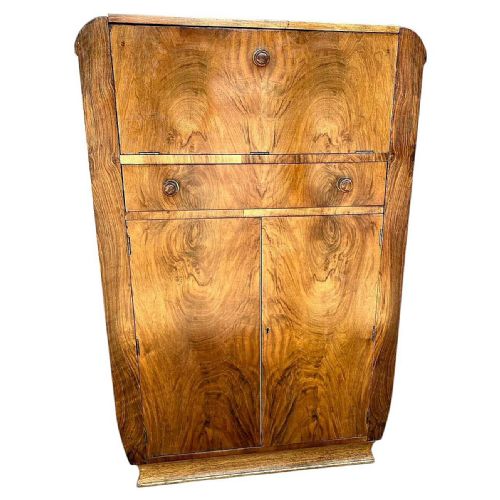
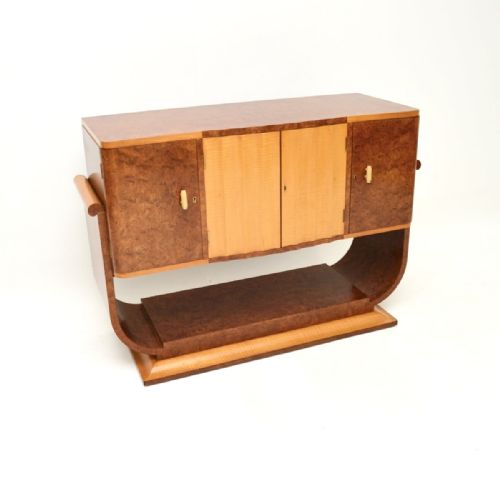
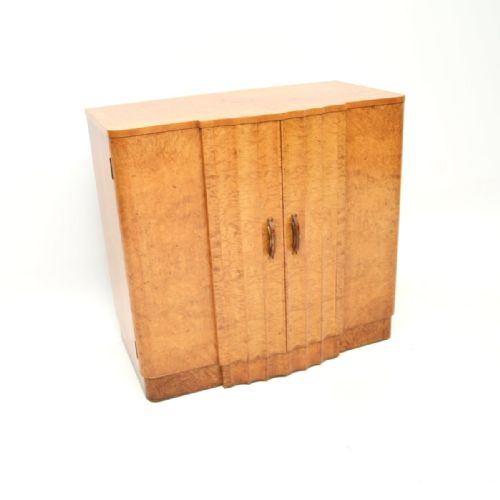
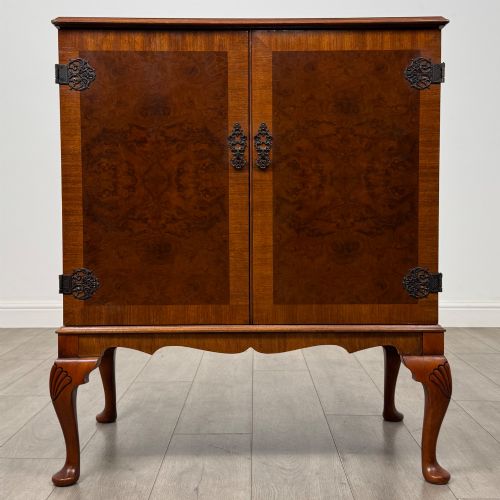
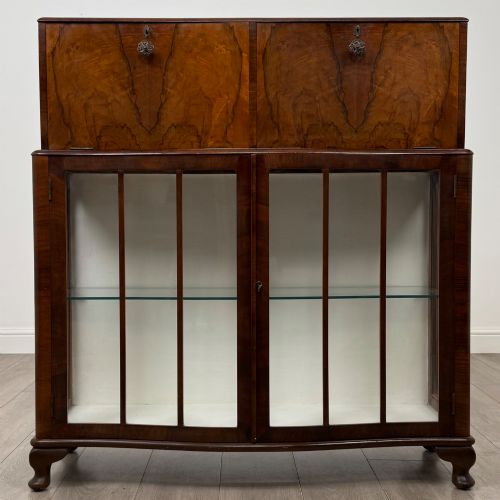
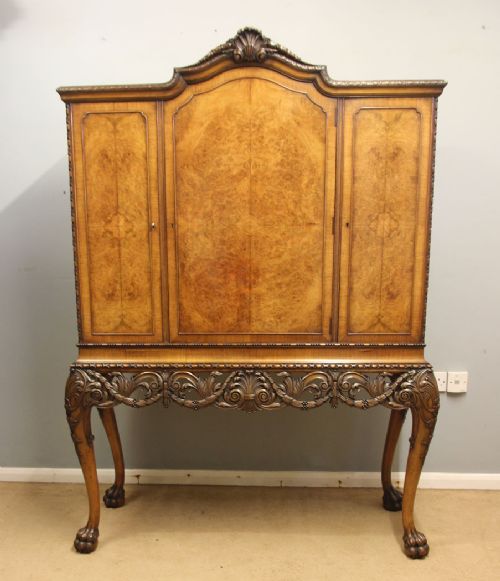
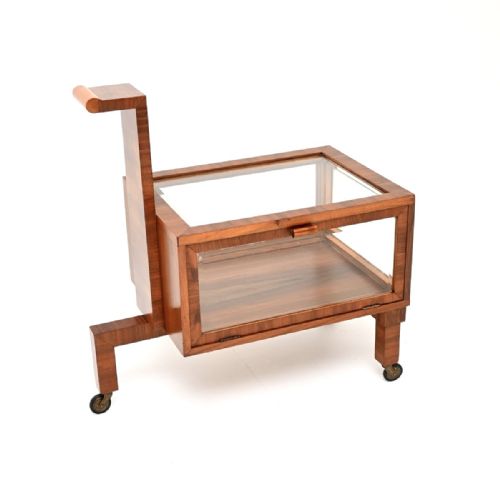
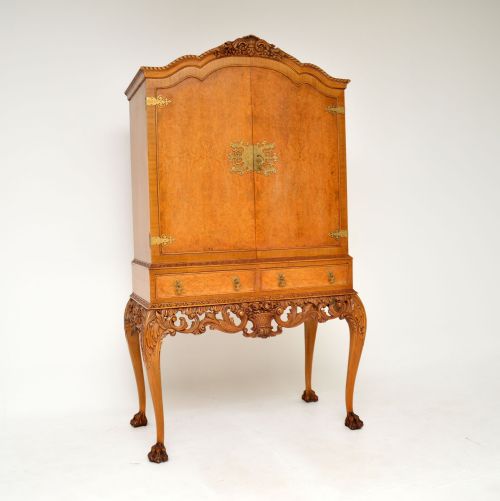
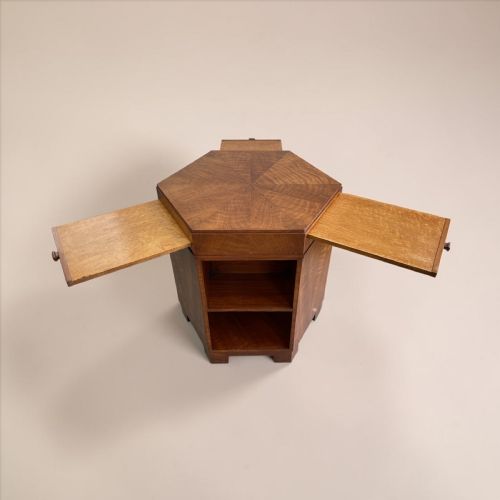
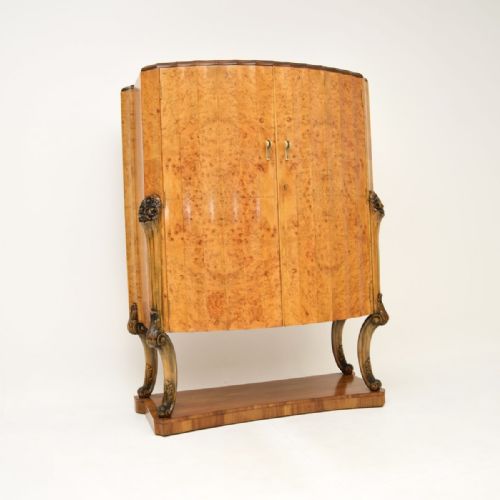
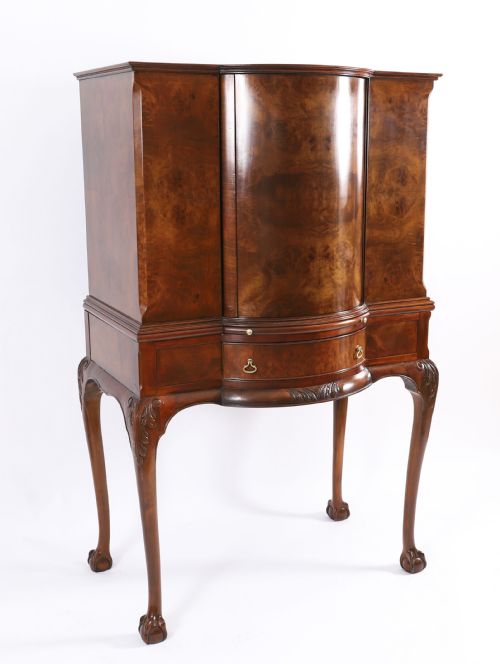
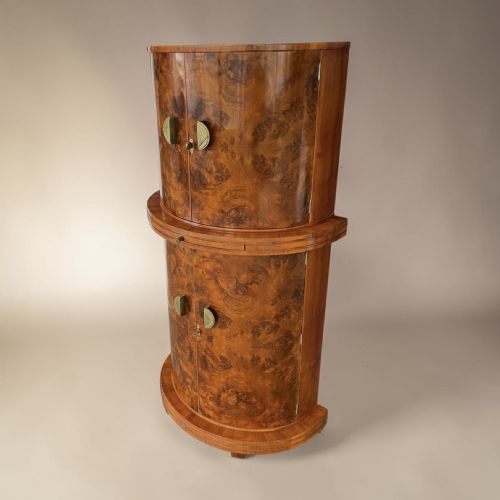
The selections available on this page lean heavily towards the Art Deco period, alongside Queen Anne Revival and French revival styles. Buyers encounter fitted cupboards, double bow front shapes, and pop-up tables designed specifically for entertaining.
Materials and Construction
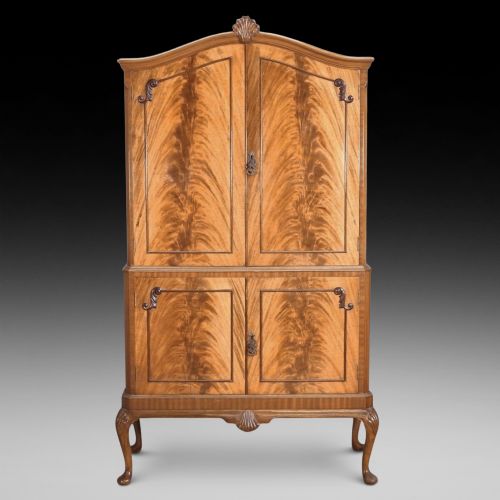
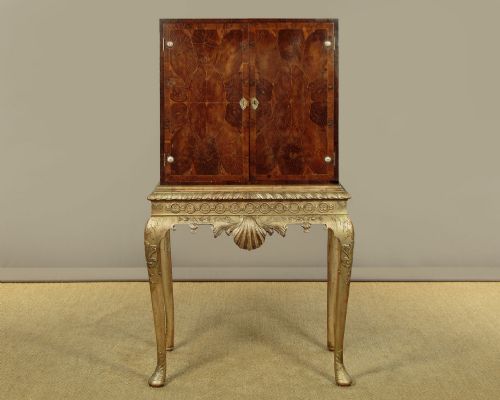
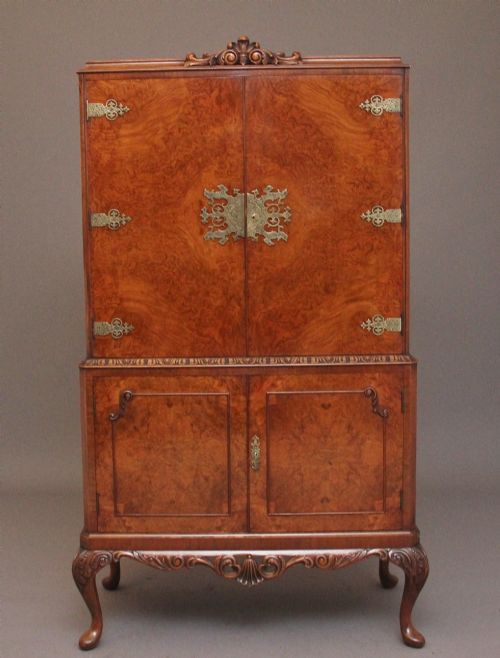
Construction relies heavily on walnut timber, often utilised as burr walnut or figured walnut veneer to create striking grain patterns across the exterior doors and panels. Sycamore sometimes appears as a contrasting secondary wood inside compartments.
Hardware and interior details incorporate brass, chrome, glass, and mirror elements to illuminate and reflect glassware during use. Cabinets frequently feature fitted interiors with drop-down serving surfaces and dedicated storage slots for bottles and accessories.
Walnut and burr walnut veneer dominate the materials, supported by brass, chrome, glass, and mirror.
Evaluating Quality
Quality rests upon the selection and matching of the walnut veneers, where symmetrical grain patterns across the front doors demonstrate superior cabinet-making. Plain timber surfaces without thoughtful grain placement sit lower down the scale.
The sophistication of the internal fittings defines the better examples, such as mirrored back panels, pull-out slides, and original electrical lighting or hardware. Simpler empty cupboards lack the intricate engineering found in dedicated cocktail furniture.
Harry and Lou Epstein·Epstein·Hille
The Vintage Walnut Drinks Cabinet Glossary
- Burr walnut
- A specialised wood figure obtained from the wart-like growths on walnut trees, prized for its swirling, highly decorative grain patterns. Cabinet-makers slice this timber into thin veneers to cover large surface areas.
- Cocktail cabinet
- A dedicated piece of furniture designed for mixing and serving alcoholic drinks, typically featuring a drop-down flap that serves as a shelf. Interiors often include glass shelves, mirror glass, and holders for bottles.
- Veneer
- A thin layer of superior wood applied over a secondary timber base to create decorative exterior surfaces. This technique prevents warping while displaying expensive grains.
- Tantalus
- A locking wooden frame holding decanters that displays the contents while preventing unauthorized access to the liquor. These typically feature brass mechanisms and keys.
- Art Deco
- A design style from the interwar period characterised by sleek geometric shapes, stylised motifs, and modern industrial materials. It strongly influences the nineteen-thirties pieces in this category.
Vintage Walnut Drinks Cabinet: Frequently Asked Questions
What is a vintage walnut drinks cabinet?
A vintage walnut drinks cabinet is a designated piece of furniture created to hold bottles, decanters, and cocktail glasses. These items date primarily from the early twentieth century and feature specialised internal compartments.
Many examples incorporate drop-down serving flaps and mirrored interiors designed for entertaining guests. They combine practical storage with decorative period aesthetics.
How do I use a cocktail cabinet?
Cocktail cabinets function as home bars, providing dedicated space for glassware, mixing tools, and liquor bottles. The drop-down door acts as a preparation shelf when mixing drinks.
Internal mirrored sections and glass shelves display glassware effectively while keeping bottles secure behind closed doors. Some pieces include built-in lighting or serving carts.
How do I identify Art Deco pieces?
Art Deco pieces from the nineteen-thirties display geometric lines, streamlined forms, and symmetrical burr walnut veneers. They often dispense with traditional ornamentation in favour of clean architectural shapes.
Makers such as Epstein and Hille produced characteristic cabinets from this era. Chrome hardware and contrasting light woods like sycamore frequently accompany the dark walnut.
Are Edwardian drinks cabinets different?
Edwardian and early twentieth-century examples tend to follow traditional revival styles, such as Queen Anne or colonial designs. They utilise figured walnut rather than the bold geometric veneer work of later decades.
These pieces often take the form of side cabinets or fitted cupboards rather than specialised cocktail bars. The joinery reflects older cabinet-making traditions.