






Arita Porcelain Display Plates
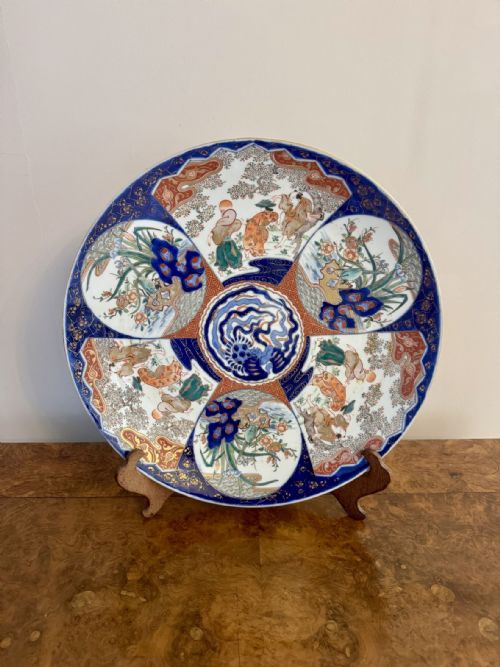
Arita porcelain display plates bring rich palette work and scale to a room, offering striking decorative presence through traditional forms.

Arita Porcelain Display Plates
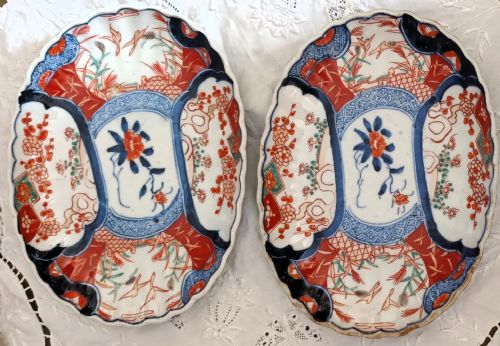
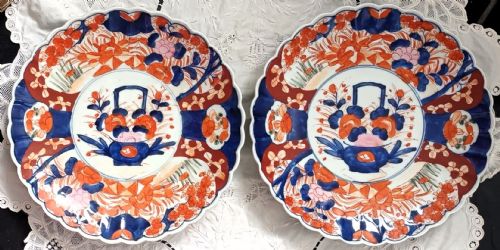
When you search for arita porcelain display plates, you are looking at large chargers, platters, and decorative dishes originating from Japan. The selection on this page leans heavily toward pieces produced during the Meiji period and around nineteen hundred, alongside earlier examples from the Edo period and eighteenth century.
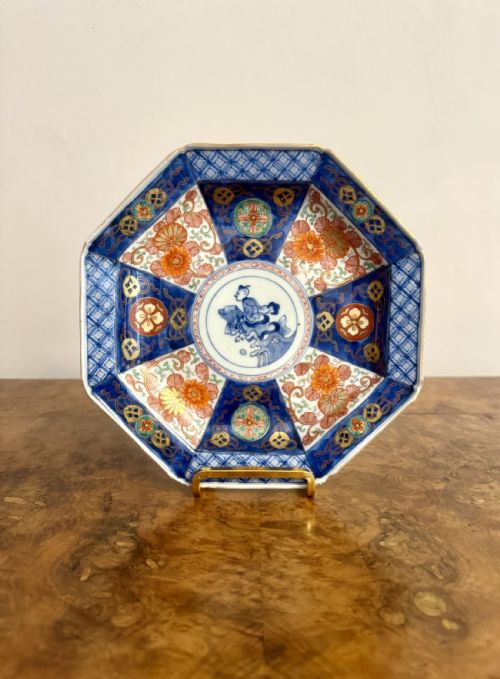
These items were intended primarily for display rather than dining, taking forms that range from standard circular chargers to hexagonal, square, fan-shaped, and scalloped edges. Collectors will find both pairs and larger matching collections among the available decorative plates.
Materials and construction
The foundation of these pieces is hard ceramic porcelain, painted by hand and finished with cobalt glaze or polychrome enamels. Many examples incorporate gilding, gold leaf, and gold gilt highlights to accentuate the intricate patterns.
Techniques relied on high-temperature firing of the porcelain body, followed by meticulous hand application of pigments depicting floral motifs, exotic birds, and koi carp.
Listings span the eighteenth century, the Edo period, the Victorian era, and the Meiji period up to nineteen twenty.
Distinguishing quality across pieces
Quality rests upon the precision of the hand painting and the complexity of the compositional layout. Pieces featuring unusual geometric shapes like squares, ribbons, or fans often display a higher degree of artisan skill than standard circular dishes.
The depth and vibrancy of the enamel work, combined with the careful placement of gold leaf or gilding, separate standard decorative wares from the finest examples.
The Arita Porcelain Display Plates Glossary
- Imari
- A style of Japanese porcelain decorated in underglaze blue and overglaze red, gold, and other colours. It originated in the town of Arita and became widely exported.
- Charger
- A large decorative plate or platter. These items were traditionally used for formal presentation or wall hanging rather than serving food.
- Meiji Period
- A span of Japanese history lasting from eighteen sixty-eight to nineteen twelve. This era produced many of the detailed porcelain works found on the market today.
- Edo Period
- The period in Japanese history spanning from sixteen hundred and three to eighteen sixty-eight. Pieces from this era represent the earlier traditions of Arita production.
- Glaze
- A glassy coating baked onto ceramic ware to seal the surface and provide colour or sheen. Cobalt versions provide the deep blue tones common in these designs.
Arita Porcelain Display Plates: Frequently Asked Questions
How were these large plates used originally?
These large dishes served primarily as decorative chargers in wealthy interiors. They were meant for visual display on walls, cabinets, or table stands rather than everyday dining.
Their substantial scale allowed households to showcase intricate hand-painted artisan work to visitors.
How do I hang a heavy charger safely?
Displaying heavy porcelain requires specialised wall mountings with coated spring clips that grip the rim evenly. Ensure the anchor fixes securely into solid wall material rather than plaster alone.
Using proper weight-rated hardware protects the ceramic body from accidental drops.
How do I tell Meiji period pieces apart?
Meiji period porcelain often exhibits dense, vibrant colour palettes and meticulous hand-painted details including birds, florals, and carp. The paste and glaze finishes reflect late nineteenth-century export standards.
Comparing motif complexity and potting thickness helps distinguish these from earlier Edo examples.
What is the difference between blue and white and Imari?
Blue and white pieces rely solely on cobalt oxide underglaze to create monochrome designs against a white porcelain background. Imari wares add overglaze enamel colours like iron red and gold gilt.
Both styles emerged from the same Arita kilns but offer distinct visual palettes.