


Underglaze Blue Red Porcelain
Underglaze blue red porcelain brings together cobalt and copper pigments beneath a clear glaze, offering collectors centuries of Asian ceramic artistry.

Underglaze Blue Red Porcelain
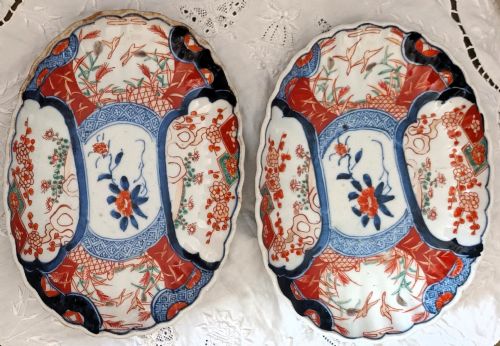
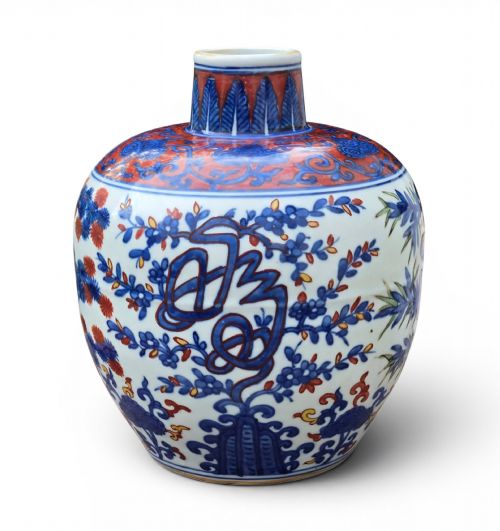
Underglaze blue red porcelain encompasses decorative plates, bowls, dishes, chargers, vases, and scholar's objects originating from China and Japan across multiple centuries. The selection spans distinct periods, including pieces from the sixteenth century, the seventeenth-century Kangxi era, the eighteenth century, the nineteenth century, and into the early twentieth century.
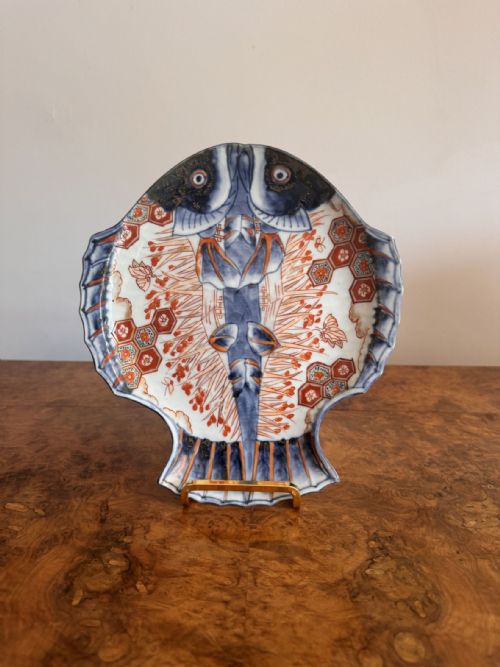
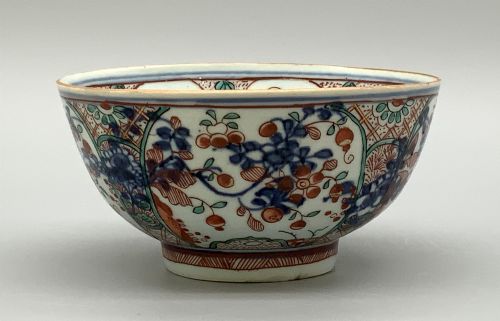
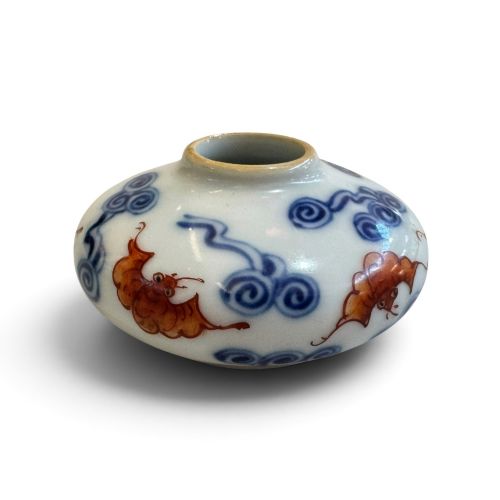
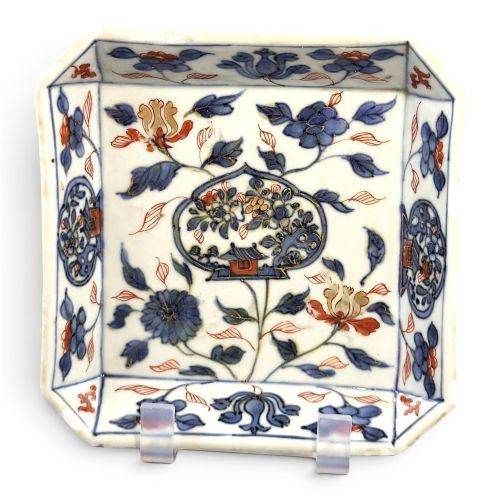
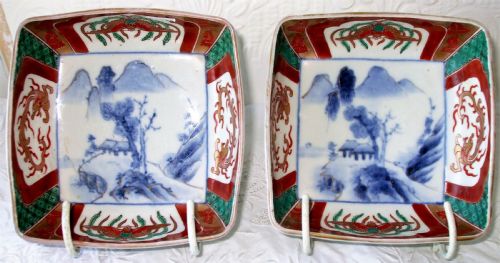
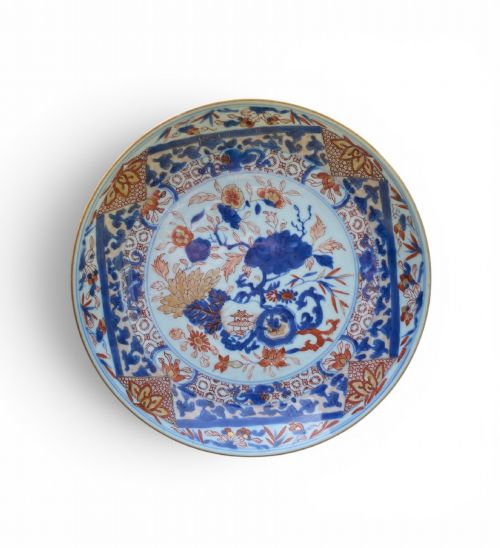
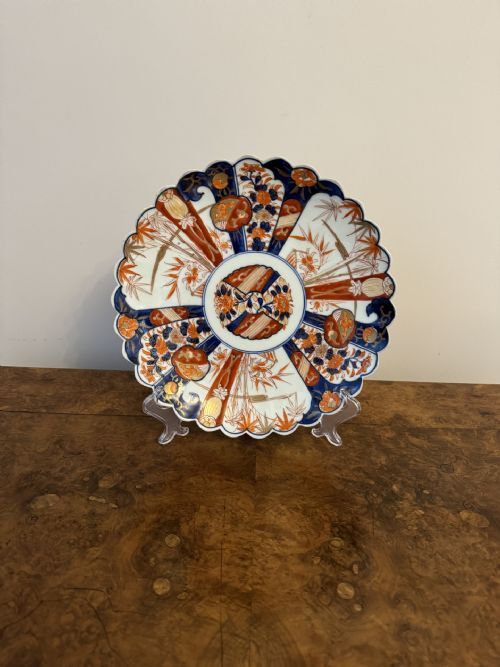
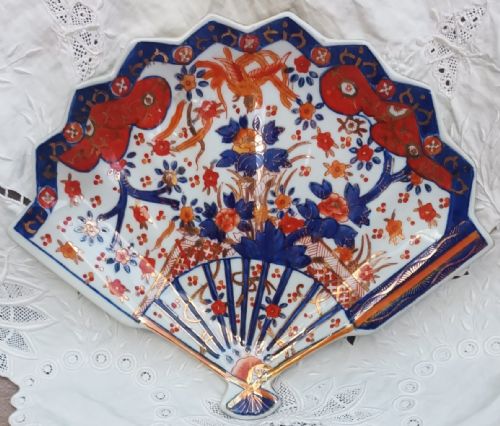
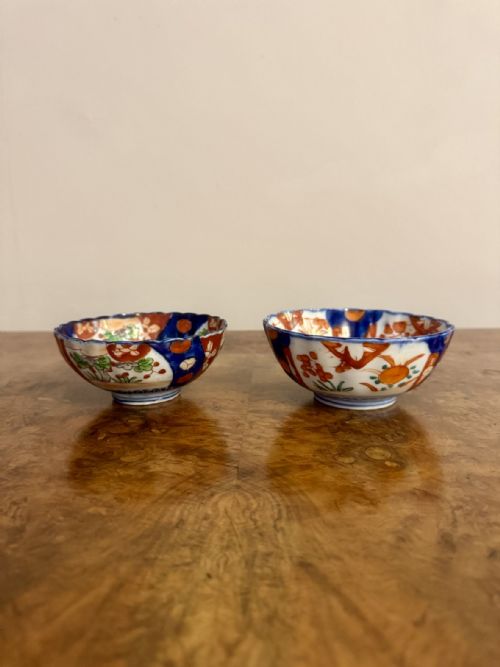
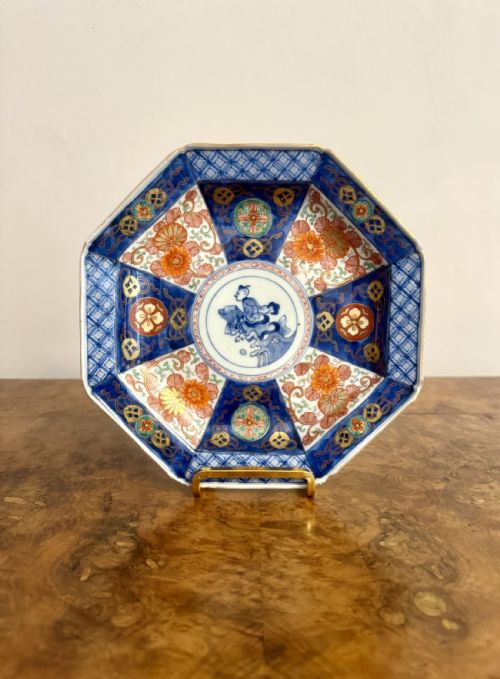
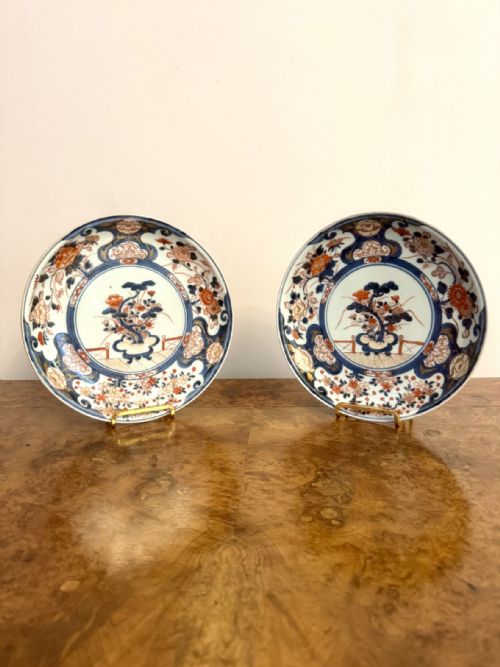
Japanese Imari works from the Meiji period and Edo period appear most frequently on this page, alongside Chinese export wares and Qing dynasty examples. These take various forms, from hexagonal and scalloped plates to double gourd vases and brush washers.
Makers and producers from different Asian traditions employed traditional firing methods to fuse these cobalt and copper elements into the ceramic body.
How they were made
Potters painted cobalt blue and copper-red pigments directly onto the raw ceramic body before applying a transparent glaze and firing the porcelain at high temperatures. This underglaze technique protected the painted decoration beneath a glassy surface, ensuring the colours remained stable during the intense kiln process.
Certain vessels incorporate additional decoration such as enamel, gold leaf, gilding, or celadon glaze over or alongside the primary underglaze painting. Kiln workers managed complex firing atmospheres to control how the copper pigment turned red rather than green or brown.
Listings span the sixteenth to the twentieth centuries, featuring Chinese Kangxi and Qing dynasty pieces alongside Japanese Meiji period Imari works.
What varies in quality
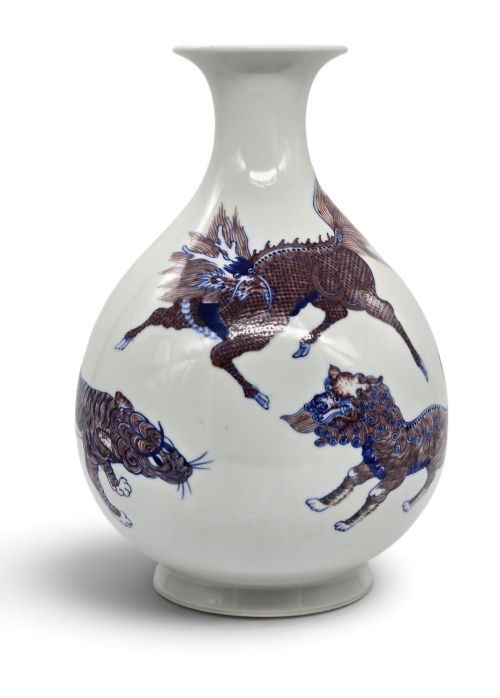
The precision and clarity of the painted brushwork separate standard production pieces from finer examples, particularly in complex motifs like mythical beasts, bats and clouds, or floral panels. Cobalt tones and copper-red areas that maintain sharp definition without blurring into the surrounding glaze demonstrate superior control during the firing stage.
The sophistication of the porcelain body, the regularity of hand-formed shapes such as chamfered square bowls or scalloped edges, and the crispness of the underlying ceramic mass dictate the overall standing of an individual vessel.
The Underglaze Blue Red Porcelain Glossary
- Underglaze
- A method of decorating pottery beneath a clear glaze using pigments that withstand high kiln temperatures. Cobalt blue and copper-red are typical underglaze colours.
- Imari
- A style of Japanese porcelain decorated in underglaze blue, iron red, and other colours, originating from Arita during the Edo period. These pieces often feature intricate panel designs.
- Qing Dynasty
- The final imperial dynasty of China, lasting from sixteen-forty-four to nineteen-twelve. Porcelain from this era is noted for technical refinement and diverse decorative palettes.
- Kangxi Period
- A major reign within the Qing dynasty lasting from sixteen-sixty-two to seventeen-twenty-two. Wares from this era are celebrated for vibrant cobalt blue and Imari export styles.
- Meiji Period
- A Japanese era spanning from eighteen-sixty-eight to nineteen-twelve. This period produced substantial quantities of decorative Imari plates and chargers for international markets.
Underglaze Blue Red Porcelain: Frequently Asked Questions
What is underglaze blue red porcelain?
Underglaze blue red porcelain refers to ceramic items decorated with cobalt and copper pigments applied beneath a transparent glaze. These pieces include plates, bowls, and vases from Chinese and Japanese traditions.
Craftsmen painted the raw clay before glazing and firing the vessel at high temperatures. This technique locks the colours permanently beneath the glassy surface.
What is a Chinese export porcelain dish?
Chinese export porcelain encompasses wares manufactured in China specifically for European and Western markets. These items often combine traditional Chinese forms with decorative styles suited to foreign tastes.
Examples range from Kangxi period Imari bowls to later Qing dynasty plates and chargers. They demonstrate the global trade networks operating across the seventeenth and eighteenth centuries.
How should I display these ceramic pieces?
Large chargers and decorative plates suit wall mounting using appropriate brass display hangers or placement on sturdy plate stands. Vases and bowls function well on stable wooden surfaces where their forms remain visible.
Positioning items away from direct foot traffic and securing larger chargers prevents accidental knocks. Gentle dusting with a dry cloth keeps the glazed surfaces clean.