


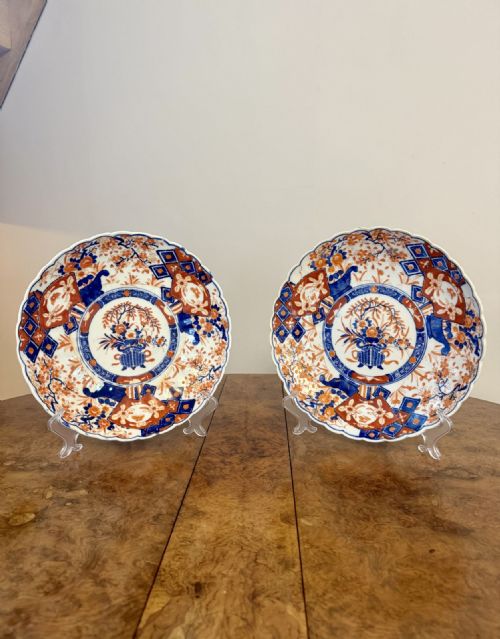


Floral Motif Porcelain Charger
These floral motif porcelain charger selections bring hand-painted artistry and centuries of decorative heritage straight to your walls or tables.

Floral Motif Porcelain Charger
A floral motif porcelain charger brings large-scale decorative presence to a room, functioning primarily as a display piece rather than everyday tableware. You encounter diverse forms here ranging from shallow bowls and scalloped edge dishes to traditional chargers originating from Asian export and domestic traditions.
The selections span significant historical periods, running from the eighteenth century through the nineteenth century and into the early twentieth century. Japanese Imari and Chinese export works dominate the inventory, accompanied by distinctive Kutani productions.
Makers and regional potteries such as Arita and Shozo shape the variety available on the market, offering both blue and white designs and polychrome palettes enriched with gold leaf.
How they were made
Potters shaped these ceramics from fine porcelain clay before applying intricate underglaze blue and overglaze enamel painting by hand. Kiln firing fixed the pigments beneath protective glossy glazes to ensure lasting brilliance.
Artisans frequently added gold gilt or gold leaf highlights to accent the floral and pictorial details across the surface. Scalloped edges and unusual vessel shapes required skilled manual trimming while the clay remained damp.
Floral Motif Porcelain Charger Retail Price Guide 2026
Typical asking prices for floral motif porcelain charger among the pieces listed under this phrase on Sellingantiques today, from the lower quarter to the upper quarter. They describe what is for sale here now, not the wider market.
House sparrows occasionally share the spotlight with lavish floral motifs on nineteenth century Kutani plates.
What varies in quality
The precision and density of the hand-painted brushwork separate ordinary output from superior examples, with finer pieces displaying meticulous control in every petal and leaf. The richness of the enamel palette and the careful application of gold leaf dictate visual impact.
Forming and throwing mastery show in the symmetry of scalloped rims and the weight of the porcelain body. Signatures by renowned artists like Shozo elevate individual bowls and plates above unsigned factory output.
The Floral Motif Porcelain Charger Glossary
- Imari
- A style of Japanese porcelain decorated in underglaze blue, iron red, and gold, named after the port from which it was shipped to the West.
- Charger
- A large decorative plate or platter used traditionally for ceremonial display rather than serving food.
- Kutani
- Japanese porcelain and ceramic ware known for bold polychrome decoration, often featuring reds and golds.
- Enamel
- Opaque glass-like material applied to fired porcelain to add colourful designs before a low-temperature fix.
- Edo Period
- The period in Japanese history spanning from sixteen hundred and three to eighteen hundred and sixty-eight, noted for flourishing ceramic arts.
Floral Motif Porcelain Charger: Frequently Asked Questions
How were floral chargers used historically?
These large ceramic pieces served primarily as display items on sideboards or walls rather than for serving meals. Wealthy households utilised them to showcase vibrant artistry in formal reception rooms.
Over generations, collectors shifted them into dedicated display cabinets or mounted them directly onto walls to highlight the intricate painting.
How do I identify eighteenth century Imari?
Eighteenth century pieces typically display a heavier porcelain body with characteristic cobalt blue underglaze combined with iron red and gold enamel overglaze. The brushwork tends to show organic variations distinct from later mass production.
Examining the foot ring and glaze pooling on the underside provides further clues regarding the firing methods of the period.
What is the difference between Kutani and Imari?
Kutani ware generally relies on a dense palette dominated by greens, purples, and rich golds alongside reds, often depicting pictorial scenes and detailed house sparrows. Imari focuses more strictly on a tripartite scheme of blue, red, and gold within symmetrical floral panels.
Both styles originated in Japan but developed distinct aesthetic signatures that separate them on the display table.
How should I display porcelain chargers safely?
Wall mounting requires specialised brackets designed to support the full weight of a heavy ceramic charger without putting pressure on the rim. Alternatively, sturdy plate stands placed inside secure cabinets protect the piece from accidental knocks.
Keep them away from direct sunlight to preserve the vibrant overglaze enamels and gold leaf over time.