




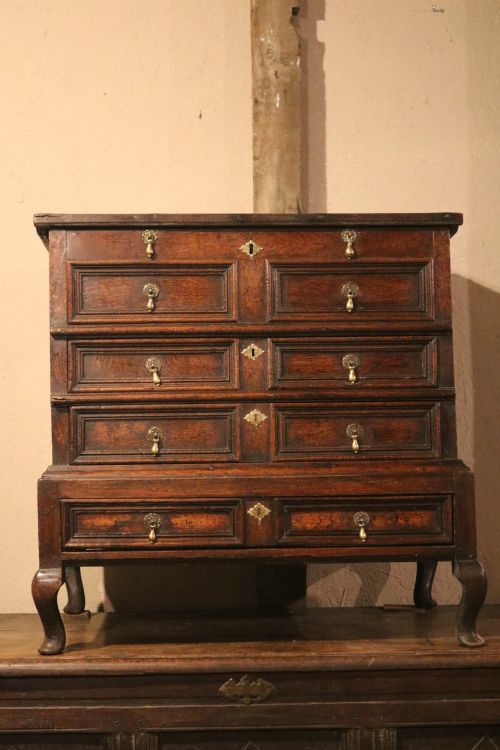


Apprentice Oak Chest
These small-scale apprentice oak chest pieces bring domestic cabinet-making into miniature form, offering both historical depth and compact presence.
Apprentice Oak Chest
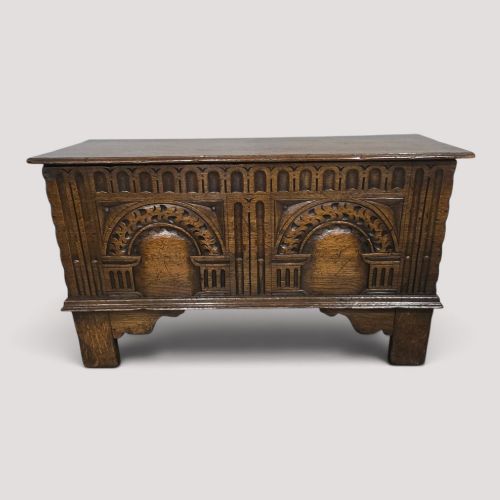
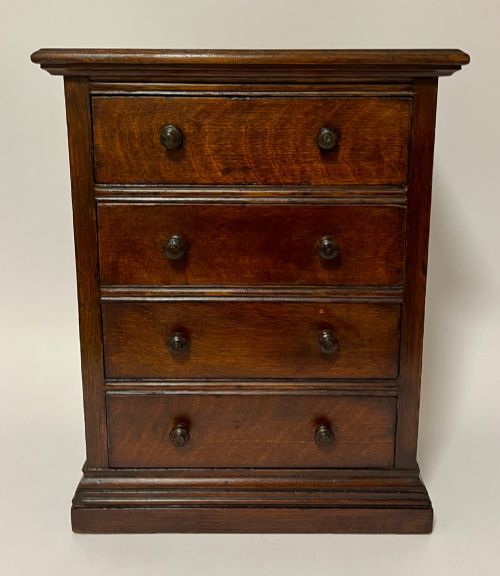
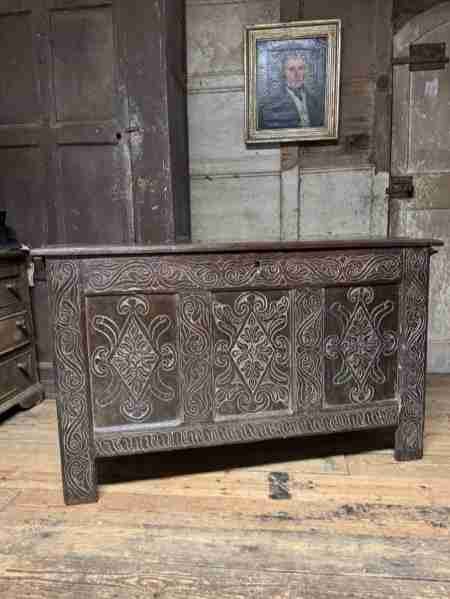
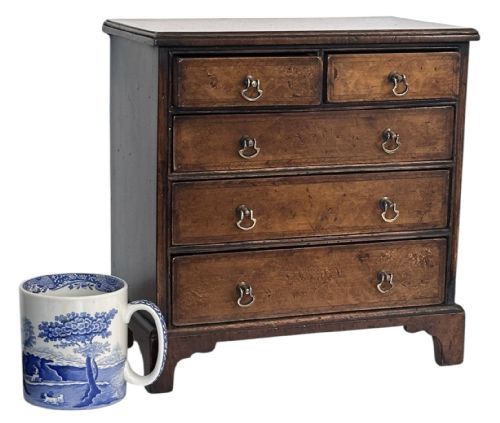
When you search for an apprentice oak chest, you encounter miniature furniture forms such as tabletop chests of drawers, coffers, mule chests, and small cabinets. These pieces span periods from the seventeenth century through to the nineteenth century, including Georgian and Victorian examples.
The most common versions met on this page are nineteenth-century and Victorian miniature chests of drawers, alongside eighteenth-century Georgian and Welsh regional pieces. They demonstrate full-sized joinery and cabinet-making techniques scaled down for display or testing skill.
Judging the quality of miniature pieces
Quality rests upon the fidelity of the proportional scale and the accuracy of the miniature joinery. Fine examples display the same dovetailing and timber selection found in full-scale masterworks rather than simplified box construction.
The presence of secondary woods, refined brass or iron hardware, and distinct regional characteristics such as Welsh or West Country design traits elevate specific pieces above standard workshop output.
Some miniature chests include secret compartments hidden behind dummy drawers, offering small spaces for tiny treasures.
Thomas Dennis
The Apprentice Oak Chest Glossary
- Apprentice piece
- A fine example of miniature furniture created by a craftsman to demonstrate skill or mastery of a trade. These objects often replicate full-scale furniture forms precisely.
- Mule chest
- A traditional storage chest featuring one or more drawers beneath the main lift-lid compartment. They combine the storage of a coffer with the utility of drawer space.
- Court cupboard
- A small, ornate cupboard structure featuring recessed upper sections supported by pillars. In miniature form, they display intricate carving and joinery.
- Tallboy
- A tall chest of drawers consisting of one chest stacked upon another taller base section. Miniature versions replicate this imposing vertical proportion in miniature scale.
- Dovetail
- A traditional interlocking woodworking joint used to connect drawer sides and carcase corners. Fine miniature pieces exhibit tightly spaced, hand-cut dovetails.
Apprentice Oak Chest: Frequently Asked Questions
What is an apprentice oak chest?
An apprentice oak chest is a small-scale model of a full-sized chest or bureau, traditionally made by a woodworker to prove skill or master a craft.
These pieces replicate standard domestic furniture in miniature, utilising the same woods and joinery techniques as larger household items.
How were these miniature chests used?
Many served as travelling salesman samples, decorative tabletop cabinets, or repositories for small valuables and documents.
Their sturdy construction in oak and pine allowed them to function as practical desktop storage while demonstrating the maker's proficiency.
How do I date an antique miniature chest?
Dating relies on examining the timber species, construction joints like hand-cut dovetails, and stylistic markers corresponding to Georgian or Victorian periods.
Regional variations in Welsh or English cabinet-making also provide clues regarding the likely decade of manufacture.
Where were apprentice chests made?
Makers produced these miniature forms across various English regions, Wales, and parts of continental Europe such as the Netherlands and France.
Local workshop traditions heavily influenced the specific decorative details, wood choices, and overall form of each piece.