



Carved Wooden Jewellery Chest
A carved wooden jewellery chest brings miniature craftsmanship and rich timber grain to a dressing table.
Carved Wooden Jewellery Chest
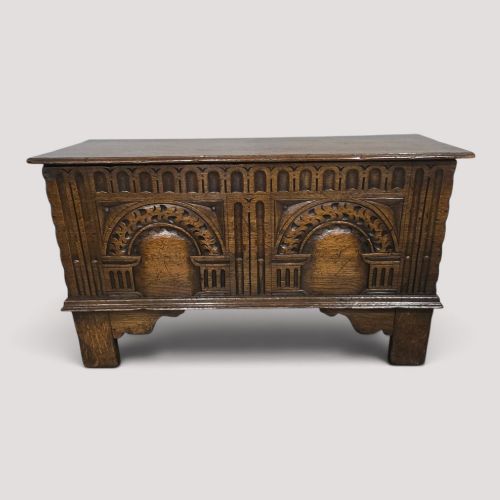
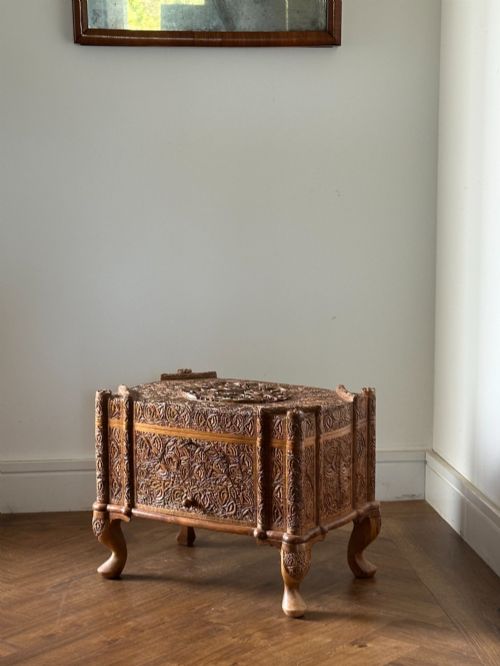
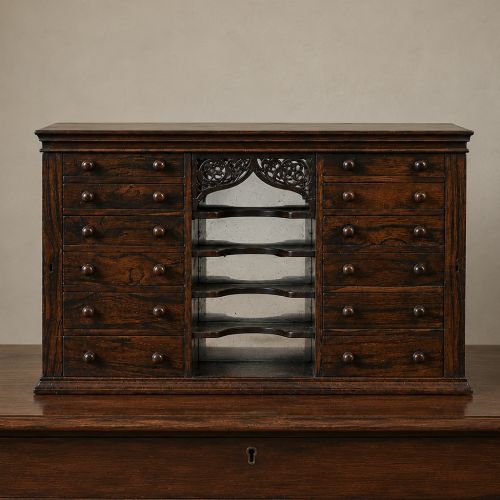
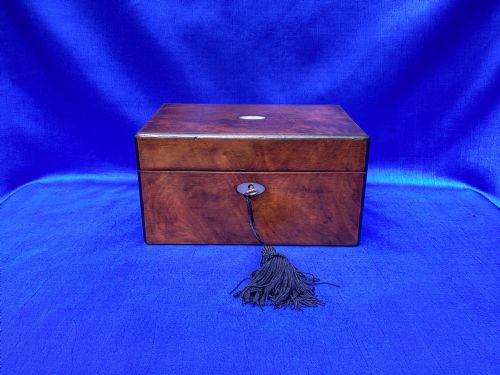
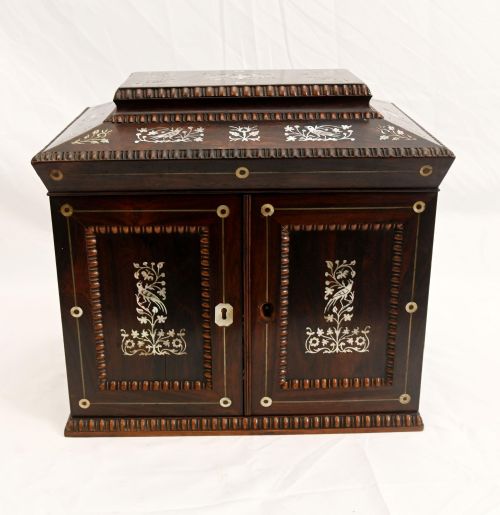
A carved wooden jewellery chest is a compact storage box designed for precious ornaments, rings, and trinkets, spanning forms like table cabinets, miniature chests of drawers, and sarcophagus-shaped caskets.
The pieces on this page emerge from various periods including the seventeenth, eighteenth, and nineteenth centuries, alongside items from the nineteen-twenties.
Makers shaped these boxes in styles such as Victorian, Regency, Jacobean, and Arts and Crafts, often incorporating regional traditions from India, China, and Europe.
How they were made
Artisans built these chests using timbers like oak, walnut, mahogany, rosewood, and sandalwood, frequently selecting dense hardwoods suited to deep relief carving.
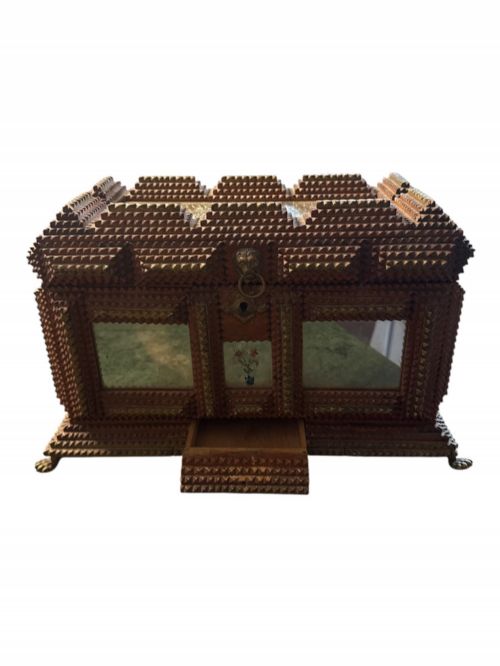
Decoration relied on hand-carving techniques, chip carving, and surface embellishments such as mother-of-pearl inlay, brass mounts, glass panels, and floral marquetry.
Structural joinery combined traditional box-making methods with miniature cabinet-making practices, producing fitted interiors, swing-out cases, and working drawers.
Several chests double as ingenious travel trunks or secret watch-repairer compartments designed for itinerant tradesmen.
What varies in quality
Quality rests upon the crispness of the hand-carved detail and the selection of figured wood, where tighter grain patterns and deeply undercut foliage elevate a box above plain utility.
The integrity of internal fittings, original brass hardware, and delicate inlays such as Tunbridge mosaic or mother-of-pearl distinguish finer workshop production from standard output.
The Carved Wooden Jewellery Chest Glossary
- Casket
- A decorative box used for holding valuables, often featuring a hinged lid and elaborate exterior carving.
- Marquetry
- The art of applying pieces of veneer to a structure to form decorative patterns, frequently using floral motifs.
- Tramp Art
- A style of folk art where utilitarian wooden packaging is chip-carved and layered into geometric relief designs.
- Tunbridge Ware
- Woodworking characterised by mosaic decoration created from thousands of tiny tinted wood blocks.
- Wellington Chest
- A tall, narrow chest of drawers secured by a locking hinged vertical side pilaster.
Carved Wooden Jewellery Chest: Frequently Asked Questions
What is a carved wooden jewellery chest used for?
These chests served primarily to secure and organise rings, necklaces, and personal valuables on dressing tables or inside bedchambers.
Today, they function practically for everyday jewellery storage while displaying period craftsmanship.
How do I care for a antique wooden box?
Keep wooden chests away from direct sunlight and sudden temperature shifts to protect the timber and internal linings from drying out.
Apply a traditional wax polish occasionally to nourish the grain without dampening delicate carvings.
How can I tell the period of a carved box?
Dating relies on examining the timber species, construction methods, and stylistic cues like Jacobean geometric moulding or Victorian floral motifs.
Secondary woods and hand-cut fixings often provide clues to the age of manufacture.
Where were these wooden chests made?
Makers produced these pieces across Britain, continental Europe, and international workshops in India and China.
Regional timber choices and distinct carving styles usually indicate the geographic origin of each box.