


Miniature Carved Chest
These small miniature carved chest examples offer intimate scale and genuine period timber work, perfect for compact spaces and serious collectors alike.
Miniature Carved Chest
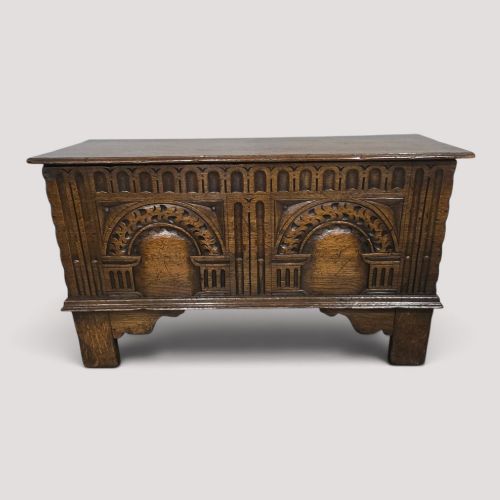
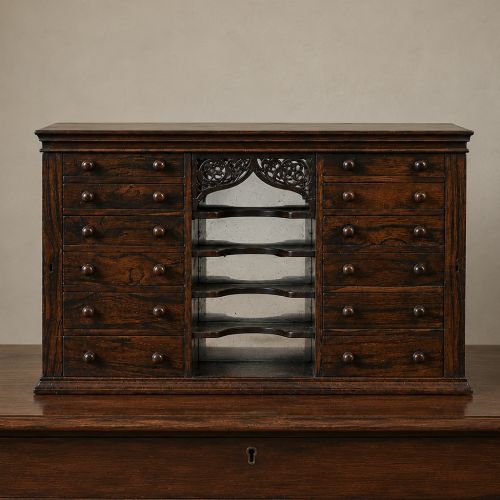
The selection on this page centres heavily on Welsh coffor bach pieces, oak coffers, and miniature chests of drawers from the Victorian and Georgian eras. These forms mirror full-scale domestic furniture, serving as apprentice pieces, travel containers, or tabletop cabinets for valuables.
Materials and construction methods
Cabinet makers utilised dense hardwoods like oak, mahogany, and walnut, frequently pairing them with contrasting brass hardware, bone inlay, or ebonised mouldings. Construction relied on traditional joinery methods appropriate for small scales, including dovetail joints for drawers and pegged framing for early coffers.
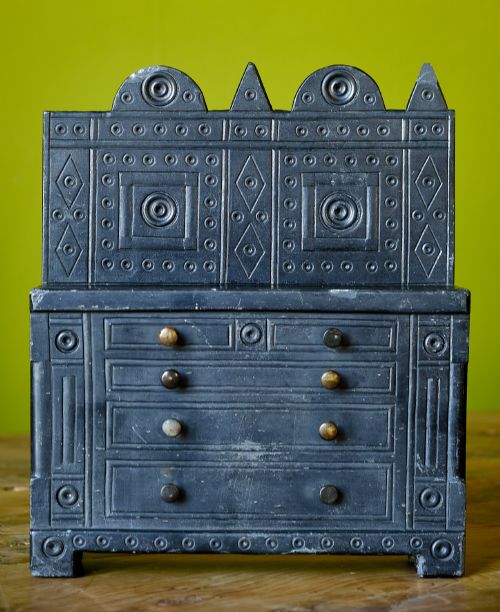
Makers also embraced local vernacular materials such as Welsh carved slate and softwoods, applying hand-carved panels, geometric mouldings, and simple inlay to decorate the surfaces. The finish was typically wax or oil, highlighting the natural grain of the timber over centuries of handling.
A Welsh slate model proves that cabinet makers occasionally abandoned timber entirely to carve miniature chests from grey stone.
What determines quality in miniature furniture
Quality rests upon the fidelity of proportion and the precision of the miniature scale, where master makers achieved the exact balance of a full-sized cabinet. The crispness of the hand carving and the integrity of the timber selection separate standard utilitarian boxes from exceptional cabinet work.
Condition and originality dictate value in this field, with untouched patination, original brass fittings, and intact internal compartments marking superior examples. Alterations to feet, lids, or drawer linings alter the historic balance of the piece.
The Miniature Carved Chest Glossary
- Coffor Bach
- A small Welsh oak coffer or chest traditionally made as a marriage gift or presentation piece. These vessels usually feature a hinged lid above a drawer base.
- Apprentice Piece
- A small-scale item demonstrated to a guild to prove a craftsman's skill before achieving master status. They replicate full-sized furniture designs with identical joinery.
- Wellington Chest
- A tall, narrow chest of drawers secured by a locking side pilaster bar. Regency examples in rosewood or mahogany appear frequently.
- Tea Caddy
- A small container designed to store loose tea leaves, often styled as a miniature sideboard or cabinet in Regency and Georgian periods.
- Inlay
- A decorative technique where contrasting materials like bone or lighter woods are inserted into recesses in the primary surface. This ornament appears on regional Welsh boxes.
Miniature Carved Chest: Frequently Asked Questions
What is a coffor bach?
A coffor bach is a small Welsh oak chest, frequently featuring a hinged lid and one or more bottom drawers. These items date primarily to the eighteenth century and served domestic or ceremonial purposes.
Craftsmen built them with the same regional joinery techniques used for larger household furniture, translating domestic storage into an intimate scale.
Were these made by apprentices?
Some small furniture pieces are attributed as apprentice pieces, created to demonstrate advanced woodworking proficiency. These items replicate standard furniture forms with precise joinery.
Other examples functioned as tabletop collector cabinets, spice cupboards, or jewellery chests for domestic use.
How do I date a miniature chest?
Dating relies on timber choice, construction methods, and stylistic details that align with specific eras like the Georgian or Victorian periods. Oak and vernacular styles tend to indicate eighteenth-century origins, while walnut and rosewood often point toward Regency or Victorian manufacture.
Hardware examination provides further clues, as hand-forged or brass fittings changed in design across the centuries.
Where were these pieces used?
Owners placed these compact storage items on desks, tabletops, or sideboards to hold documents, tea, jewellery, or small curiosities. Their modest footprint allowed them to sit comfortably in principal rooms or bedchambers.
Today, they function well in modern interiors as desktop organisers or decorative focal points.